



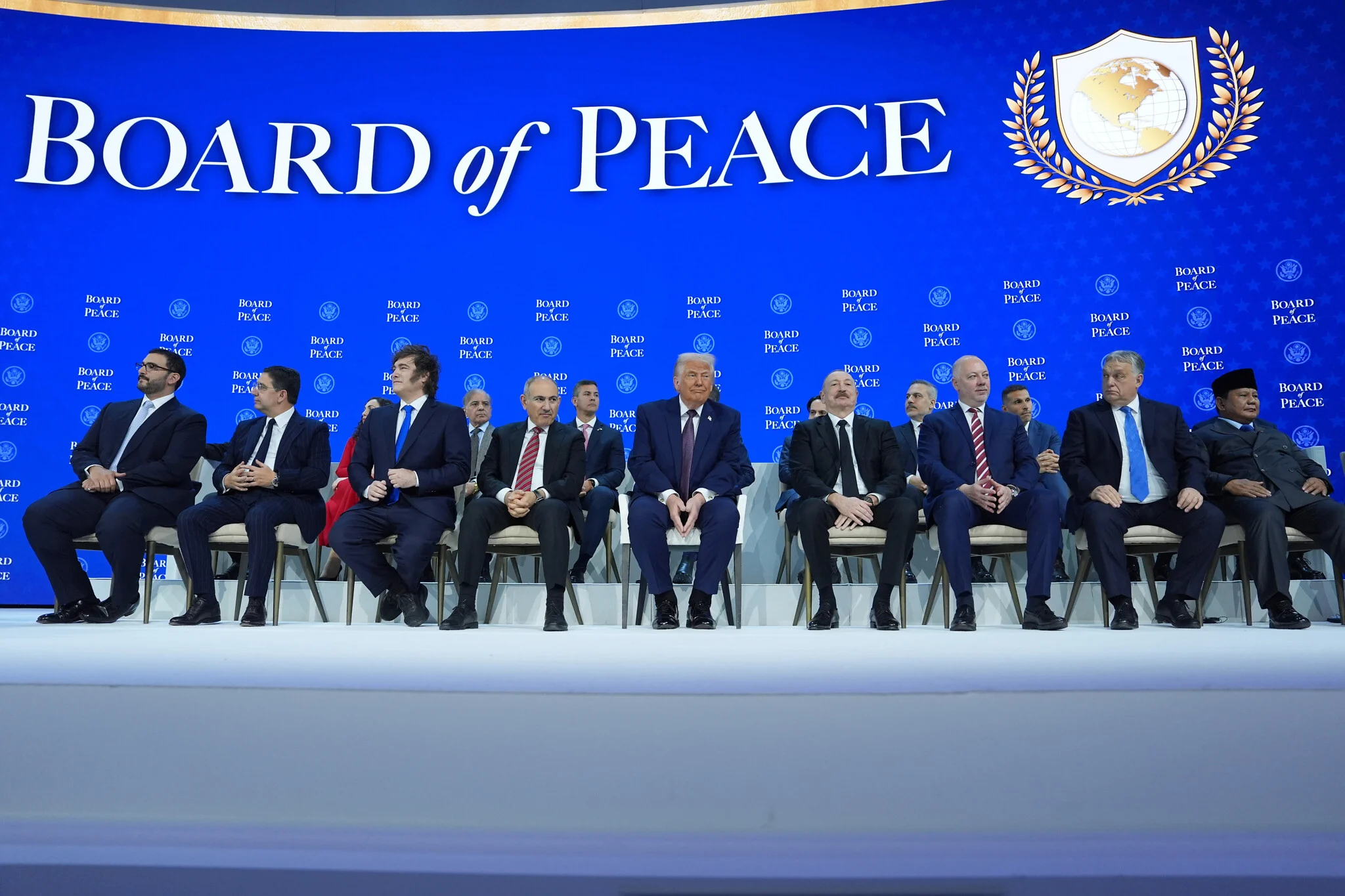
- Trump Board of Peace uses economic leverage and tariff threats to influence India-Pakistan relations.
- Pakistan engages actively with the Board, while India maintains strategic distance.
- The initiative reflects Trump’s transactional approach to international diplomacy.
- Long-term peace remains uncertain as the Board prioritizes behavior management over historical dispute resolution.
A high-stakes diplomatic meeting of the newly formed Board of Peace on Gaza, initiated by Donald Trump during his second presidential term, is emerging as one of the most closely watched geopolitical developments in the Middle East. The gathering, expected to include eight major Muslim-majority nations — Saudi Arabia, Türkiye, Egypt, Jordan, Indonesia, Pakistan, Qatar, and the United Arab Emirates — is being framed by supporters as a potential turning point in the decades-long Israel-Palestine conflict.
Diplomatic sources indicate that Muslim participants are preparing to adopt a unified position on humanitarian access, ceasefire enforcement mechanisms, reconstruction planning, and long-term political arrangements for Gaza. Observers say the unprecedented coordination among influential Muslim states reflects a structural change in how negotiations around Palestine are being shaped.
Trump Launches Board of Peace With $5 Billion Gaza Reconstruction Pledge
For decades, peace efforts surrounding Palestine were largely dominated by Western powers and multilateral forums led by the United Nations. Despite numerous resolutions, peacekeeping initiatives, and mediation attempts, the conflict remained unresolved, with repeated cycles of violence in Gaza and the occupied Palestinian territories undermining diplomatic momentum.
Trump’s Board of Peace seeks to alter that equation by integrating regional stakeholders directly into the negotiating architecture. According to officials familiar with the initiative, all twenty invited countries — including Pakistan and Saudi Arabia — have formally accepted participation, signaling broad international backing for the platform.
Trump’s Board of Peace to meet as Gaza stability plan languishes
Analysts note that this is the first time powerful Muslim-majority nations are expected to play a decisive and institutionalized role in shaping outcomes related to Gaza’s future. For many across the Muslim world and among Palestinians, such involvement has long been viewed as essential to achieving legitimacy and regional acceptance for any settlement framework.
“The central argument behind the Board of Peace is that sustainable solutions must come from actors who possess both political leverage and regional credibility,” said a Middle East policy analyst based in Dubai. “This model departs sharply from past diplomatic formats.”
Trump’s “Board of Peace” Delivers Lasting Stability
Trump’s intentions appear clear: to produce tangible outcomes where previous international mechanisms struggled. During the first year of his second stint in office, the U.S. administration has pursued aggressive diplomatic engagement across the Middle East, combining pressure diplomacy with regional coalition-building. Supporters argue that Washington’s renewed activism has created momentum absent for years.
The initiative has not been without controversy. Israeli officials reportedly expressed reservations about the composition of the Board, particularly the inclusion of multiple influential Muslim states capable of collectively shaping negotiation outcomes. However, diplomatic insiders say Israel ultimately accepted participation after sustained U.S. engagement, recognizing that refusal could isolate it diplomatically at a time of growing international scrutiny over Gaza.
The historical roots of the Palestine conflict stretch back to the mid-20th century, beginning with competing national claims following the end of British rule and the creation of Israel in 1948. Wars, uprisings, failed peace agreements, and stalled negotiations have since defined the political landscape. Efforts such as the Oslo Accords raised hopes but ultimately collapsed amid mistrust, violence, and political fragmentation on both sides.
In Gaza, repeated military confrontations and humanitarian crises have intensified global calls for a durable political settlement. Reconstruction efforts have often faltered due to security concerns, funding gaps, and lack of unified governance arrangements — challenges the Board of Peace aims to address collectively.
Current discussions are expected to focus on immediate humanitarian relief corridors, governance reforms in Gaza, and economic stabilization measures designed to prevent future conflict cycles. Participating Muslim nations are believed to be preparing proposals involving reconstruction funds, security guarantees, and regional monitoring mechanisms.
Looking ahead, diplomats suggest the Board of Peace could redefine the future trajectory of the Palestine issue if it succeeds in aligning regional consensus with American diplomatic leverage. The inclusion of countries such as Pakistan and Indonesia — representing large Muslim populations — alongside Gulf powers with economic influence may provide both political legitimacy and financial capacity for long-term implementation.
Whether the initiative can overcome entrenched distrust remains uncertain. Yet many analysts argue that the mere formation of a forum where Muslim-majority states hold decisive influence marks a historic shift in conflict diplomacy.
For Palestinians, decades of stalled negotiations have fostered skepticism toward international promises. However, proponents of the Board believe the new structure — combining U.S. leadership with coordinated Muslim participation — may finally generate outcomes that previous global efforts failed to deliver.
As the meeting begins, expectations remain high that the Board of Peace on Gaza could open a new chapter in one of the world’s most enduring conflicts, potentially reshaping both regional diplomacy and the future prospects of Palestine itself.