



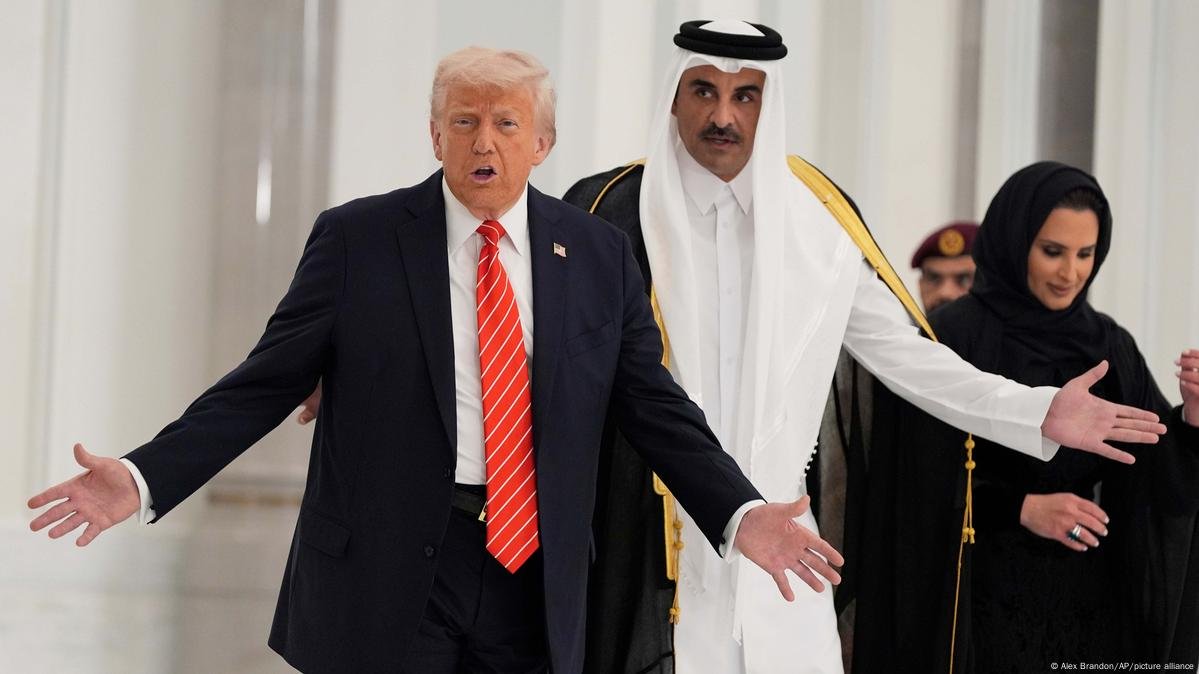
- Trump’s bold move: An executive order commits the U.S. to defend Qatar with “all lawful and appropriate measures.”
- Israel’s strike on Doha: Washington failed to prevent Israel’s unprecedented air attack in Qatar’s capital, sparking anger in Doha.
- Gaza war backdrop: The Israeli assault on Gaza has isolated Israel diplomatically and elevated Qatar as a key broker.
- Diplomatic theater: Trump staged an Oval Office apology call between Netanyahu and Qatar’s prime minister.
- Risky gamble: The pledge could strain U.S.-Israel ties, anger Saudi Arabia, and divide Trump’s Republican base.
When President Donald Trump issued an executive order this week promising NATO-like protection to Qatar, the move was hailed in Doha as a diplomatic victory. But it also underscored a stark reality: America, despite its global might, had failed to prevent Israel from violating Qatari sovereignty just days earlier. That contradiction lies at the heart of Washington’s credibility crisis in the Middle East.
Israel’s unprecedented airstrike on Hamas figures in Doha—intended to target political leaders operating in exile—sent shockwaves through the Gulf. For Qatar, a small but immensely wealthy country that hosts the largest U.S. military base in the region, the attack was more than a breach of sovereignty; it was a humiliation. Despite the thousands of American troops stationed at Al Udeid Air Base, the United States stood by as its closest Middle Eastern ally carried out an attack in the capital of another ally. Doha’s leadership lodged a furious protest and even suspended, albeit briefly, its central role as mediator between Hamas and Israel.
Trump’s executive order, dated Monday but released Wednesday, seeks to repair that damage. It commits the United States to take “all lawful and appropriate measures—including diplomatic, economic, and, if necessary, military” to defend Qatar. The language deliberately echoes America’s pledges to partners such as South Korea and Japan. Yet, it stops short of Article 5 of NATO, which would obligate automatic military retaliation. In essence, Trump offered Qatar a half-treaty—a security umbrella with vague boundaries but unmistakable symbolism.
Why now? The answer lies in the shifting dynamics of the Gaza war. Israel’s assault on Gaza has morphed from a campaign to dismantle Hamas into a regional crisis that is isolating Israel diplomatically. Qatar, historically a sponsor of mediation between Palestinian groups and Israel, has found itself thrust into the spotlight. By attacking Hamas operatives in Doha, Israel not only jeopardized its ties with Qatar but also risked alienating one of the few Arab states capable of delivering a deal.
READ MORE: Trump visits Saudi Arabia, Qatar, UAE: What to know
Trump understands this. In a rare moment of stage-managed diplomacy, he stood in the Oval Office as Israeli Prime Minister Benjamin Netanyahu personally called Qatar’s prime minister, Mohammed bin Abdulrahman al-Thani, to apologize. It was a theatrical show of American mediation—but also a tacit admission of Washington’s inability to restrain Israel’s military impulses.
The broader Middle East context is equally telling. Since the outbreak of the Israel-Gaza war, the region has hardened against Israel. Once-celebrated normalization agreements under the Abraham Accords now look brittle. Arab capitals that once quietly aligned with Israel against Iran are rethinking their calculus as images of Gaza’s devastation circulate. Qatar, by contrast, has emerged as the indispensable broker, balancing ties with Hamas, maintaining dialogue with Israel, and serving as Washington’s Gulf anchor. Trump’s pledge of protection is both a reward for that balancing act and an insurance policy against further Israeli adventurism.
Yet, the risks are enormous. By elevating Qatar’s security to the level of America’s formal allies, Trump risks angering not only Israel but also Saudi Arabia, which has long resented Doha’s independent foreign policy and its ties to Iran. Within the U.S., Trump also faces resistance. Hardline voices in the Republican Party are questioning why American soldiers should be placed on the line for Qatar, a state many accuse of funding Islamist movements. “I don’t want to die for Qatar,” Trump ally Laura Loomer fumed on social media.
ALSO READ: Trump’s Dinner Diplomacy After Israeli Strike on Qatar: Calming Tensions or Papering Cracks?
Still, the former president appears undeterred. Qatar has courted Trump personally, gifting a $400 million aircraft that will serve as Air Force One during his presidency and investing in Trump-branded projects. It is a transactional relationship—but one that suits Trump’s worldview. His security pledge is as much about personal rapport and economic ties as it is about strategy.
The unanswered question is whether Trump’s words will translate into action if Israel strikes again. Would the United States, under Trump’s leadership, confront its closest ally militarily to defend Qatar? Or is this executive order simply another Trumpian flourish—bold, theatrical, but ultimately ambiguous?
For now, what is clear is that Washington’s balancing act in the Middle East has grown harder. The war in Gaza is reshaping alliances, isolating Israel, and thrusting Qatar into an outsized role. Trump’s promise of protection is a bet on Doha’s relevance in brokering peace. Whether it becomes a cornerstone of stability—or another flashpoint in America’s troubled Middle East policy—remains to be seen.