



- Trump Iran nuclear deal negotiations face a one-month deadline set by President Trump.
- US military pressure increases with potential second carrier deployment to the Middle East.
- Israel demands ballistic missile and proxy restrictions beyond nuclear limits.
- Iran insists talks focus only on nuclear enrichment under the Non-Proliferation Treaty.
The Trump Iran nuclear deal strategy has entered a decisive phase, with President Donald Trump warning that failure to reach an agreement with Tehran within weeks would be “very traumatic” for the Islamic Republic. His remarks underscore a dual-track approach: intensifying military pressure while keeping diplomatic channels open.
“We have to make a deal, otherwise it’s going to be very traumatic. Very traumatic. I don’t want that to happen, but we have to make a deal,” Trump said, setting what he described as a timeline of “over the next month, something like that.”
The warning comes amid renewed indirect negotiations between U.S. and Iranian officials following talks in Oman last week. Trump’s rhetoric signals urgency, suggesting Washington believes the window for diplomacy is narrowing.
Military Pressure in the Gulf
Adding weight to his message, Trump appeared to suggest that a second aircraft carrier strike group could be preparing for deployment to the Middle East. He shared a Wall Street Journal report on Truth Social indicating that such a move was under consideration, though no formal order had been issued.
The U.S. has already deployed the USS Abraham Lincoln to the region, part of what Trump previously described as an “armada.” Defense analysts view the possible deployment of another carrier as strategic leverage.
“That’s a big deal,” said one former U.S. defense official, noting that while the administration may not be actively preparing to strike Iran, “what he’s trying to do is put continued pressure on Iran during negotiations.”
Another former official disagreed that the move was symbolic. “I don’t think it’s a bluff,” the official said, arguing that the United States is signaling readiness while maintaining diplomatic engagement.
The show of force reflects Washington’s longstanding concern over Iran’s nuclear enrichment, ballistic missile development, and regional proxy network — issues that extend beyond the nuclear file.
Netanyahu’s Calculated Support
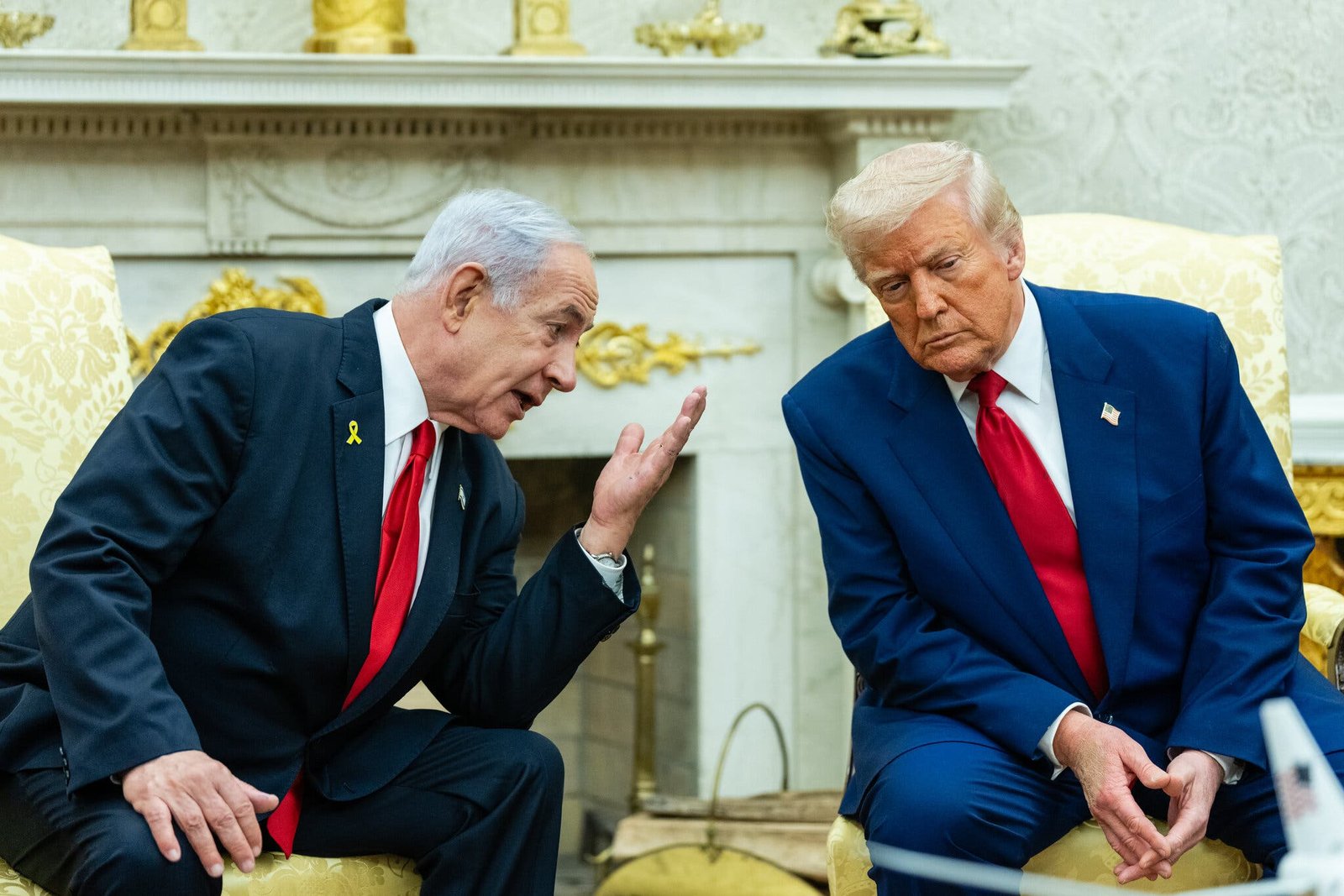
Trump’s strategy has been closely coordinated with Israeli Prime Minister Benjamin Netanyahu, who met him at the White House this week. After the meeting, Trump emphasized that diplomacy remained his preference but warned of consequences if talks fail.
“If the deal isn’t a very fair deal and a very good deal with Iran, then it’s going to be, I think, a very difficult time for them,” Trump said.
Netanyahu, traditionally skeptical of diplomatic engagement with Tehran, expressed guarded optimism. He said Trump’s pressure tactics could create conditions for “a good agreement,” though he stressed that Israel’s red lines extend beyond uranium enrichment.
“It is not only the nuclear issue; it is also the ballistic missiles and also the Iranian proxies,” Netanyahu told reporters, reiterating Israel’s demand that any Trump Iran nuclear deal address broader security threats.
Ilan Berman, senior vice president of the American Foreign Policy Council, said Israel is seeking clarity from Washington. “What the Israelis are actually looking for is reassurance that their green light to deal with the Iranian ballistic missile program is still a green light if they feel like they need to do it,” he said.
Iran’s Position: Nuclear Scope Only
Tehran has signaled cautious engagement but rejected expanding the talks. Iranian Foreign Ministry spokesperson Esmail Baghei said discussions so far have focused solely on the nuclear program.
“Our demand is to secure the interests of the Iranian nation based on international norms and the Non-Proliferation Treaty and peaceful use of nuclear energy,” Baghei said, emphasizing that “zero enrichment” is outside the scope of negotiations from Iran’s perspective.
This divergence highlights the core obstacle: Washington seeks strict limits on enrichment and missile capabilities, while Tehran insists on its right to peaceful nuclear energy under the NPT.
Future Outlook: Diplomacy or Escalation?
The coming month could prove pivotal. If negotiations yield tangible concessions, the Trump Iran nuclear deal may reset regional dynamics and ease tensions in the Gulf. A comprehensive agreement addressing missiles and proxies would mark a strategic breakthrough for Washington and its allies.
However, failure could accelerate military escalation. A second carrier strike group would significantly enhance U.S. operational capacity in the region, signaling readiness to target air defenses, missile infrastructure, or command-and-control assets if diplomacy collapses.
For now, Trump appears determined to test Iran’s willingness to compromise while preserving maximum leverage. As one senior administration official noted, the United States is making a “good faith effort” to reach a conclusion — but “the president always retains every option.”
Whether this high-stakes brinkmanship produces a diplomatic breakthrough or ushers in a new phase of confrontation will shape Middle East geopolitics for years to come.