



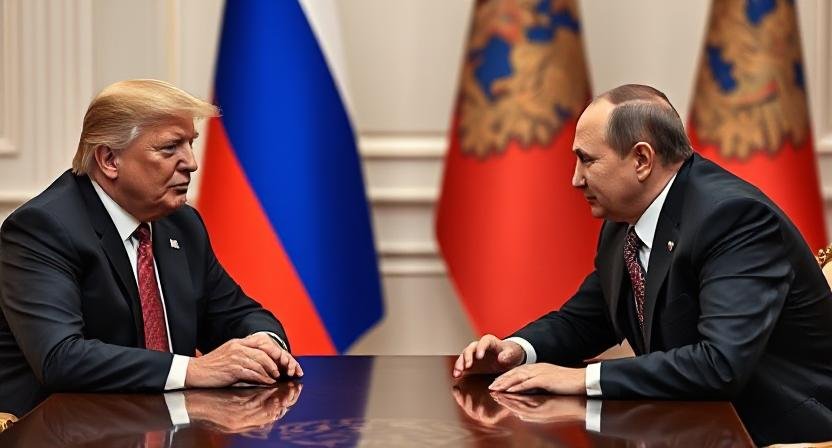
- Trump-Putin summit expected within days, possibly in Qatar or Saudi Arabia, to discuss a potential end to the Ukraine war.
- Kremlin confirms talks are underway, saying the meeting was initiated by the U.S. through Trump confidant Steve Witkoff.
- Ukraine’s Zelensky cautiously optimistic, stresses any deal must guarantee ceasefire and Ukraine’s independence.
- Summit could reshape global diplomacy, with major implications for NATO, sanctions, and the 2024 U.S. election.
Washington/Moscow/Doha – August 7, 2025 — In what could become the most consequential diplomatic encounter since the start of the Ukraine war, former U.S. President Donald J. Trump and Russian President Vladimir Putin are expected to meet within days in a highly anticipated summit that may set the course for peace—or redefine the battlefield altogether.
Sources within both Washington and Moscow, speaking exclusively to The Islamabad Telegraph, confirmed that final touches are being put on a meeting between the two powerful leaders. Kremlin foreign policy adviser Yuri Ushakov stated Thursday that the two sides had “agreed to the meeting at the suggestion of the American side,” with the location kept undisclosed for security and political sensitivity.
Trump Tariff Shock: Doubling Duties on India Over Russian Oil Sends Economic Alarm Bells
Though no exact date has been publicly announced, multiple high-level sources in the Trump campaign, the Russian Foreign Ministry, and Middle Eastern diplomatic circles told The Islamabad Telegraph that the summit is likely to occur “within the next five days,” possibly in a neutral Gulf state—either Qatar or Saudi Arabia.
“There’s a good chance,” Trump told reporters earlier this week, “that I’ll be meeting President Putin soon. We’ll talk about peace. A real peace.”
The Background: A Meeting Long in the Making
Speculation over a Trump-Putin rendezvous has swirled for months. Intelligence sources say a similar summit was being organized last month in Doha or Riyadh, but was called off at the eleventh hour due to logistical complications and disagreement over format.
READ MORE: Russia Says Putin and Trump Will Meet in Coming Days
What’s changed now, according to officials involved in the planning, is Trump’s growing confidence that a decisive deal could be struck if he reclaims the White House. Russian officials, in turn, appear increasingly open to a negotiated settlement as sanctions bite deeper and the war drags into its fourth year with no decisive military outcome.
The Secret Messenger: Steve Witkoff’s Role
The latest initiative reportedly began after American businessman and Trump confidant Steve Witkoff met with President Putin in Moscow on Wednesday. According to U.S. Secretary of State Marco Rubio, Witkoff conveyed Trump’s openness to a direct engagement, and returned with a detailed outline of Russia’s evolving peace terms.
“Putin shared concrete examples of what Russia wants for a settlement. It’s no longer just about Donbas. It’s about NATO posture, security guarantees, and sanctions relief,” Rubio told The Islamabad Telegraph.
Rubio confirmed that the former president was briefed within hours and responded positively, suggesting he may even be open to a trilateral meeting that includes Ukrainian President Volodymyr Zelensky.
ALSO READ: Exclusive: Canada Charts a New Economic Course as Trump Tariffs Upend Decades-Old Trade Reliance
Zelensky’s Response: Hopeful but Cautious
Ukrainian President Volodymyr Zelensky signaled cautious optimism Thursday following his phone call with Trump. In a statement posted on X (formerly Twitter), he wrote:
“Today is a day of numerous calls and contacts aimed at making real progress on the path to peace and ensuring Ukraine’s independence under any circumstances.”
Zelensky added that he was preparing follow-up conversations with the leaders of Germany, France, and Italy—nations central to any European security architecture post-conflict.
However, Kyiv has maintained that any agreement must include an immediate ceasefire and full respect for Ukrainian sovereignty, including Crimea and the Donbas—terms Moscow has previously rejected.
Geopolitical Implications: Peace or Political Showdown?
If the meeting takes place, it would mark the first U.S.-Russia presidential-level contact since President Joe Biden met Putin in Geneva in 2021. But unlike previous summits, this one is unfolding amid dramatically different global dynamics.
Trump, the Republican frontrunner for the 2024 U.S. presidential election, has repeatedly promised to “end the war in 24 hours” if reelected. Critics have warned this might come at the cost of concessions to Moscow, while supporters argue it could break the deadlock that has cost hundreds of thousands of lives and destabilized Europe.
“Trump sees himself as a dealmaker. If anyone could bring Putin to the table, it’s him,” said Col. Richard Black (Ret.), a staunch Trump supporter and former Pentagon adviser. “He’s not interested in endless war. He wants results, and he knows Putin respects strength.”
On the other side of the debate, former U.S. National Security Council official Fiona Hill warned that the optics of such a summit could give Russia a propaganda victory if it’s not backed by concrete Ukrainian support.
“If Zelensky is sidelined or pressured into premature concessions, the summit risks legitimizing aggression and undercutting international law,” Hill told The Islamabad Telegraph.
The Stakes: The End—or Escalation—of War
With battlefield lines largely frozen and Western arms shipments to Ukraine slowing amid political fatigue, the timing for negotiations may be ripe. But any deal—if forged—would require extraordinary political will from all sides.
Officials familiar with the summit planning say the key issues on the agenda include:
- A permanent ceasefire across Ukraine;
- The future status of Crimea and occupied Donbas;
- The rollback of NATO deployments in Eastern Europe;
- Potential sanctions relief for Russia;
- War crimes accountability and prisoner exchanges.
Middle Eastern nations, particularly Qatar and Saudi Arabia, are seen as preferred hosts due to their growing diplomatic clout and neutral posture in the conflict. Riyadh reportedly offered royal security and state protocol to host the summit “without media frenzy.”
History in the Balance
Whether this summit leads to a breakthrough or becomes another footnote in a long and bloody conflict, it will carry immense symbolic and strategic weight.
For Trump, it is a chance to demonstrate global statesmanship before election season heats up. For Putin, it is an opportunity to reset Russia’s diplomatic isolation. For Ukraine, it may offer a lifeline—or a trap.
But one thing is certain: The world will be watching.
This is a developing story. Stay with The Islamabad Telegraph for exclusive updates.