


- Trump’s Middle East strategy has pivotally transitioned from economic pressure to direct, kinetic military intervention.
- Severe frustration over the failure of the Strait of Hormuz blockade has pushed Washington to take its most controversial decision yet.
- Mossad’s active sleeper cells within Iran have delivered critical targeting coordinates of fortified nuclear installations directly to U.S. planners.
- Exclusive diplomatic sources from The Islamabad Telegraph confirm that Tehran’s top leadership has sensed the plan and is preparing a massive retaliation.
WASHINGTON / TEHRAN — The geopolitical architecture of the Middle East is on the verge of a violent, structural realignment. Following consecutive nights of intense U.S. airstrikes in the Persian Gulf, highly placed national security sources in Washington have confirmed that President Donald Trump has officially signed off on highly classified executive orders.
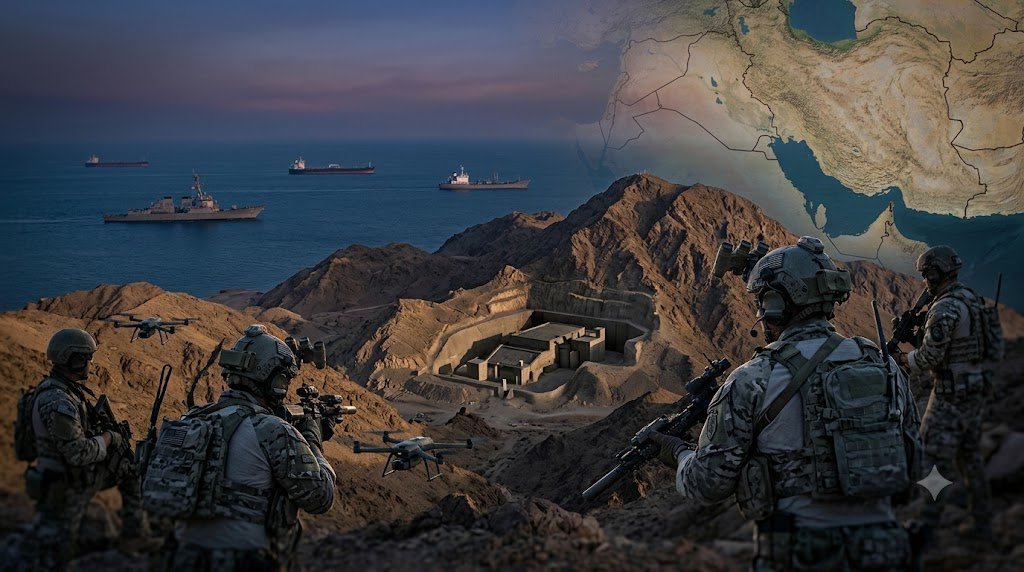
As Commander-in-Chief, Trump has greenlighted U.S. Special Forces and strategic air assets to launch a devastating offensive targeted at completely wiping out Iran’s nuclear installations—including highly fortified, underground complexes like Pickaxe Mountain.
This dramatic shift marks a definitive end to Washington’s previous playbook. Having exhausted years of economic maximum pressure and back-channel efforts aimed at forcing a regime change in Tehran, Trump has reportedly decided to bypass diplomatic stalemate entirely. Instead, he is moving to redraft the security map of the region on his own terms, regardless of the global fallout.
Trump’s Middle East Strategy: The Hormuz Frustration
The path to this high-stakes decision was paved by growing frustration in the Oval Office over the strategic impasse in the Strait of Hormuz. Trump’s highly publicized plan to turn the U.S. into the “guardian of the strait”—imposing a controversial 20% toll on commercial cargo transiting the waterway to reimburse the U.S. for its naval protection—has faced stiff resistance.
THE STRAIT OF HORMUZ TRANSIT DISPUTEU.S. Proposed Toll: 20% fee on all transiting cargoLegal Objections: Deemed a violation of maritime lawIranian Response: Kinetic denial & cruise missile strikesCurrent Status: Blockade reinstated; ceasefire broken
Rather than yielding to the U.S. blockade, Iran’s Islamic Revolutionary Guard Corps (IRGC) retaliated with asymmetric strikes, disabling international tankers and successfully challenging the American naval presence.
READ MORE: War Returns to Haunt Iran as Trump Reimposes Hormuz Blockade, Ceasefire MoU Unravels
This inability to cleanly open and control the waterway according to his blueprint deeply irked Trump. Allies and aides close to the President confirm that this strategic failure became the final straw, provoking him to abandon incremental containment in favor of a harsh, unilateral military solution.
Mossad’s Sleepers and the Intelligence Matrix
The tactical viability of the impending strike relies heavily on a highly active espionage campaign. Intelligence officials confirm that Mossad’s extensive network of deep-cover sleeper cells operating inside Iran has spent months transmitting high-fidelity targeting data back to Israel.
These operatives have successfully bypassed Iran’s most stringent counter-intelligence measures to locate:
- Trump’s Middle East strategy And Secret underground transport tunnels.
- Ventilation shafts of deeply buried centrifuge facilities.
- The structural vulnerabilities of heavily protected mountain bastions like Pickaxe Mountain and Fordow.
This vital intelligence has provided U.S. commanders with the exact coordinates needed to ensure that the planned bunker-busting operations can breach and permanently destroy Tehran’s nuclear infrastructure.
RELATED NEWS: U.S. Launches New Iran Strikes
Tehran Senses the Blow and Prepares to Strike Back
The operational preparations in Washington have not gone unnoticed in the Iranian capital. Sources from deep within Iran’s security apparatus have told a correspondent for The Islamabad Telegraph that the regime’s top leadership has fully detected Trump’s blueprint.
“Tehran knows exactly what is coming,” an Iranian official told The Islamabad Telegraph under the condition of anonymity. “The leadership has already signaled that if our nuclear sovereignty is breached, the response will be immediate, asymmetric, and global. We are preparing to strike back with everything at our disposal.”
Sensing Trump’s Middle East strategy, military movements within Iran suggest that ballistic missile units, drone divisions, and regional proxy forces across Lebanon, Iraq, and Yemen have been placed on highest alert, ready to launch a synchronized retaliatory wave the moment U.S. Special Forces initiate their strike.
A Historic Gamble Amid Domestic Strife
The decision to initiate a direct confrontation has sent shockwaves through Washington. Trump’s unilateral move has drawn sharp condemnation from congressional rivals and even some of his own national security advisers, who warn that a direct assault on sovereign Iranian soil bypassing congressional approval could ignite an uncontainable Middle Eastern war.
Yet, with a restarted 60-day War Powers clock ticking, Trump remains undeterred. He has given the ultimate go-ahead to a plan that will either dismantle Tehran’s nuclear ambitions once and for all, or plunge the global community into a conflict that will rewrite history.
Not sure either Trump’s Middle East strategy works this time or not. However, Iran seems ready to counter it.