



-
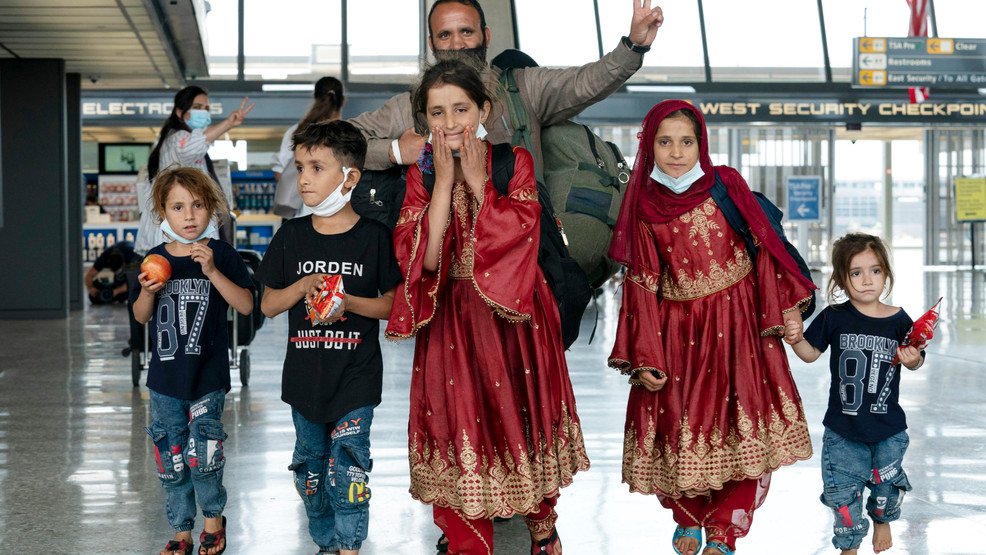
- Afghan refugees who aided U.S. forces now stranded despite years of counterterrorism vetting.
- Legal experts warn that Trump may be preparing blanket asylum denials and mass deportations.
- Afghan families, U.S. veterans, and resettlement groups call the freeze a betrayal of America’s wartime commitments.
Washington’s political landscape convulsed on Friday as President Donald Trump abruptly halted all asylum decisions and ordered an immediate freeze on U.S. visas for Afghan nationals—an extraordinary escalation that officials framed as a security measure but critics see as a direct assault on the modern refugee system. The move comes just one day after Trump vowed to “permanently pause migration from all Third World Countries,” and only 48 hours after an Afghan man shot two National Guard members near the White House, killing one.
The administration’s new posture has thrust the U.S. asylum crisis to the center of global attention. What began as an isolated criminal incident has now morphed into the most dramatic immigration crackdown of Trump’s second term—one that is already unsettling allies, electrifying domestic politics, and raising legal questions that stretch from Congress to the Supreme Court.
USCIS Director Joseph B. Edlow’s late-night announcement declared a full freeze on asylum adjudications “until we can ensure every alien is vetted and screened to the maximum degree possible.” Minutes later, the State Department declared it had paused all visas for Afghan passport holders, a move resettlement organizations warn could effectively dismantle the Special Immigrant Visa (SIV) pipeline that brought wartime interpreters and CIA-linked operatives to safety.
For thousands of Afghan families—many who fought alongside U.S. troops—this is not a bureaucratic delay. It is a devastating blow.
Shawn VanDiver, head of #AfghanEvac, described the freeze as “a deliberate abandonment of our wartime allies,” warning that it violates federal law and court orders. His anger echoes across the veteran community, where many see the decision as a dangerous rewriting of America’s moral obligations.
At the center of the storm is Rahmanullah Lakanwal, a 29-year-old Afghan who allegedly opened fire on two National Guard members near the White House, killing Army specialist Sarah Beckstrom. Within hours, senior officials—including Homeland Security Secretary Kristi Noem—claimed he was “unvetted” and entered under Biden’s “mass parole” system.
READ MORE: Counterterrorism officials vetted Guard shooting suspect before he entered U.S.
But The Washington Post’s reporting undercut that claim: counterterrorism officials vetted Lakanwal twice, including during his service with one of the CIA’s covert “Zero Units,” and again before he arrived in 2021 under Operation Allies Welcome. He later passed an asylum review this year.
The contradiction is politically explosive. Trump officials are blaming Biden’s refugee policy. Yet intelligence sources say Lakanwal underwent more security screening than most global migrants.
Still, the tragedy provided the White House the moment it needed for a sweeping overhaul. Trump, whose second term has revolved around mass deportations and strict border controls, now appears to be pursuing the most aggressive immigration agenda in modern U.S. history—one that treats legal pathways as security vulnerabilities.
The Real Goal: A System Where No One Qualifies
Immigration experts warn that the asylum freeze may be only the first step. David Bier of the Cato Institute argues the administration is likely setting up a system where asylum becomes nearly impossible to obtain: “All avenues are closed, no matter who you are and what you did.”
This signals a deeper strategic shift. Trump’s rhetoric this week—threatening to denaturalize “non-compatible” migrants and deport anyone he deems a “public charge”—suggests he aims to reshape the very definition of who belongs in America.
ALSO READ: Trump Declares Venezuelan Airspace “Completely Closed” as Caribbean Tensions Enter Dangerous New Phase
The asylum system, already overwhelmed with 1.4 million pending claims, has now ground to a halt. Ironically, those waiting cannot legally be deported while their claims remain undecided. The freeze therefore places the administration in a legally contradictory position: they want rapid removals, but they have immobilized the very process that would allow it.
For Afghans, a Second Abandonment
Nowhere is the emotional and political fallout more severe than among Afghans who fought for the United States. Many risked their lives gathering intelligence, guiding special forces, and assisting CIA teams in the war’s most violent years. America promised them safety in return.
That promise now lies in ruins.
Families who have waited years for interviews are now stranded in limbo. Former interpreters who fled Taliban death squads fear deportation. Afghan evacuees with pending asylum claims are terrified of being caught up in sweeping raids.
In precincts across Virginia, Maryland, and Illinois, Afghan communities describe a climate of fear not seen since the post-9/11 period.
A Human Story Behind the Headlines
Adding a poignant counterweight to Trump’s rhetoric is the story of Aleah Arundale, a Trump-supporting Jewish conservative from Chicago whose basement has become a sanctuary for terrified migrant families. Her efforts—raising money, housing refugees, driving families through police checkpoints—are a human reminder that the asylum debate is not merely policy, but survival.
She represents a crack within Trump’s base: conservatives who support tough borders, yet recoil at the brutality of mass deportations. Her quiet rebellion underscores an emerging political reality—Trump’s policy could mobilize not just progressives, but disillusioned center-right voters.
Global Implications: A New Era of ‘Fortress America’
For Europe, NATO partners, and countries like Pakistan that depend on U.S. refugee and visa regimes, the freeze signals a profound geopolitical recalibration. Trump’s vow to shut migration from “Third World Countries” challenges decades of international humanitarian norms and could strain relations with nations that fought alongside the U.S. during the war on terror.
Diplomats warn privately that the decision undermines America’s credibility at a moment when global conflicts—from Ukraine to the Middle East—demand coordinated alliances.
The Road Ahead
Legal challenges are inevitable. Human rights groups are preparing lawsuits. Veterans’ organizations are mobilizing. Congress, divided and fatigued, may struggle to respond.
But one thing is certain: the U.S. asylum crisis is no longer a border issue. It is a full-scale national debate over America’s identity, obligations, and place in the world.
And for thousands of Afghans who once fought under the American flag, the consequences could be life or death.