



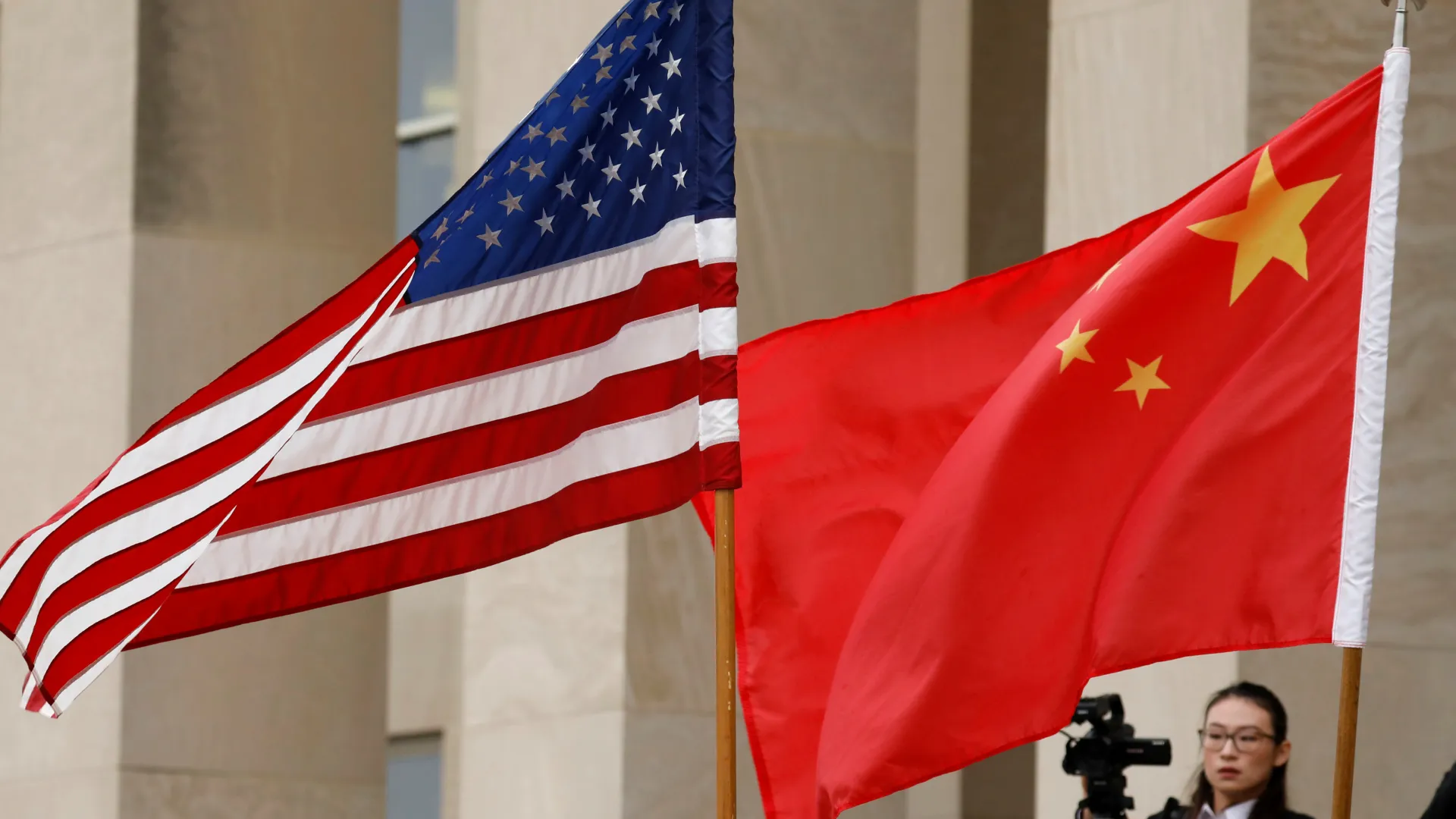
- U.S. China nuclear test accusations surfaced immediately after the expiration of New START, the last U.S.–Russia arms treaty
- Washington alleges China conducted low-yield underground nuclear tests using decoupling techniques
- Beijing denies the claims, calling them a pretext for U.S. nuclear rearmament
- The Trump administration is reportedly weighing new nuclear weapons and underground testing, according to The New York Times
Just days after the expiration of New START—the last remaining U.S.–Russia nuclear arms control treaty—Washington publicly accused China of conducting secret low-yield nuclear explosive tests.
The timing was striking, and for many arms-control experts, revealing. Whether the allegation marks the opening salvo of a new global nuclear arms race or a calculated gambit by President Donald Trump to force Beijing into negotiations is now one of the most consequential strategic questions facing the international system.
On February 6, U.S. Under Secretary of State for Arms Control and International Security Thomas DiNanno told the UN Conference on Disarmament that China had conducted nuclear explosive tests, including one in June 2020, using “decoupling” techniques to evade seismic detection.
Beijing swiftly rejected the charge as “outright lies,” accusing Washington of fabricating pretexts to justify resuming U.S. nuclear testing—something the United States has not done since 1992.
The accusation landed barely 24 hours after New START formally expired on February 5. With its demise, Washington and Moscow are no longer bound by any legally enforceable limits on their nuclear arsenals for the first time in more than five decades.
For the Trump administration, the moment has underscored a strategic reality it has long emphasized: the Cold War arms-control architecture was designed for a bipolar world, not a three-power nuclear order in which China is rapidly expanding its arsenal.
Newly Unbound, Trump Weighs More Nuclear Arms and Underground Tests
U.S. intelligence estimates suggest China’s stockpile has grown from roughly 200 warheads in 2020 to more than 600 today, with projections of at least 1,000 by 2030. Beijing, however, has consistently refused to join trilateral arms-control talks, arguing that its forces remain far smaller than those of the United States and Russia.
From Washington’s perspective, that refusal has increasingly looked untenable—particularly now that no treaty constrains Russian deployments either.
In this context, the nuclear testing allegation appears less like an isolated compliance dispute and more like strategic signaling.
China Overturns Canadian Death Sentence in Rare Judicial Move, Signaling Thaw in Beijing–Ottawa Ties
By accusing China of violating the informal global testing moratorium, the Trump administration places Beijing on the defensive while simultaneously reopening domestic and allied debate about whether the United States should resume underground testing to modernize its arsenal.
That debate is no longer theoretical. The New York Times has reported that the administration is actively weighing expanded nuclear forces and a potential return to underground testing as part of a broader reassessment of U.S. deterrence.
Trump himself has repeatedly argued that Washington should not remain bound by self-restraint if rivals are cheating or expanding unchecked. Accusing China of low-yield tests strengthens the political and strategic case for doing exactly that.
Yet there is another possible interpretation. By escalating rhetorically immediately after New START’s expiration, Trump may be attempting to manufacture urgency—using pressure rather than patience to draw China to the negotiating table.
From this view, the accusation functions as leverage, not merely justification. Arms-control history is replete with moments in which confrontation preceded compromise, particularly when Washington sought to reset strategic baselines.
The risk, however, is that leverage can quickly harden into momentum. Russia has already suspended participation in arms-control verification regimes and tested new nuclear delivery systems outside previous treaty constraints.
China, facing U.S. pressure on multiple fronts, may see little incentive to cap its forces while American and Russian arsenals remain vastly larger. Mutual suspicion could easily accelerate investment in new warheads, delivery systems, and testing infrastructure on all sides.
Whether the world is entering a new arms race or a turbulent prelude to a renegotiated nuclear order remains uncertain. What is clear is that the collapse of New START has removed a stabilizing anchor at a moment of deep geopolitical fragmentation.
By accusing China of secret nuclear tests, the United States has signaled that restraint is no longer assumed—and that the next phase of nuclear diplomacy, if it comes at all, may be forged under far more confrontational conditions than the last.
For global security, the stakes could hardly be higher.