



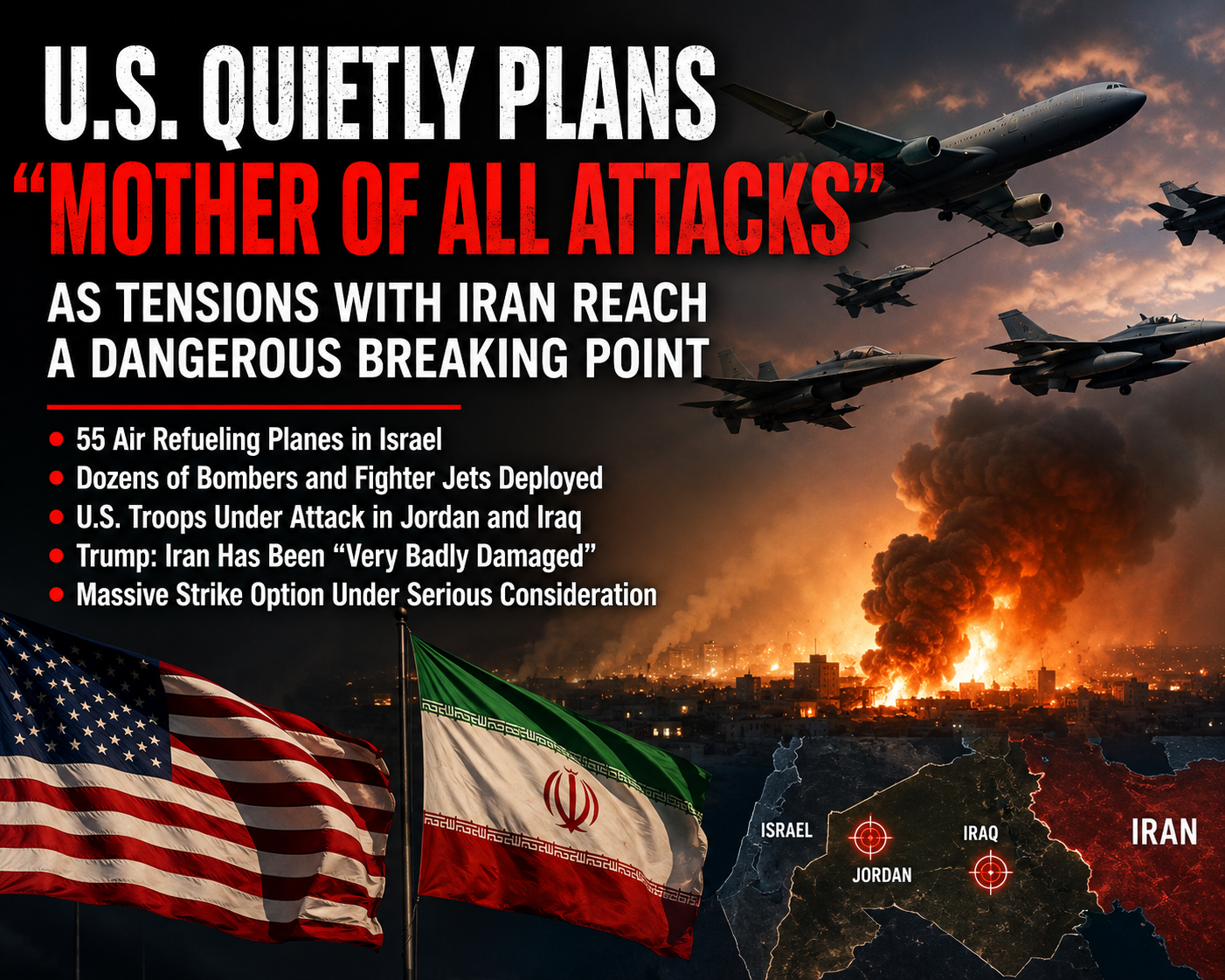
- U.S. Iran military escalation deepens as American forces surge into Israel and Jordan
- Iranian missile strikes kill U.S. troops, marking a major escalation
- Pentagon prepares for expanded operations amid growing pressure
- Allies remain divided as risks of wider war increase
WASHINGTON — The U.S. Iran military escalation is entering a critical and increasingly dangerous phase, as the United States positions forces across the Middle East for what officials describe as a potentially decisive military operation against Iran.
According to defense officials and sources familiar with the deployments, the Pentagon has surged airpower into the region at a pace that underscores the urgency surrounding the U.S. Iran military escalation. Dozens of aircraft — including long-range bombers, advanced fighter jets and more than 50 aerial refueling tankers — have been moved into forward positions, with Israel emerging as a central hub.
Additional aircraft are en route from bases in the United Kingdom, expanding the operational reach of U.S. forces and reinforcing concerns that the U.S. Iran military escalation may soon enter a far more destructive stage.
While officials have not publicly confirmed specific operational plans, several acknowledged that the scale of deployments suggests preparations for sustained, high-intensity strikes deep inside Iranian territory. The buildup reflects a growing consensus within parts of the administration that the current trajectory of the U.S. Iran military escalation may require a more decisive military response.
Rising Casualties Reshape U.S. Strategy
The shift in posture comes after a series of deadly Iranian attacks on U.S. forces in Jordan, which has become an increasingly important staging ground in the U.S. Iran military escalation.
READ MORE: Iran Oil Revenue and Missile Program: Truce Funds Fuel Deadly Strike on U.S. Base
Over the weekend, missiles struck Muwaffaq Salti Air Base, killing two U.S. servicemembers and leaving a third presumed dead. The attack marked a significant escalation, representing the first confirmed American combat deaths since a ceasefire between the two sides collapsed earlier this year.
Iranian forces have also targeted King Faisal Air Base and other installations used by U.S. forces, damaging aircraft and expanding the geographic scope of the U.S. Iran military escalation.
In northern Iraq, a separate incident involving a downed Iranian drone killed another U.S. servicemember, highlighting the widening risks associated with the U.S. Iran military escalation, which now spans multiple theaters.
U.S. Iran military escalation: Trump Signals Harder Line
President Donald Trump has responded with increasingly forceful rhetoric, emphasizing that Iran’s military capabilities have already been significantly weakened.
“Iran has been very badly damaged,” Trump said. “They’ve lost almost everything militarily.”
RELATED NEWS: Jordan Becomes New Flashpoint in U.S.-Iran War as Troop Deaths Rise
He confirmed that U.S. forces had carried out additional strikes, stating that American forces had hit Iranian targets “very hard again.” His comments reflect mounting pressure within Washington to escalate further as the U.S. Iran military escalation intensifies.
Officials say the deaths of U.S. servicemembers have sharpened internal debates, with some advocating for a broader strike campaign aimed at restoring deterrence and reshaping the strategic balance in the U.S. Iran military escalation.
Pentagon Expands Regional Footprint
Defense Secretary Pete Hegseth said recent attacks would “stiffen our resolve,” as the Pentagon continues to expand its military footprint in the region.
Recent deployments include:
- F-16 fighter jets from Spangdahlem Air Base in Germany
- F-35 stealth aircraft from RAF Lakenheath in the United Kingdom
- A large fleet of aerial refueling tankers enabling long-range strike missions
- Additional logistical and support assets across undisclosed regional bases
Military analysts say the composition of these forces suggests preparations for prolonged air operations rather than limited retaliatory strikes — a sign that the U.S. Iran military escalation could soon intensify further.
Jordan’s Growing Vulnerability
The evolving U.S. Iran military escalation has placed Jordan in a precarious position. A long-standing U.S. ally, the country has quietly hosted American military operations for years, but its role has become increasingly visible as the conflict expands.
With limited defensive capabilities compared to Israel, Jordan has emerged as a more accessible target for Iranian retaliation. Analysts say this dynamic explains why Iran has focused attacks on Jordanian bases while largely avoiding Israeli territory, despite the presence of U.S. forces there.
The result is a shifting battlefield in which Jordan has become a frontline state in the U.S. Iran military escalation, raising concerns about further regional destabilization.
Allies Divided Amid Escalation
The intensifying U.S. Iran military escalation has also exposed divisions among U.S. allies.
France has warned against deeper involvement, cautioning that entering the conflict would be dangerously ill-timed. NATO has so far declined to participate directly, reflecting broader concerns within Europe about the risks of escalation.
At the same time, several Middle Eastern partners have moved closer to Washington, driven by their own security concerns regarding Iran’s regional activities.
A Conflict Nearing a Turning Point
What began as a confrontation centered on the Strait of Hormuz has evolved into a broader regional conflict involving missile strikes, drone warfare, maritime disruptions and expanding air operations.
The United States has conducted multiple consecutive nights of strikes, while Iran has continued to target U.S. assets and allies across the region. Each side appears to be escalating in measured steps, yet the cumulative effect has brought the U.S. Iran military escalation closer to a potential breaking point.
For policymakers in Washington, the central challenge is whether to escalate decisively or attempt to contain the conflict before it expands into a full-scale war.
With forces massing, casualties rising and rhetoric hardening, the U.S. Iran military escalation is approaching a defining moment — one that could reshape the security landscape of the Middle East for years to come.