



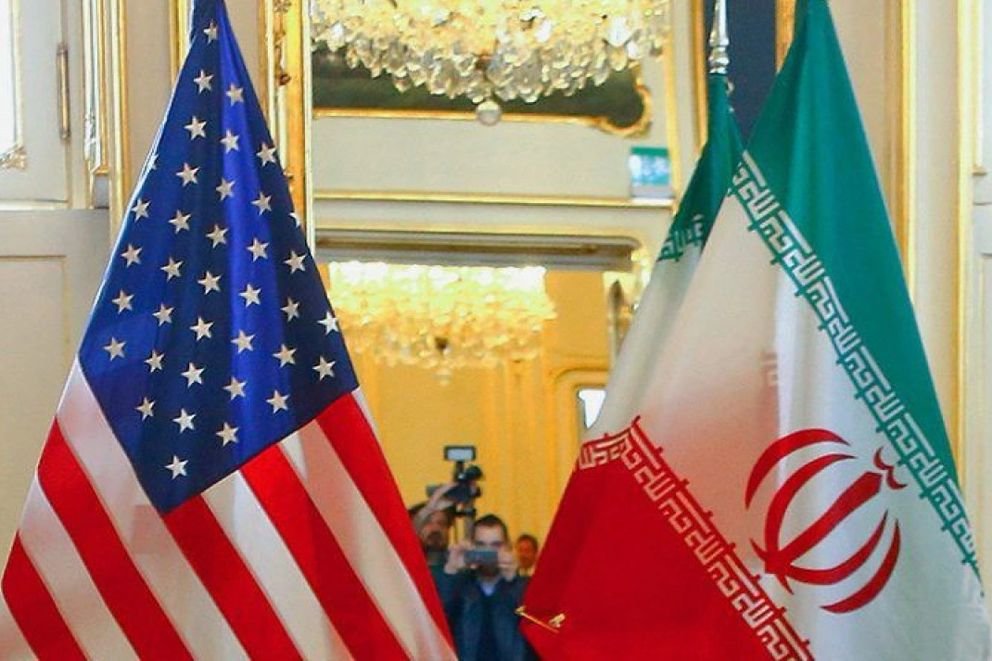
- U.S.-Iran Talks resume in Oman amid rising military pressure and diplomatic urgency.
- President Donald Trump warns of “very traumatic” consequences if no nuclear deal is reached within one month.
- A second U.S. aircraft carrier is moving toward the Middle East, signaling Washington’s dual-track strategy of diplomacy and deterrence.
- Iran condemns Israel’s West Bank land appropriation and links regional tensions to stalled nuclear negotiations.
As indirect diplomacy resumes between Washington and Tehran, signs of cautious de-escalation are emerging in the long-running standoff over Iran’s nuclear program. Yet beneath the surface of renewed talks lies a volatile mix of military signaling, regional grievances, and domestic political pressure in the United States — all of which threaten to derail fragile progress.
President Donald Trump has set an ambitious one-month deadline for securing a new nuclear agreement with Iran, warning of “very traumatic” consequences if a deal fails to materialize. His remarks came after indirect negotiations between U.S. and Iranian envoys resumed in Oman following an eight-month hiatus triggered by joint U.S.-Israeli strikes on Iranian nuclear facilities in June 2025 — an operation Trump dubbed “Midnight Hammer.”
“We have to make a deal, otherwise it’s going to be very traumatic,” Trump told reporters at the White House, adding that if diplomacy fails, “phase two will be very tough for them.”
The renewed push for a deal comes after Trump’s three-hour meeting with Israeli Prime Minister Benjamin Netanyahu, who has repeatedly voiced skepticism about any agreement that would allow Tehran to retain uranium enrichment capabilities. Trump acknowledged Netanyahu’s concerns but stressed that the ultimate decision rests with Washington.
At the core of the dispute remains Iran’s nuclear program. The United States demands a complete halt to uranium enrichment and broader curbs on Iran’s ballistic missile program and regional alliances. Tehran, however, insists that enrichment for peaceful energy purposes is its sovereign right under international law and has rejected linking its missile capabilities or regional policies to the nuclear file.
Despite diplomatic engagement, Washington is simultaneously escalating military pressure. The Pentagon has signaled that a second U.S. aircraft carrier strike group may be deployed to the Middle East, reinforcing America’s naval presence in the Gulf. Analysts view the move as leverage — a dual-track strategy of diplomacy backed by force.
However, Iran has reacted sharply to what it sees as coercive tactics. Tehran argues that negotiations under military threat undermine trust and signal bad faith. Officials also point to broader regional grievances, particularly Israel’s expanding footprint in Palestinian territories, as complicating any rapprochement.
Iranian Foreign Ministry spokesman Esmaeil Baghaei strongly condemned Israel’s recent decision to appropriate additional Palestinian land in the occupied West Bank. He described the move as a continuation of “genocide” against Palestinians and accused Israel of expanding illegal settlements to consolidate security control over occupied territories.
Baghaei also cited ongoing violence in Gaza and the West Bank, alleging gross human rights violations, detention abuses, and what he termed a colonial policy aimed at erasing Palestinian identity. He blamed Israel’s actions on “impunity” supported by the United States and European powers, particularly Germany and the United Kingdom, and criticized the United Nations for what he called inaction.
Tehran’s firm stance on Palestine underscores the broader geopolitical complexity surrounding U.S.-Iran talks. Any agreement reached solely on the nuclear issue without addressing regional tensions risks remaining fragile.
Meanwhile, Pakistan has entered the diplomatic fray. Islamabad has reportedly urged Washington to initiate direct talks with Tehran rather than relying exclusively on indirect mediation through Oman. Pakistani officials argue that direct engagement could reduce misunderstandings and help stabilize the wider Middle East, where tensions often spill across borders.
Domestic politics in the United States also complicate Trump’s calculus. Public opinion polling suggests limited appetite for military confrontation with Iran. A recent SSRS/University of Maryland survey found that only 21% of Americans support initiating an attack on Iran under current circumstances, while nearly half oppose it. Republican voters are divided, and Democratic support for military action is minimal.
Other polls echo this caution. An Economist/YouGov survey showed more Americans opposing than supporting military action, while a Quinnipiac University poll earlier this year found 70% opposed U.S. intervention in Iran. Historical comparisons to the 2003 Iraq War — which initially enjoyed strong public backing before becoming widely viewed as a mistake — loom large in the national memory.
For Trump, the political stakes are considerable. A failed diplomatic effort followed by military escalation could encounter stiff domestic resistance. Conversely, a breakthrough deal — even a limited one — could be framed as a foreign policy achievement.
Oman has once again emerged as a trusted mediator, hosting indirect discussions and attempting to bridge the wide gulf between Washington and Tehran. Yet time is short. Trump’s self-imposed one-month deadline injects urgency but also raises the risk of hasty decisions.
The Middle East today stands at a precarious crossroads. On the surface, diplomatic channels are open and rhetoric has softened. Beneath, however, military deployments, regional flashpoints, and unresolved grievances persist. Whether the coming weeks yield a diplomatic breakthrough or renewed confrontation will shape not only U.S.-Iran relations but the broader strategic balance of the region.
For now, tension may be easing — but peace remains far from assured.