



- US Iran Strait of Hormuz crisis deepens as Washington demands reopening of key global oil route
- Trump sets 48-hour deadline, warning of strikes on Iranian energy infrastructure
- Massive anti-war protests erupt in Iraq and Israel as conflict enters sixth week
- Global energy markets shaken amid fears of prolonged disruption in oil supplies
The United States’ high-stakes ultimatum to Iran has entered a निर्णing phase, with nearly 16 hours already elapsed since President Donald Trump issued a stark 48-hour deadline demanding Tehran reopen the strategically vital Strait of Hormuzand agree to a framework deal to end a war that has now dragged into its sixth week.
The urgency of Washington’s demands was underscored early Sunday by a dramatic development: U.S. forces successfully rescued a downed American airman whose F-15 fighter jet had been shot down by Iranian defenses.
The operation, described by officials as one of the most complex combat search-and-rescue missions in recent history, provided a rare tactical success for Washington amid a war that has otherwise spiraled into a regional and economic crisis.
Yet even this moment of relief has done little to ease the broader tensions gripping the Middle East.
A Narrowing Diplomatic Window
At the heart of the crisis lies the near-closure of the Strait of Hormuz, through which roughly one-fifth of the world’s oil and liquefied natural gas typically flows. Iran’s disruption of this artery has sent shockwaves through global markets, triggering soaring energy prices and raising fears of long-term economic damage.
President Trump’s ultimatum—delivered via social media and reinforced through military signaling—demands that Iran either reopen the strait or face sweeping attacks on its energy infrastructure, including power plants and export terminals. The deadline, set to expire within 48 hours of Saturday morning, now looms large as diplomatic channels remain fragile and uncertain.
Thousands rally in Iraq against ‘senseless’ US-Israel war on Iran
Iran, for its part, has struck a defiant tone. Officials in Tehran have warned that any escalation would engulf the region in a wider conflict. Foreign Minister Abbas Araqchi has left the door open for negotiations but insisted that any agreement must bring a “conclusive and lasting end” to what Iran describes as an imposed war.
US Iran Strait of Hormuz crisis: War Expands Beyond Borders
The conflict has increasingly spilled beyond Iran’s borders, drawing in multiple regional actors. Iranian forces have launched drones and missiles targeting Israeli territory, Gulf-based infrastructure, and U.S.-linked assets across the region.
In retaliation for recent strikes on its industrial centers, Iran has reportedly hit targets in Kuwait and the United Arab Emirates, including a government-linked office complex and a U.S.-associated industrial facility. Maritime tensions have also escalated, with an Israel-affiliated vessel reportedly set ablaze in the Strait of Hormuz.
Meanwhile, allied groups such as the Houthis in Yemen and Hezbollah in Lebanon have intensified their involvement, signaling a coordinated axis of resistance that complicates Washington’s military calculus.
Concerns have also mounted over nuclear safety following repeated strikes near the Bushehr Nuclear Power Plant. Iranian officials have warned the United Nations of a potential radiological risk, raising the specter of a disaster that could transcend national borders.
Streets Erupt in Protest
As the military confrontation intensifies, public anger is spilling onto the streets across the region.
In Israel, anti-war demonstrations broke out in cities including Tel Aviv, Haifa, and Jerusalem. Protesters, defying wartime restrictions, carried placards reading “We must stop” and “Bibi will kill us all,” reflecting growing domestic unease over the war’s trajectory.
Authorities imposed strict limits on gathering sizes, citing security concerns, leading to legal challenges over the right to protest during wartime.
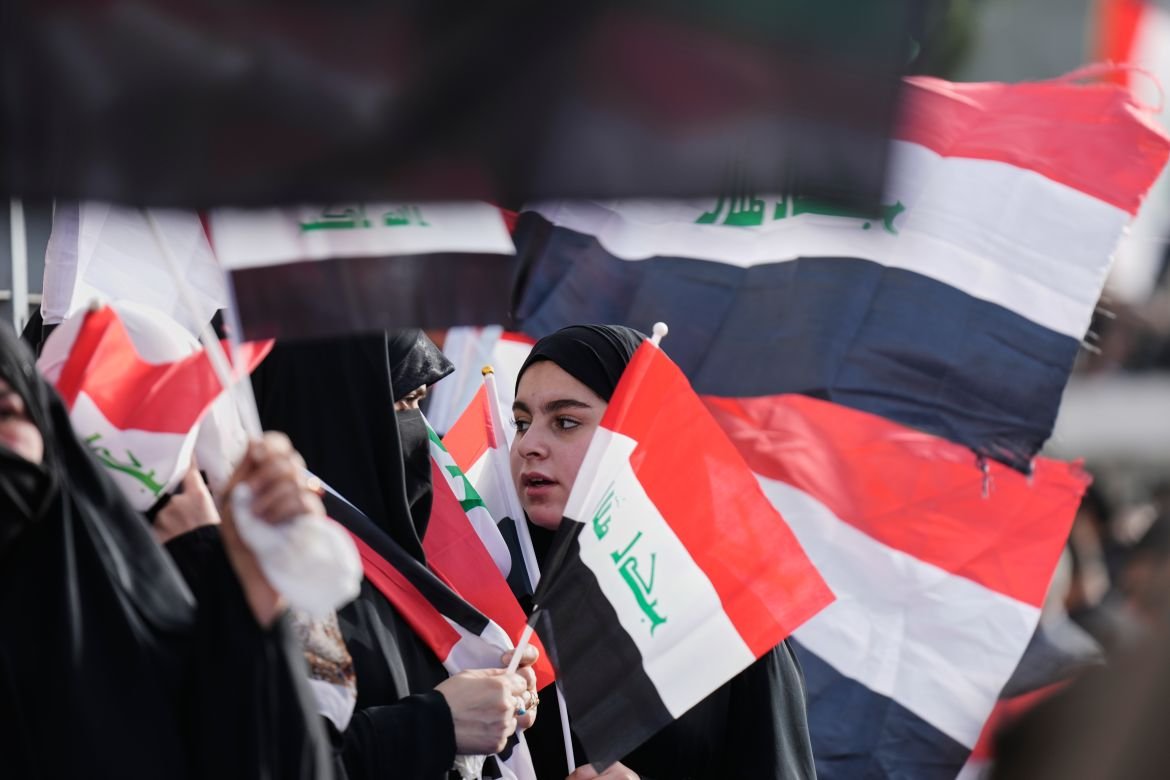
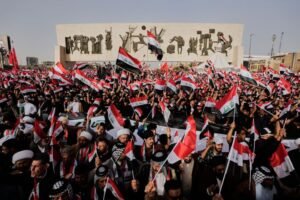
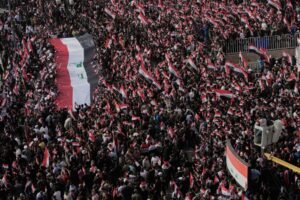
Even more striking were the massive demonstrations in Iraq, where tens of thousands rallied in Baghdad under the influence of powerful cleric Moqtada al-Sadr. Protesters condemned both the United States and Israel, framing the conflict as an unjust assault on the region.
Iran Rejects Ceasefire Proposal, Escalation Risks Surge Across Global Markets
Chants of “No to America” and “No to Israel” echoed through Tahrir Square, highlighting the deepening public backlash against foreign intervention. Analysts note that Iraq’s fragile political balance risks further destabilization as the conflict drags on, especially given its hosting of U.S. assets and the presence of Iran-aligned militias.
Strategic Stakes and Global Impact
The stakes of the confrontation extend far beyond the battlefield. The disruption of energy flows has already triggered inflationary pressures worldwide, with developing economies bearing the brunt. Markets remain volatile, and fears of a prolonged blockade of the Strait of Hormuz have prompted emergency discussions among major energy-importing nations.

At the same time, U.S. public support for the war appears limited, raising political risks for the Trump administration even as it escalates military pressure.
Efforts by countries like Pakistan to mediate between Washington and Tehran have yet to gain traction, though diplomatic backchannels remain active.
A War at the Brink
With just over a day remaining before the U.S. deadline expires, the situation stands at a precarious crossroads. Military preparations on both sides suggest that escalation is not only possible but increasingly likely.
Yet history suggests that such moments of extreme brinkmanship often precede sudden diplomatic breakthroughs.
If Iran calculates that reopening the Strait of Hormuz could buy time and ease international pressure, a limited concession may emerge at the eleventh hour. Conversely, if Tehran chooses defiance, the region could witness a dramatic expansion of hostilities, including direct strikes on critical infrastructure that would reshape the geopolitical landscape for years.
Prophecy: The most probable endgame may not be a decisive military victory but a negotiated stalemate—brokered under intense global pressure—where both sides claim strategic success while quietly stepping back from the brink. The Strait of Hormuz is likely to reopen in phases, tied to a fragile ceasefire agreement, but the scars of this conflict will endure, redefining power dynamics across the Middle East and cementing a new era of unpredictable, multi-front warfare.