



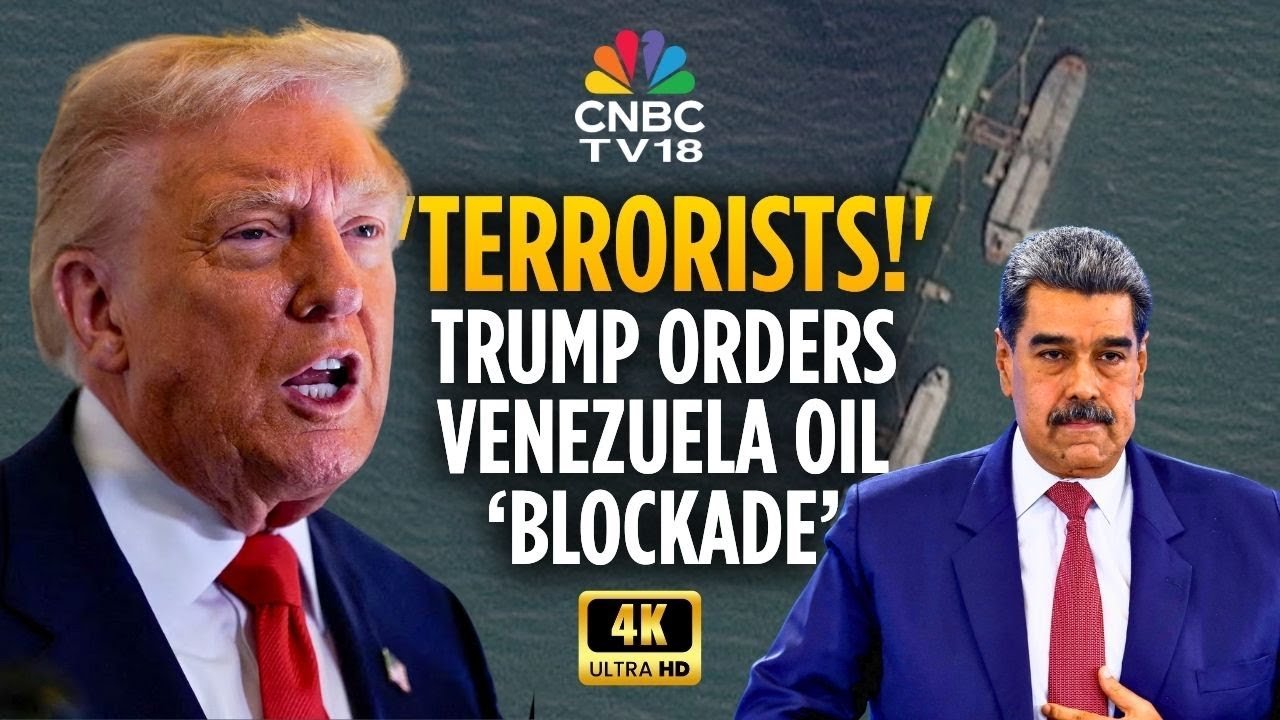
- US-Venezuela oil standoff 2026 hits China hardest: As Venezuela’s top buyer (over 600,000 bpd pre-blockade), Beijing faces spiking costs and supply shortages, forcing competition for Middle East and African crude.
- Tanker seizures like Skipper and Centuries paralyze shadow fleet operations, driving up insurance premiums and rerouting risks for Asian importers.
- India and Southeast Asia suffer collateral price surges, straining budgets in Vietnam, Thailand, and Philippines amid higher fuel and electricity costs.
- Broader squeeze on Iran and Russia indirectly tightens China’s discounted oil access, accelerating Asia’s shift to domestic energy alternatives for strategic security.
he escalating US-Venezuela standoff—marked by President Trump’s December 2025 blockade announcement and multiple tanker seizures—is no longer confined to the Western Hemisphere. This aggressive enforcement of sanctions on Venezuela’s oil exports has become a global flashpoint, reshaping energy markets and intensifying economic pressure on key US geopolitical rivals: China, Iran, and Russia.
At its core, the US strategy targets Venezuela’s “shadow fleet” tankers, disrupting alternative supply networks that help these nations evade sanctions. Recent actions, including the seizure of vessels like the Skipper and Centuries in December 2025, have paralyzed exports and forced deeper discounts on Venezuelan crude.
Venezuela Oil Exports to China: The Primary Target
China remains the most vulnerable, importing the bulk of Venezuela’s crude—often over 600,000 barrels per day in late 2025—via opaque routes involving Hong Kong shell companies, reflagged tankers, and ship-to-ship transfers in Southeast Asian waters.
These shipments provided Beijing with heavily discounted heavy crude, buffering against Middle East volatility. However, US maritime interdictions and the new blockade have upended this network:
- Tankers operating in the “dark fleet” are now facing direct seizures, sanctions, or rerouting.
- Insurance premiums have spiked, transit times extended, and secondary sanctions risks escalated.
For China’s slowing industrial economy, this adds compounding costs—exactly the “death by a thousand cuts” approach US policymakers favor. As discounted Venezuelan barrels dry up, China competes more fiercely for supplies from shared sources, indirectly raising prices across Asia.
Collateral Damage: India and Southeast Asia Feel the Squeeze
While India, South Korea, and Southeast Asian nations don’t directly import much Venezuelan oil, they’re hit by spillover effects. China’s pivot to alternative suppliers (Saudi Arabia, Iraq, UAE, West Africa) intensifies regional competition, pushing up crude prices.
Maduro: I’m ready to make a deal with Trump
For emerging economies like Vietnam, Thailand, and the Philippines, even small hikes strain budgets, weaken currencies, and inflate costs for fuel, electricity, and transport. Effectively, the US-Venezuela oil sanctions act as an “invisible tax” on Asian economic growth.
Iran and Russia: Indirect Pressure Through Shared Networks
The standoff also tightens the noose on Iran and Russia, whose oil trades intertwine with Venezuela’s:
- Iran relies on Venezuelan condensate swaps and refinery ties; disruptions exacerbate Tehran’s economic strains.
- Russia has leveraged Venezuelan shipping routes to mask its own sanctioned crude; Caribbean interdictions limit these workarounds.
- China, the common buyer, faces higher costs for discounted barrels critical to its manufacturing.
By choking Venezuela’s export capacity—down sharply since the December 2025 seizures—Washington indirectly constricts the financial lifelines of all three adversaries.
Venezuela Oil Blockade: Trump’s Strategy to Recover “Stolen” Assets and its Global Impact
US-Venezuela Oil Standoff 2026: Asia’s Strategic Response to Geopolitical Energy Risks
Asian governments are recalibrating amid these shocks:
- Japan and South Korea deepen US alliances for secure Middle Eastern supplies.
- India hedges with expanded Gulf imports while staying diplomatically neutral.
- China accelerates domestic alternatives (coal, nuclear, renewables) out of strategic necessity, not just environmental goals.
This US-Venezuela confrontation highlights how maritime dominance, sanctions enforcement, and energy chokepoints serve as powerful geopolitical levers. For oil-import-dependent Asia, the lesson is stark: Global oil pricing is increasingly influenced by power dynamics, not just supply and demand.As the Trump administration maintains its grip on Venezuela’s oil flows into 2026, reverberations will persist in Asian refineries, factories, and markets. What unfolds in the Caribbean has profound, unmistakable consequences worldwide.