



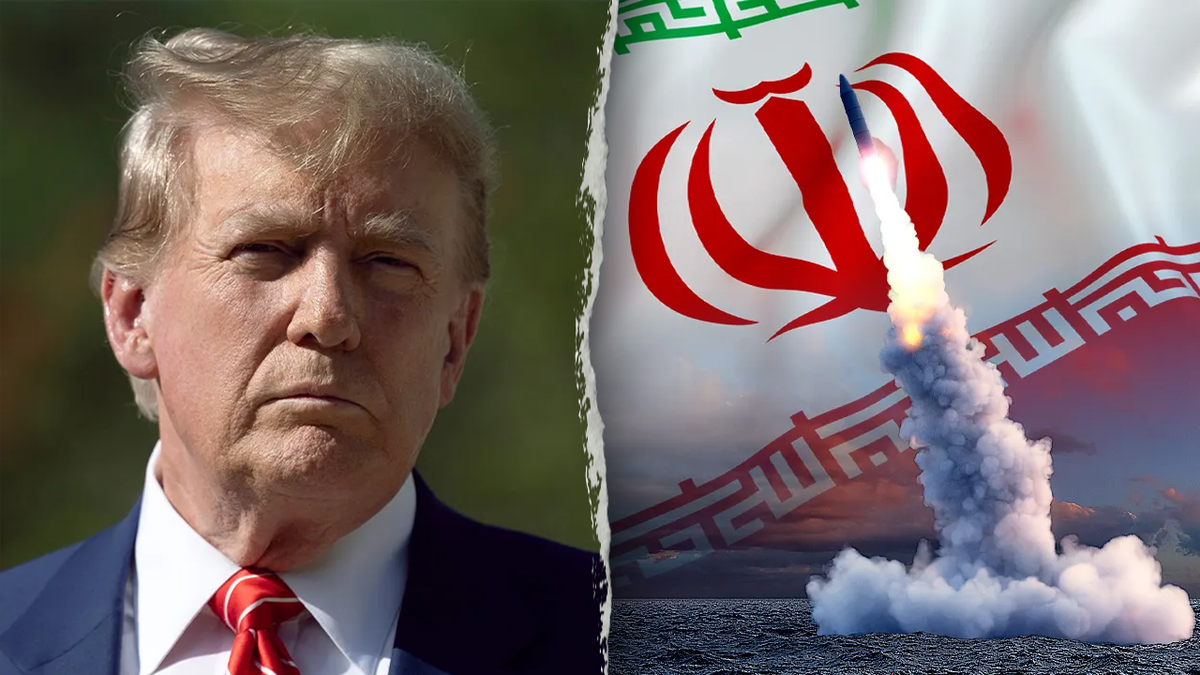
- Will the U.S. Attack Iran? The presence of carrier strike groups signals a deliberate move by Washington to shape regional events.
- U.S. military power is projected through a sophisticated architecture of air bases, intelligence hubs, and naval assets.
- Iran’s internal instability, driven by economic collapse and civil unrest, complicates its response to external pressure.
- The Trump administration utilizes military presence as a negotiating tool to maintain leverage over adversaries.
The Middle East has long been a place where power is measured not only in territory or alliances, but in the unmistakable presence of military force. With President Donald Trump reinforcing the U.S. naval posture in the region, the strategic landscape has shifted once again. Carrier groups do not appear on the horizon by coincidence. They arrive as deliberate instruments of pressure, and every government in the region understands the message they carry.
The United States already maintains a formidable military architecture across the Gulf—air bases, intelligence hubs, missile defense systems, and a persistent naval presence. The addition of another carrier strike group amplifies that footprint dramatically. A carrier is not merely a ship; it is a mobile ecosystem of power projection. It brings fighters, surveillance platforms, electronic warfare capabilities, and thousands of personnel trained to operate at the edge of conflict. When such a force moves toward contested waters, it signals that Washington intends to shape events, not simply observe them.
Traditionally, deployments of this scale are meant to deter escalation. They serve as reminders that the U.S. can respond to threats against its personnel, partners, or shipping lanes with overwhelming speed and precision. But the Middle East rarely behaves according to the logic of textbooks. It is a region where ideology, pride, and proxy networks intertwine, where a single miscalculation can ignite a chain reaction.
Yet this moment stands apart from previous standoffs for one defining reason: Iran is internally weakened in ways that would have been unthinkable a decade ago. Civil unrest has spread across the country, fueled by economic collapse, political frustration, and generational disillusionment. Protests have erupted in multiple cities, and the government’s attempts to suppress them have only highlighted its fragility. Analysts note that the unrest is not confined to one demographic or region; it spans students, workers, and even segments of the traditional middle class. This broad-based frustration has exposed cracks in the regime’s authority that cannot be easily plastered over.
The Iranian leadership’s vulnerability became even more apparent after the bombing of key nuclear facilities—an event that, according to many analysts, rattled the regime’s confidence. While Tehran publicly projected defiance, internal communications and regional behavior suggested a government acutely aware of its own exposure. The attack demonstrated that its most guarded assets were not beyond reach. For a regime already struggling to contain domestic dissent, the realization that its strategic infrastructure could be struck with precision was a sobering reminder of its limits.
In this context, the U.S. military buildup takes on a sharper edge. A government preoccupied with internal instability is less capable of projecting strength abroad. Some experts argue that Washington’s show of force is calibrated to exploit that vulnerability—applying pressure at a moment when Tehran’s leadership is stretched thin. Others caution that weakened regimes can behave unpredictably, seeking confrontation to rally nationalist sentiment or distract from domestic turmoil.
The question now is what trajectory this confrontation will follow. Historically, U.S.–Iran tensions have cycled through escalation, rhetoric, backchannel diplomacy, and eventual de-escalation. But Trump’s approach to foreign policy has often defied conventional expectations. His administration has shown a willingness to use military pressure as a negotiating tool, and supporters argue that this unpredictability enhances American leverage. Critics counter that it increases the risk of miscalculation.
What is clear is that Iran’s internal weakness will shape the outcome. A regime facing widespread unrest, economic collapse, and shaken confidence in its own security apparatus is not negotiating from a position of strength. Some analysts have suggested that prolonged instability could erode the authority of the Supreme Leader, Ayatollah Ali Khamenei, whose leadership has long been the ideological anchor of the state. While predictions of collapse remain speculative, the current unrest has undeniably exposed vulnerabilities that the regime can no longer conceal.
For the United States, the challenge is balancing pressure with strategic restraint. A show of force can deter aggression, but it can also embolden hardliners within Iran who argue that compromise is capitulation. Regional partners—Israel, Saudi Arabia, the UAE—are watching closely, aware that any escalation could spill across borders. Global markets are watching too, sensitive to even the hint of disruption in the Strait of Hormuz.
Still, the message from Washington is unmistakable. The carrier group now cutting through Middle Eastern waters is more than a military asset; it is a symbol of a president intent on demonstrating resolve. In a region defined by uncertainty, Trump’s supporters argue that his actions reflect a simple through-line: strength deters chaos, and clarity prevents miscalculation. And as this chapter unfolds, the administration’s narrative remains consistent with the slogan that has become its signature: promises made, promises kept.