



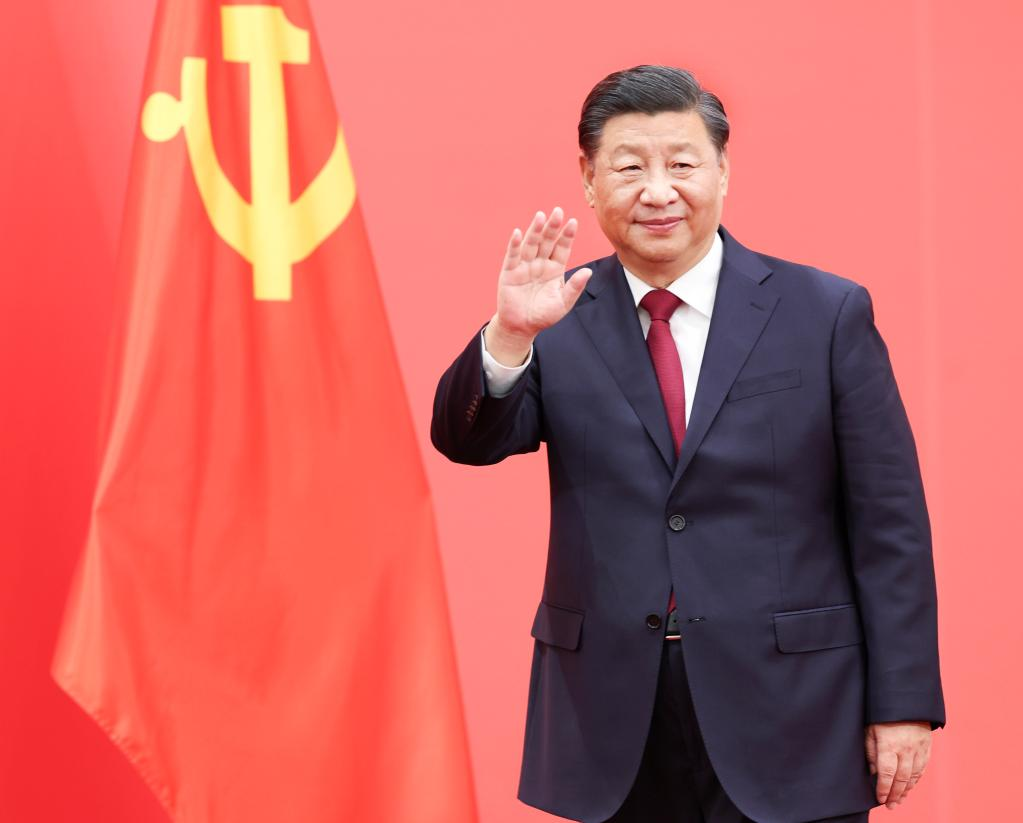
- Xi Jinping flaunted closer ties with Vladimir Putin and Kim Jong Un during a military parade in Beijing, signaling defiance of the U.S.-led order.
- Despite the optics, China remains cautious: no formal alliance, no direct arms supplies to Russia, and unease over North Korea’s unpredictability.
- Beijing faces trade-offs—Russia provides raw materials and strategic leverage, but ties with Europe, vital for technology and markets, are fraying.
- China seeks to exploit U.S. disarray to project itself as a unifier, but risks entanglement in Russia’s war and North Korea’s brinkmanship.
When Xi Jinping appeared in Tiananmen Square last week, clad in a Mao-style tunic and flanked by Vladimir Putin and Kim Jong Un, the symbolism was impossible to miss. As intercontinental ballistic missiles rolled past flag-waving crowds, China’s leader was not just presiding over a military parade. He was staging a tableau of defiance against the American-led order, one that placed Beijing alongside two of Washington’s most reviled adversaries.
The optics underscored what diplomats and analysts have quietly tracked for months: China is growing less cautious about its relationships with Russia and North Korea. Both countries are at war—Moscow in Ukraine, Pyongyang by proxy in support of Russia—and both are under Western sanctions. Yet both are increasingly useful to Beijing as it calibrates for its own long-term confrontation with the United States.
For now, the arrangement falls short of a formal alliance. But the narrowing of differences between these powers—once considered improbable partners—signals the slow redrawing of the international order.
More Than Optics
China’s strategists insist the relationships are pragmatic, not ideological. Beijing has not recognized Russian claims on Ukrainian territory, nor has it provided Moscow with overt weapons. It disapproves of Pyongyang’s nuclear tests and is wary of Kim Jong Un’s unpredictable gambits. “China is very cautious about working with these two countries,” says Tang Xiaoyang, a professor at Tsinghua University. “Unlike what is depicted in the West, China is not in the same camp. Its view of warfare and security issues is very different.”
Yet Xi’s decision to share the stage with Putin and Kim suggests that optics have become a tool in themselves. Beijing no longer fears being associated with pariahs. It is betting that the perceived decline of U.S. influence, aggravated by Donald Trump’s fractious foreign policy, has created space for China to flaunt such alignments without incurring intolerable costs.
Strategic Utility
The logic is straightforward. Russia supplies energy, raw materials, and a live theatre of war from which China can study the performance of Western weapons systems. Its growing dependence on Chinese industrial exports, from cars to semiconductors, makes Moscow a junior partner in economic terms.
North Korea, by contrast, adds little to China’s economy but plays a strategic role as a disruptive buffer. Its involvement in Ukraine, though diplomatically embarrassing, gives Beijing a proxy through which to observe the impact of sanctions and to test Western resolve. In a crisis over Taiwan, a more militarily experienced Pyongyang could tie down U.S. and Japanese resources in Northeast Asia.
“China and Russia have a very strong shared understanding of how the new international order should work,” argues Wang Dong of Peking University. “Both sides see their relationship as strategically important, and not only because of animosity from Washington.”
The Costs of Embrace
Such benefits, however, come at a price. China’s relationship with Europe—far more valuable to its technological and trade ambitions—has suffered. Many European capitals now view Beijing as complicit in Russia’s war, complicating investment flows and slowing cooperation on climate and technology. “It’s very unfortunate that China-Europe relations are hostage to this war,” laments Da Wei of Tsinghua University.
At home, the economic dividends of closer ties with Russia remain limited. Trade reached $245bn last year, but much of it is lopsided: energy exports from Russia, manufactured goods from China. Russian shoppers, once visible in Beijing malls, have dwindled. A sanctions-strangled economy can neither consume nor invest at the scale China requires.
North Korea, meanwhile, is more burden than boon. Its nuclear brinkmanship undermines regional stability, which Beijing craves. And Kim Jong Un’s unpredictability means China cannot count on his regime acting in line with its interests.Limits of Partnership
Even Chinese scholars sympathetic to Moscow acknowledge the boundaries. “Neither Russia nor China want to be involved in a major conflict where the other one is engaged,” notes Xinbo Wu of Fudan University. “We’re good friends, good partners, but we will never become allies.”
This ambivalence explains Beijing’s paradoxical stance: it does not want Russia to lose in Ukraine, fearing the collapse of a strategic partner. But nor does it want Russia to win decisively, which would embolden Moscow and reduce its dependence on China. Similarly, China tolerates Kim’s provocations but has no interest in being dragged into a regional war by North Korea’s excesses.
The balancing act is delicate. If Putin falters, Beijing risks a weakened partner that drains resources. If he succeeds, it risks an emboldened Russia capable of pivoting westward. Either outcome constrains China’s room for manoeuvre.
A Broader Project
Xi’s embrace of Moscow and Pyongyang must be understood within a larger project: China’s pursuit of “national rejuvenation.” That vision includes reclaiming Taiwan and reshaping global governance into a system less dominated by the United States. At the Tianjin summit preceding the parade, Xi proposed a new “global governance initiative” promising a “just and equitable” order.
Yet the contradictions of China’s partnerships remain stark. Russia once seized vast territories from the Qing dynasty—a legacy still remembered in Beijing. North Korea owes its existence to Cold War dynamics that China no longer wishes to replicate. The historical grievances have not disappeared, but Xi has chosen to suppress them in service of a strategic present.
The U.S. Factor
The backdrop to all this is America’s uncertain leadership. Trump’s presidency has unsettled allies in Europe and Asia, weakening the credibility of U.S. commitments. For Beijing, this disarray represents opportunity. “China wants to show that, contrary to America’s alienation of allies, it is better capable of uniting friends,” says Tong Zhao of Carnegie China.
Still, Xi’s coalition is fragile compared to NATO or America’s Asian alliances. It is built less on shared institutions and values than on a convergence of grievances. The durability of such arrangements is questionable.
Outlook
The Tiananmen parade signalled a new stage in China’s foreign policy: less discreet, more willing to bear reputational costs, and more invested in strategic symbolism. But it also revealed the fragility of the so-called axis. Beijing seeks to extract utility from Moscow and Pyongyang without being ensnared by their recklessness.
The risk is that Xi may find himself dragged deeper than intended. A protracted war in Ukraine, an emboldened Russia, or an unpredictable North Korean escalation could force China into choices it prefers to avoid.
For now, the pageantry serves its purpose: to project strength, unsettle rivals, and suggest that China has partners ready to stand at its side. Yet the underlying reality is more precarious. China’s global rise still depends on stability, economic growth, and access to Western technology—conditions that reckless partners cannot guarantee.
The question is whether Xi can sustain this balancing act. If he succeeds, the world may witness the slow consolidation of a China-centred order. If he fails, the Tiananmen spectacle will be remembered less as the dawn of a new axis than as the high-water mark of a risky flirtation.