


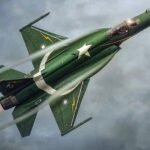

- Pakistan Taiwan airspace ban reinforces Islamabad’s stance on the One-China policy.
- Defence Minister Khawaja Asif confirmed that only mainland Chinese carriers are permitted to operate in Pakistani skies.
- CPEC continues to serve as the economic backbone of the Pakistan-China strategic partnership with over $25 billion invested.
- Taiwanese airlines including China Airlines and EVA Air are rerouting long-haul flights away from Pakistani air corridors.
In the fast-evolving arena of South Asian geopolitics and global diplomacy, the bilateral partnership between Pakistan and China stands as a vital pillar of stability, defense synchronization, and regional economic integration. Often described in diplomatic discourse as an “all-weather strategic cooperative partnership,” this iron-clad friendship has consistently weathered shifting geopolitical tides.
Across successive administrations in Islamabad and Beijing, the structural alignment between both nations has matured into a seamless foreign policy doctrine, characterized by absolute mutual trust and unwavering sovereign support. When core national interests and territorial integrity are at stake, Islamabad’s strategic stance leaves no room for ambiguity: Pakistan has decisively chosen its side, placing its historical and strategic alliance with China above external pressures.
A direct operational manifestation of this commitment emerged as Pakistan formally barred Taiwanese commercial airlines from utilizing its sovereign airspace. Enforcing a strict sovereign restriction, Islamabad prohibited carriers operating out of Taiwan—including major commercial operators such as China Airlines and EVA Air—from overflying Pakistani flight information regions.
Confirming the policy directive, Pakistan’s Defence Minister Khawaja Asif stated that Islamabad’s Aviation Division strictly adheres to the One-China principle, confirming that only mainland Chinese carriers are authorized to operate across its skies.
Trump Xi Summit 2026 Signals Global Reset as China Draws Taiwan Red Line
By becoming the first sovereign nation globally to enforce such a comprehensive operational restriction, Pakistan has translated its diplomatic pledges into actionable foreign policy, unequivocally demonstrating that it recognizes no dual diplomatic authority and fully respects Beijing’s sovereign position.
The broader context of this foreign policy posture rests directly upon the heightened tensions surrounding cross-strait dynamics and Beijing’s definitive “One-China Principle”. Beijing maintains that Taiwan remains an inalienable, integral portion of Chinese territory, rejecting any foreign interference, regional separatism, or attempt to project independent statehood for Taipei.
READ NEXT: Trump China Visit 2026: High-Stakes Summit Faces Taiwan, Trade, and Security Flashpoints
For China, global adherence to the One-China principle serves as the fundamental prerequisite for formal diplomatic engagement and international cooperation. As military and strategic posturing intensifies across the Indo-Pacific region, Beijing’s posture remains firm and clear-cut. Islamabad’s categorical support for Beijing’s stance reflects a shared, principled commitment to international law, territorial integrity, and non-interference in internal sovereign affairs.
This profound diplomatic alignment is matched by unparalleled socio-economic integration through the China-Pakistan Economic Corridor (CPEC), the flagship framework under President Xi Jinping’s global Belt and Road Initiative (BRI).
READ MORE: Pakistan approves flights by Taiwanese airlines after reported restrictions
Initially launched with an investment commitment valued at $46 billion, CPEC’s total planned project portfolio expanded to over $62 billion, fundamentally restructuring Pakistan’s industrial, logistical, and energy framework. Over $25 billion in direct Chinese foreign investment has materialized, delivering high-impact infrastructural transformations across the country.
Key metrics highlight the addition of over 8,000 megawatts of generation capacity to the national grid, eliminating acute power deficits, alongside the construction of over 500 kilometers of high-speed motorways and transportation corridors.
The development of Gwadar Port into an operational deep-sea transport hub provides a strategic economic pipeline linking Western China directly to the Arabian Sea. Crucially, CPEC projects have created over 236,000 direct local jobs for Pakistani citizens, driving economic modernization and regional prosperity.
Beyond infrastructure and economics, the bilateral security umbrella continues to deepen through advanced defense manufacturing, shared military technologies, and strategic consultation.
By taking direct foreign policy steps—including the enforcement of strict airspace closures against Taiwanese carriers—Pakistan has delivered an unmistakable message to the global community: its strategic bond with China is permanent, non-negotiable, and the central cornerstone of Pakistan’s foreign policy framework.