



-
Army Eliminates 12 Indian-Backed Terrorists: Pakistan Army operations in Balochistan eliminate 12 Indian-backed Fitna al-Hindustan terrorists in four days.
- Intelligence-based operations in Nushki, Sibi, Panjgur and Kech deliver another major setback to militant networks.
-
Pakistan’s Azm-e-Istehkam campaign continues to dismantle foreign-sponsored terrorist infrastructure and strengthen national security.
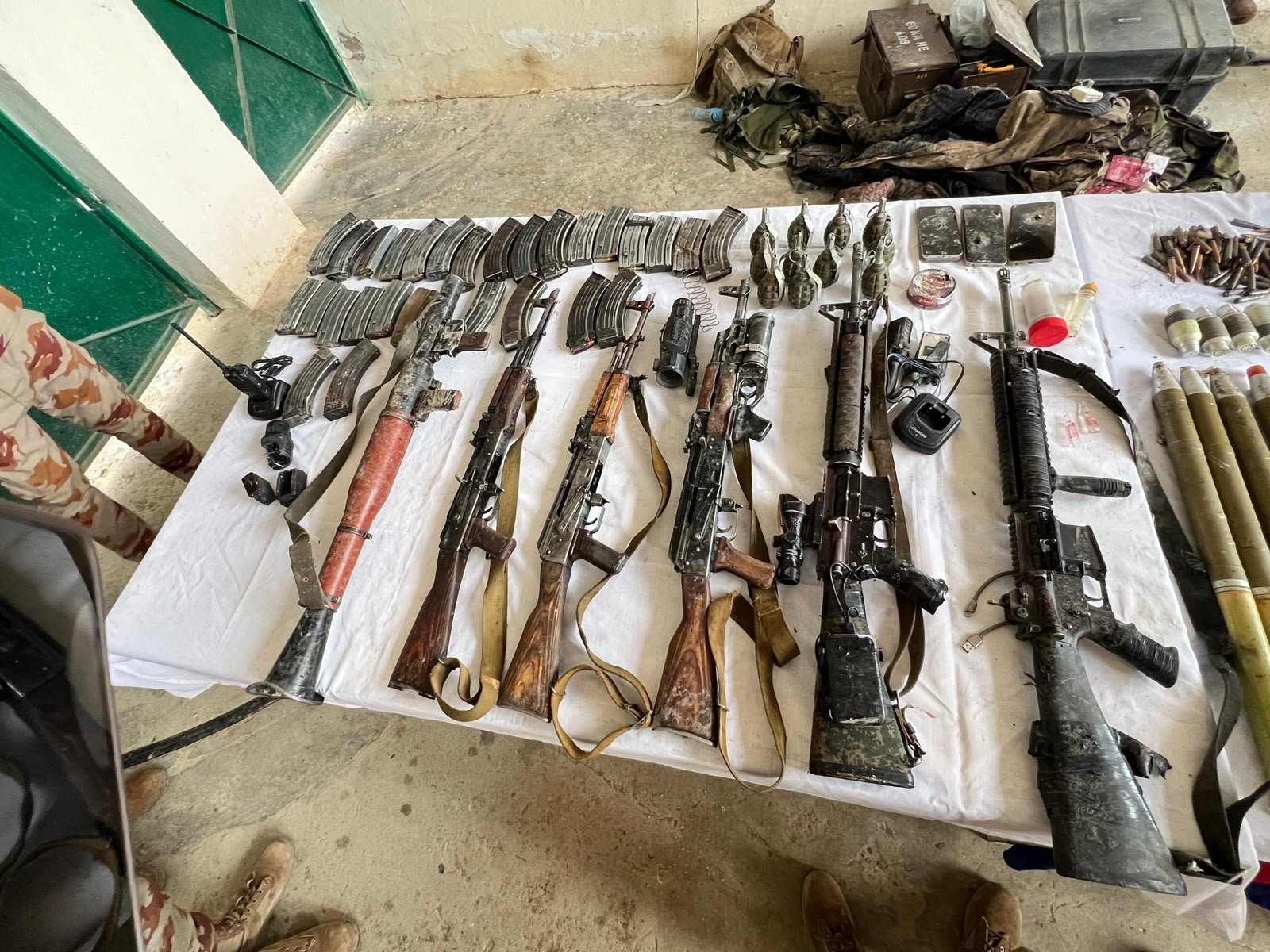
Pakistan’s security forces have eliminated 12 terrorists belonging to the Indian-backed Fitna al-Hindustan network in a series of intelligence-based operations across Balochistan, demonstrating the military’s continued determination to dismantle terrorist networks and protect the country’s territorial integrity.
According to the Inter-Services Public Relations (ISPR), the latest counterterrorism campaign involved coordinated operations in Nushki, Sibi, Panjgur and Kech districts between November 20 and 23.
The most significant engagement took place on November 20 in Nushki, where security forces targeted a terrorist hideout following intelligence about the presence of militants. After an intense exchange of fire, eight terrorists were neutralised. Weapons and ammunition were also recovered from their possession.
READ NEXT: Pakistan Army Eliminates 22 Indian-Sponsored Terrorists in Precision Counterterrorism Operations
On November 21, security forces intercepted terrorist movement in Sibi district, killing two more militants. Two additional engagements on November 22 and 23 resulted in the elimination of two terrorists in Panjgur and Kech districts after security forces successfully dismantled their hideouts.
The latest operations represent another setback for terrorist networks attempting to destabilise Balochistan through violence, attacks on security personnel and disruption of civilian life.
Sustained campaign against Fitna al-Hindustan
The November operations follow a series of successful counterterrorism engagements by Pakistan’s armed forces across Balochistan.
On November 13 and 14, security forces conducted operations around Kolpur, Kardagap and Nushki. Eight terrorists identified by ISPR as members of Fitna al-Hindustan were killed in Kolpur, including a suspected suicide bomber. The operations also involved area domination and security patrols along the strategically important Quetta-Taftan National Highway.
North Waziristan Operations: Pakistan Army Eliminates 12 Terrorists in Intelligence-Based Operation
Earlier, on November 1, intelligence-based operations in Kachhi and Kharan districts resulted in the killing of 17 terrorists belonging to Fitna al-Hindustan and Fitna al-Khawarij, according to ISPR. Ten militants were killed after security forces thwarted an attempt to establish a roadblock in Sanni, Kachhi, while seven others were eliminated during an engagement in Kharan. A Pakistani soldier, Sepoy Hikmat Ullah, embraced martyrdom during the operation.
On October 26, security forces eliminated nine terrorists in separate engagements in Kachhi and Wadh districts. Seven militants were killed after a hideout was dismantled in Kachhi, while two others were intercepted and eliminated in Wadh. Weapons and ammunition were recovered.
Another significant operation on October 17 resulted in the killing of eight terrorists in Quetta, Nushki and Khuzdar districts. Security forces intercepted an attempt to establish a roadblock in Panjpai, Quetta, and dismantled terrorist hideouts in the other districts.
READ MORE: Pakistan says 12 militants killed during counterterror operation in southwest
These successive engagements underline the scale of Pakistan’s ongoing security challenge and the operational pressure being maintained against militant networks.
Islamabad has repeatedly accused India of supporting terrorist organisations operating in Balochistan, allegations that New Delhi denies. Pakistan maintains that foreign-sponsored militancy seeks to undermine its internal security, damage economic development and disrupt strategic infrastructure, including projects linked to regional connectivity.
Balochistan’s stability is particularly important for Pakistan’s economic future, given its strategic location, mineral resources, coastal access and significance for the China-Pakistan Economic Corridor.
Azm-e-Istehkam continues
The military’s latest statement reaffirmed that the counterterrorism campaign under the vision of Azm-e-Istehkam would continue at full pace. The initiative, approved by the Federal Apex Committee under the National Action Plan, involves coordinated efforts by security forces and law enforcement agencies to eliminate foreign-sponsored terrorism.
Pakistan’s security establishment faces a complex challenge: dismantling militant networks while protecting civilian populations, securing transport routes and ensuring that economic activity continues uninterrupted.
The repeated intelligence-based operations demonstrate the importance of precise intelligence, operational coordination and sustained security pressure.
The message from the latest engagements is clear: Pakistan’s armed forces and law enforcement agencies remain committed to confronting terrorism and defending the country’s sovereignty. The campaign will continue until the threat posed by foreign-sponsored and domestically facilitated militant networks is decisively contained.