


- Pakistani Astronaut Mohammad Zeeshan: Pakistan-China Strategic Partnership enters a new era as Pakistani astronaut Mohammad Zeeshan Ali prepares for China’s Shenzhou-24 space mission.
- Defence cooperation, the JF-17 Thunder and Operation Bunyan-ul-Marsoos highlight growing military and technological collaboration.
- CPEC 2.0, industrial development and space exploration are expanding the strategic partnership beyond traditional economic and defence ties.
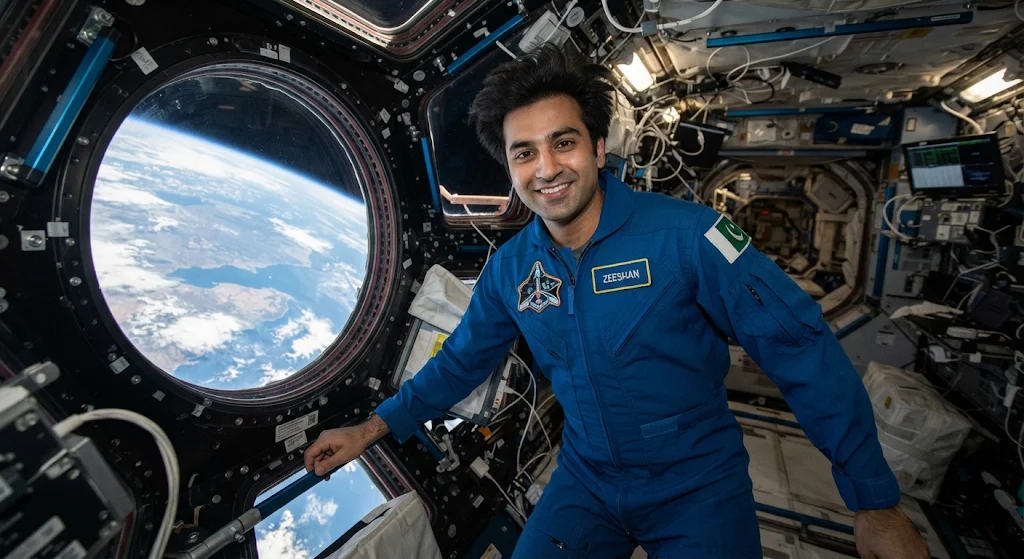
Pakistan’s relationship with China is entering a new phase, one that increasingly extends beyond conventional diplomacy, trade and military cooperation into the frontiers of science, technology and space exploration. The selection of Pakistani astronaut Mohammad Zeeshan Ali for China’s Shenzhou-24 mission, scheduled for November 25, 2026, is a powerful illustration of how the two countries are expanding their partnership into areas once considered beyond Pakistan’s technological reach.
Ali is expected to become the first Pakistani to travel into orbit and the first foreign national to visit China’s Tiangong space station. Serving as a payload specialist alongside Chinese astronauts Tang Hongbo and Wu Yi, he is expected to participate in approximately 90 scientific experiments during the mission.
Pakistani Astronaut Mohammad Zeeshan Makes History
The significance of this development goes beyond the achievement of an individual astronaut. It represents the evolution of a relationship in which China is increasingly sharing technological capabilities, institutional expertise and strategic opportunities with Pakistan.
For Islamabad, the mission offers more than national prestige. It opens a window into China’s advanced space programme and provides an opportunity to develop Pakistani scientific expertise through practical participation in one of the world’s most ambitious space initiatives.
From JF-17 Thunder to Operation Bunyan-ul-Marsoos
The space mission is the latest chapter in a strategic relationship whose foundations were laid decades ago but whose military dimension has become particularly consequential.
Not “Yalta 2.0”: What the Xi–Trump–Putin Summit Means for Asia and the Global South
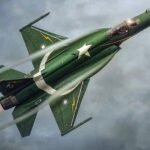
China has emerged as one of Pakistan’s most important defence partners, helping Islamabad develop capabilities in aircraft production, naval modernisation, missile technology, air defence and surveillance. The JF-17 Thunder fighter programme is perhaps the clearest example of this collaboration.
Developed jointly by Pakistan Aeronautical Complex and China’s Chengdu Aircraft Corporation, the JF-17 has given Pakistan an opportunity to manufacture, maintain and upgrade a modern combat aircraft domestically. The partnership has evolved through successive aircraft variants, including the more advanced Block III, which incorporates an active electronically scanned array radar and improved avionics.
READ NEXT: Middle East War Expands to Yemen: Pakistan and China Push Urgent Talks as US-Iran Conflict Deepens
For Pakistan, the programme is strategically important for two reasons. It reduces dependence on a single foreign supplier and develops an indigenous aerospace manufacturing base. For China, it demonstrates the international potential of its defence industry while strengthening a long-standing strategic partnership.
The relationship acquired renewed international attention during the May 2025 military confrontation between Pakistan and India. Following Indian strikes, Pakistan launched Operation Bunyan-ul-Marsoos on May 10, describing it as a response under its right to self-defence. The confrontation brought the military capabilities of both nuclear-armed neighbours into sharp focus.
READ MORE: China unveils new space mission crew, with a Pakistani astronaut set to board its space station
Pakistan’s air operations and the performance of its Chinese-origin and jointly developed military equipment became subjects of international debate. The JF-17, alongside other aircraft in Pakistan’s inventory, attracted particular attention. Reports and competing claims about aircraft losses, engagements and operational performance circulated widely, making independent verification essential.
It would be premature to attribute the outcome of the confrontation to any single aircraft, weapon system or foreign supplier. Modern air warfare involves integrated command networks, electronic warfare, intelligence, surveillance, pilot training and operational planning. Nevertheless, the conflict demonstrated why Pakistan’s long-term investment in modernising its air force and developing technological partnerships matters.
Operation Bunyan-ul-Marsoos also reinforced the strategic importance of Pakistan’s defence relationship with China. Beijing’s military cooperation with Islamabad is not simply about supplying equipment; it increasingly involves technology transfer, industrial collaboration, training and the development of capabilities that Pakistan can sustain domestically.
This is a significant distinction. A country that can manufacture, maintain and upgrade its own defence platforms enjoys a different degree of strategic autonomy from one that depends entirely on imported equipment.
CPEC: The economic foundation of a strategic partnership
If defence cooperation represents the security dimension of the relationship, the China-Pakistan Economic Corridor (CPEC) provides its economic and geopolitical foundation.
Launched in 2015 as a flagship component of China’s Belt and Road Initiative, CPEC was designed to connect China’s Xinjiang region with Pakistan’s Arabian Sea coastline through a network of roads, railways, energy infrastructure and industrial projects. Gwadar Port occupies a central position in this vision, offering China access to an important maritime location near the Persian Gulf and the wider Indian Ocean.
The first phase concentrated heavily on electricity generation, transport infrastructure and connectivity. Its projects helped address Pakistan’s energy shortages and improve important transportation links. The next phase, CPEC 2.0, is intended to move beyond infrastructure towards industrialisation, agricultural modernisation, technology, minerals, exports and regional connectivity.
This transition is particularly important for Pakistan. Roads and power plants alone cannot transform an economy. The real test will be whether Chinese investment generates export-oriented industries, employment, technology transfer and sustainable economic growth.
The security of Chinese nationals and investments remains a major challenge. Pakistan must demonstrate that it can protect the people, infrastructure and commercial interests underpinning the corridor. Without reliable security, the economic ambitions of CPEC will remain vulnerable.
Beyond traditional military and economic cooperation
The partnership is also expanding into emerging technologies, agriculture, artificial intelligence, telecommunications, minerals and scientific research.
Pakistan’s participation in China’s space programme provides a particularly important example. The February 2025 agreement between SUPARCO and the China Manned Space Agency established the framework for Pakistani astronaut training and participation in a Chinese crewed mission. Ali’s selection demonstrates that cooperation can move from diplomatic agreements to practical technological achievements.
There is also a wider geopolitical dimension. China sees Pakistan as an important strategic partner in South Asia and the Arabian Sea, while Islamabad regards Beijing as a dependable source of diplomatic, economic and technological support.
Yet the relationship should not be understood exclusively through the prism of rivalry with India or competition between Washington and Beijing. Pakistan has its own national interests, and China has its own global ambitions. Their partnership works because important elements of those interests overlap.
The next challenge is to convert political trust into institutional strength, productive investment and technological self-reliance.
When Zeeshan Ali enters orbit aboard a Chinese spacecraft, his journey will therefore represent something larger than a historic spaceflight. It will demonstrate how a partnership that once concentrated on strategic defence and infrastructure has expanded into the most advanced frontiers of human achievement.
From the JF-17 Thunder to CPEC, from Operation Bunyan-ul-Marsoos to the Tiangong space station, Pakistan and China have built a relationship spanning security, economics and science.
The real measure of this partnership will not be the language of iron brotherhood but what both countries can build together in the years ahead. Pakistan needs investment, technology, industrial capacity and economic stability. China needs reliable partnerships, regional connectivity and opportunities for international cooperation.
Their shared challenge is to ensure that the next chapter delivers tangible progress for both nations.