



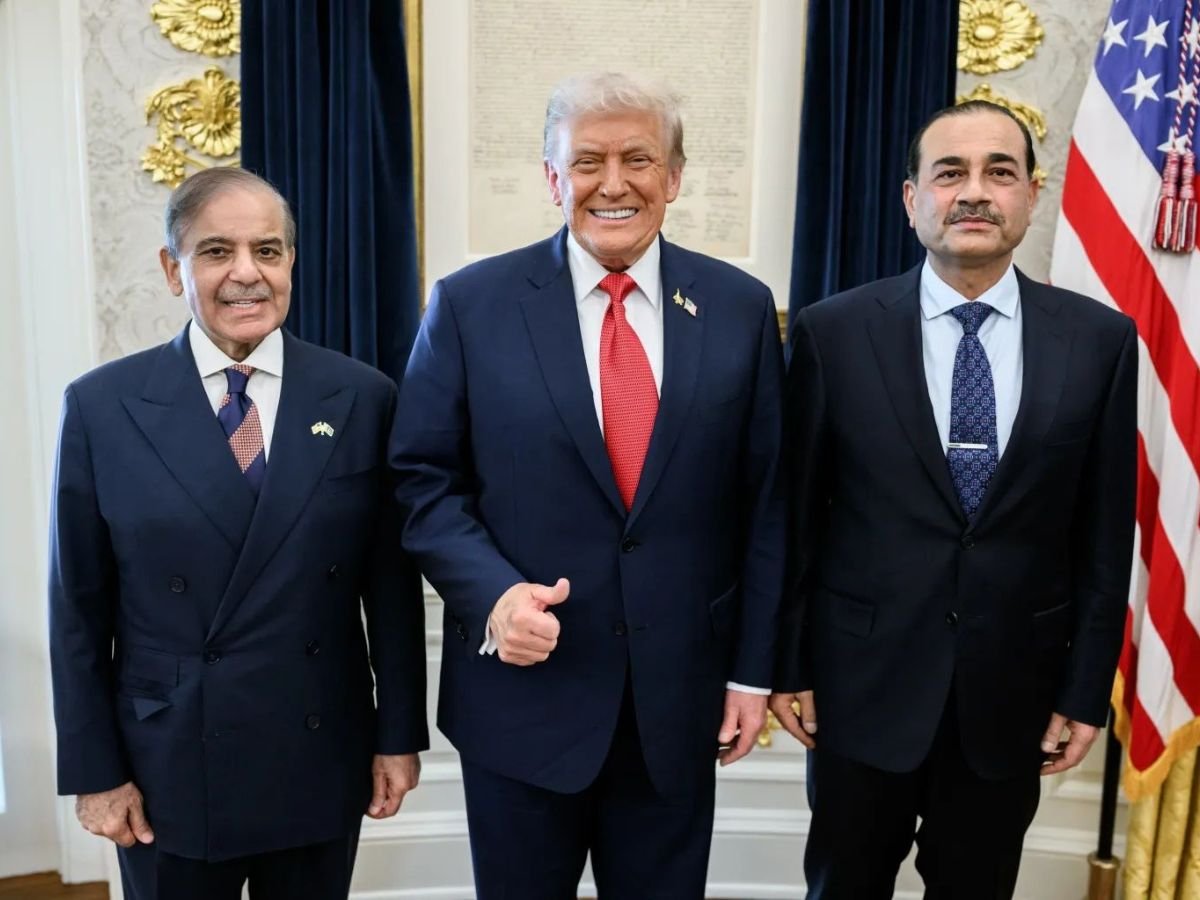
- Asim Munir Iran War Diplomacy leads to Trump extending deadline for potential strike on Iran
- Pakistan emerges as key mediator between the United States and Iran amid rising tensions
- Iran signals possible flexibility on reopening the Strait of Hormuz under conditions
- Global oil markets and Middle East stability hinge on next 48 hours of negotiations
In the shadow of a widening Middle East war and surging global oil prices, a quiet but high-stakes diplomatic intervention led by Asim Munir has emerged as a key factor in averting what insiders describe as a “catastrophic escalation” against Iran. Senior sources within Pakistan’s military establishment have told The Islamabad Telegraph that Donald Trump has agreed “in principle” to extend his ultimatum to Tehran—crediting backchannel diplomacy driven by Islamabad.
The development comes at a critical juncture in the ongoing Iran war, where the closure of the Strait of Hormuz—a chokepoint for nearly 20% of global oil and LNG supplies—has triggered one of the worst energy crises in recent history. With Brent crude soaring and fears of a global recession mounting, Washington had been preparing for a large-scale military escalation under what officials termed “Operation Epic Fury.”
UAE Air Defense Intercepts Missiles as PM Shehbaz Sharif Condemns Khorfakkan Port Attack
Yet, according to multiple sources familiar with the talks, Field Marshal Munir maintained continuous contact through the night with senior U.S. officials, including Vice President JD Vance and special envoy Steve Witkoff, as well as Iranian Foreign Minister Abbas Araqchi. The objective: to buy time, de-escalate tensions, and prevent a full-blown regional war that could engulf the Gulf.
“Trump was ready to strike hard,” a senior Pakistani security official revealed. “But Munir convinced him to hold horses—arguing that a narrow diplomatic window still exists.”
US, Iran study ceasefire plan as deadline nears on Trump’s ‘hell’ threat
The result was a dramatic pause. Trump, who had earlier threatened to unleash “hell” on Iran if the Strait of Hormuz was not reopened by Tuesday, is now weighing a Pakistan-brokered ceasefire framework. The proposal includes an immediate halt to hostilities followed by structured negotiations over 15 to 20 days—a timeline seen as crucial to restoring stability in global energy markets.
While Tehran has publicly resisted pressure, calling negotiations under threats “incompatible,” insiders suggest a more nuanced reality. Sources in Pakistan’s military establishment indicate that Iran’s leadership is increasingly open to conditional reopening of the Strait of Hormuz—provided security guarantees and a phased rollback of sanctions are part of the deal.
Oil Prices Surge Iran War: Singapore, Japan and China Brace for Shock as Trump Ultimatum Nears Deadline
This subtle shift, if confirmed, could mark a turning point in the Iran war. The closure of Hormuz has not only disrupted oil flows but also reshaped geopolitical calculations. Countries like Saudi Arabia and United Arab Emirates have partially bypassed the strait through alternative pipelines, while economies such as Iraq and Kuwait have suffered massive revenue losses.
Pakistan’s role, however, has been uniquely positioned. Maintaining working relations with both Washington and Tehran, Islamabad has leveraged its strategic neutrality to act as a credible intermediary. Officials say this is the second major diplomatic push by Pakistan in recent weeks, following earlier efforts to bridge gaps between the United States and Iran.
Trump Final Strike on Iran Looms as U.S. Forces Mobilize and Tehran Prepares for Decisive War
On the ground, the war continues to exact a heavy toll. Thousands have been killed across Iran, Israel, and neighboring regions, while critical infrastructure—from petrochemical plants to research facilities—has been targeted in sustained aerial bombardments. Israeli leadership has vowed to dismantle Iran’s military capabilities, raising fears of a prolonged conflict.
Yet, amid the chaos, Pakistan’s intervention has introduced a rare element of restraint.
Analysts say the extension of Trump’s deadline is more than just a tactical delay—it reflects growing recognition in Washington that a military solution could trigger uncontrollable consequences, including a complete shutdown of global energy routes and a broader regional war.
“Munir’s diplomacy has created breathing space,” said one regional analyst. “Whether that space leads to peace or merely postpones conflict will depend on what happens in the next 48 hours.”
For now, the world watches as negotiations hang in the balance—caught between ultimatums and diplomacy, war and restraint. But in a conflict defined by brinkmanship, Pakistan’s intervention may have just rewritten the script, offering a fragile but critical chance to step back from the edge.