



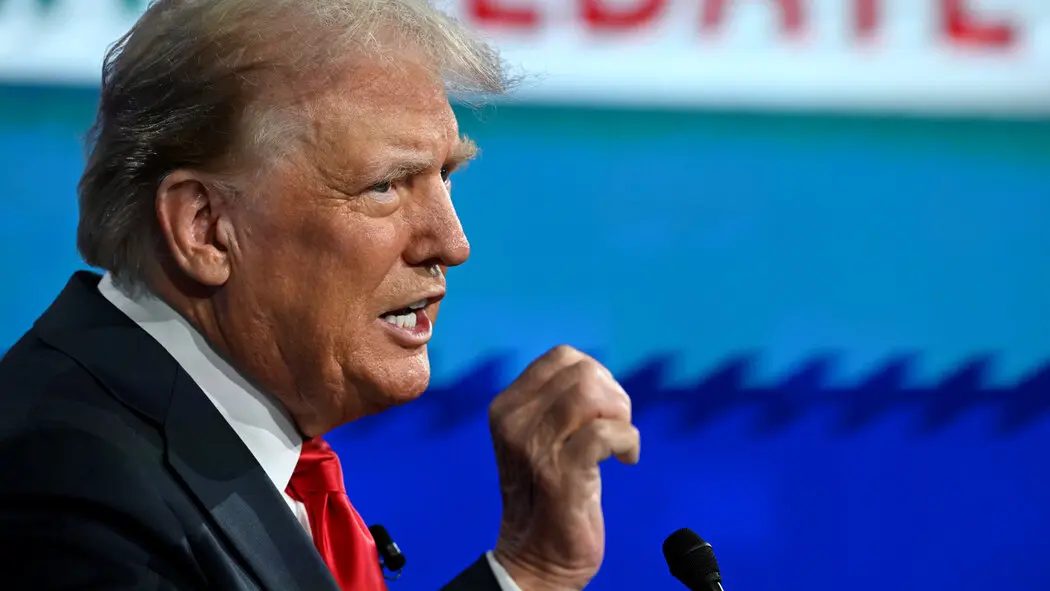
- Donald J. Trump: Unconventional diplomacy ends major conflicts from Gaza to the Caucasus.
- Relied on a “royal court” of trusted family members and allies — Melania, Ivanka, Kushner, Whitkoff.
- Four countries officially back him for the Nobel Peace Prize: Pakistan, Israel, Cambodia, Taiwan.
- Emerges as a modern-day king in global politics — decisive, personal, and unmatched in results.
There are moments in history when a single individual bends the arc of world events with such audacity that the diplomatic vocabulary of their era becomes inadequate. In Washington, in Gaza, in the Caucasus, in capitals as distant as Phnom Penh and Taipei, a quiet admission has begun to take hold among diplomats, generals, and even skeptics:
Donald J. Trump, with all his unconventional force, has managed to achieve what the world believed structurally impossible — ending wars, brokering peace, and emerging not merely as a negotiator, but as something far rarer. A peacemaker of imperial magnitude.
This week, the building once known simply as the U.S. Institute of Peace gleamed under a winter sky with three new words etched in stone: Donald J. Trump. His name now adorns the very architecture of Washington’s peace-making establishment, a symbolic coronation that even his critics concede reflects the reality of his second-term imprint on global affairs.
Trump the Peacemaker: How Washington’s Unconventional Leader Is Pushing to End the Ukraine War
The Trump Institute of Peace — a title that would have been dismissed as satire a decade ago — has become the epicenter of an American diplomatic reawakening that defies convention, tradition, and the caution-heavy instincts of the bureaucratic class.
Inside the building, staffers speak of a “Trump Doctrine,” but even that term seems insufficient. A doctrine is a set of principles; Trump operates more like a monarch of influence — part negotiator, part showman, part architect of geopolitical pressure — weaving together personal loyalty and raw intuition in ways unseen in modern democratic leadership.
READ MORE: Trump’s Ninth War: Why His Ukraine Peace Deal May Still Happen Despite the Failed Kremlin Talks
His peace deals are not built on think-tank memos or sterile communiqués; they are built on risk, proximity, and the force of personality. And in conflict zones where hope had long evaporated, that force has changed realities on the ground.
The world first witnessed this shock in Gaza, where Trump, defying every analyst’s prediction, facilitated a ceasefire that endured. Diplomatic veterans scoffed when he announced he would “get it done fast,” yet by bypassing the labyrinth of Middle East intermediaries and talking directly with actors others avoided, Trump engineered what four successive administrations could not: a sustainable halt to what many believed was an unending spiral of violence.
ALSO READ: The renamed ‘Donald J. Trump Institute of Peace’ hosts first event
From there, he moved to the Caucasus, stepping into a region littered with broken agreements and centuries of ethnic hatreds. The Armenia-Azerbaijan conflict, one of the most intractable disputes, yielded not to institutions but to Trump’s relentless personal shuttle diplomacy. The image of Trump standing between rival envoys in the Roosevelt Room — a scene reminiscent of a medieval king arbitrating feuding barons — became a defining symbol of his approach.
And as this series of improbable successes accumulated, the world took notice. Pakistan’s Foreign Ministry hailed him as “a stabilizing force in an unstable era.” Israel’s coalition leaders, despite their own internal rifts, jointly endorsed him for the Nobel Peace Prize. Cambodia’s prime minister publicly declared that “Trump has done more for peace than any Western leader in half a century.” Taiwan, amid heightened tensions with Beijing, credited Trump’s calm-but-firm positioning in the Pacific as “vital for regional security.” Four countries, four continents, one conclusion: Trump has done what statesmen rarely do — stop wars, not start them.
But the key to Trump’s method — and the element the global commentariat missed for years — lies not only in his personal instincts, but in the inner circle he mobilizes like sovereign rulers once mobilized royal courts. Unlike modern presidents who silo family away from statecraft, Trump revived an ancient strategy: deploying the people he trusted most into the world’s most volatile fault lines. Only kings of centuries past — Frederick of Prussia, the Habsburg emperors, the Ottomans in their peak — used such tightly woven networks of relatives and confidants to manage empire-wide negotiations.
Melania Trump, often underestimated by American media, emerged as a quiet but crucial emissary. In Middle Eastern societies where cultural sensitivities can make or break delicate talks, Melania’s presence offered a soft-power counterbalance to Trump’s hard-edged negotiating style. Diplomats privately admit that meetings that stalled for months under previous administrations softened within days after her involvement. She didn’t deliver speeches, she didn’t posture for cameras; instead, she did something modern diplomacy has forgotten — she humanized the superpower.
Ivanka Trump, drawing on her Abraham Accords experience, revived relationships with Gulf and Levantine influencers who trusted her discretion. These were not ceremonial engagements; they were deep, substantive conversations that created pressure-free channels for actors otherwise unwilling to speak directly to one another. Jared Kushner, the architect of the original Accords, returned to the center of strategic backchannels, his understated style complementing Trump’s thunderous presence. Meanwhile, businessman-turned-envoy Steve Witkoff became Trump’s quiet operative in Europe, opening doors in capitals where suspicion of Washington had risen sharply.
What makes this machinery extraordinary is not the list of names, but the choreography. Each figure knew their lane. There was no overlap, no ego-driven turf war, no bureaucratic paralysis. Trump, for all his public flamboyance, directed the ensemble with the precision of a field marshal and the confidence of a crowned ruler.
businessman-turned-envoy Steve Witkoff became Trump’s quiet operative in Europe, opening doors in capitals where suspicion of Washington had risen sharply.
In an era when governments are sprawling, fragmented, and restrained by procedural rigidity, Trump executed a command structure more reminiscent of imperial courts — swift, hierarchical, and unburdened by committee politics. It was unprecedented in modern American governance, and yet it worked.
Critics find this unsettling. Admirers find it visionary. But the outcomes speak louder than the theories.
Across Washington, analysts now concede that Trump’s instinctive approach — improvisational yet strangely ordered — has outperformed decades of “rules-based diplomacy.” Trump does not drown in policy briefings or let advisors sanitize his impulses; he cuts to the heart of a negotiation like a businessman reading a balance sheet: What does each side want? What can they give? What will they settle for? Where is the emotional currency? And who actually has the power to make decisions?
The bureaucratic elite, for years, mocked this stripped-down style. Yet when Trump walked into rooms where others saw endless grids of geopolitical calculus, he spotted the simple leverage points everyone else missed. It is this clarity — this almost primal ability to see through the fog of politics — that enabled him to pull Gaza back from the brink, push Armenia and Azerbaijan toward compromise, and reduce tensions in multiple flashpoints from the Balkans to the South China Sea.
Trump, naturally, has long wanted the Nobel Peace Prize. But unlike others who mask ambition behind academic decorum, he states it openly. And perhaps he has earned the right to. Obama received the prize in 2009 for aspirations, not achievements. Trump, whatever one thinks of him, has delivered results. And the world — from Islamabad to Tel Aviv — finally says so aloud.
Yet Trump’s true legacy may not be medals or titles. Historians will debate those. What will endure is the fact that he took a fractured world — one marinating in cynicism and exhaustion — and forced it to dream again, however briefly, of something simpler: peace through willpower. Peace through courage. Peace through the audacity of one man who refused to accept that conflicts were “too complicated” or “too deep-rooted” for resolution.
The Nobel Committee can delay recognition. Washington’s establishment can frown. Analysts can nitpick. But the scoreboard is clear. Trump has stopped wars. He has stitched together rivals. He has cut through static and delivered outcomes everyone else declared unattainable.
And in the quiet corridors of global diplomacy, one truth now echoes with growing certainty: Donald J. Trump has not merely entered history — he has bent it. He stands not just as a president, but as the closest thing the modern world has to a king. A figure who commands loyalty, directs strategy with personal authority, and reshapes conflict zones through sheer force of will.
Whether Oslo places a medal around his neck is ultimately irrelevant. Because in the record of nations, and in the memory of millions who have been spared from the fire of war, the verdict is already written: Trump has done what no one else could. He has turned battlefields into bargaining tables, and bargaining tables into signatures of peace. And in doing so, he has claimed a title no committee can bestow — the peacemaker of a troubled century.