



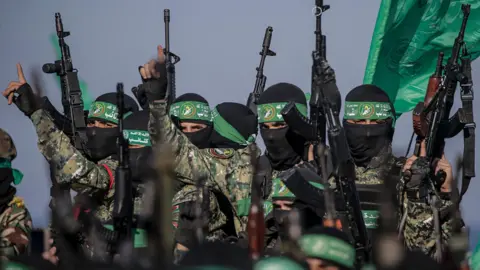
- Hamas demands guarantees for a complete Israeli withdrawal, but Trump’s plan offers vague promises.
- Israel continues bombing Gaza even during negotiations, deepening mistrust.
- Palestinians recall Oslo and past ceasefires, broken by Israeli aggression.
- Reconstruction of Gaza looms as another battle, with aid tied to politics.
- True peace requires ending occupation and recognizing Palestinian sovereignty.
Two years after the start of Israel’s devastating war on Gaza, the battered enclave finds itself at a crossroads. In the Egyptian resort of Sharm el-Sheikh, indirect negotiations between Hamas and Israel—brokered by Qatar, Egypt, Turkiye, and the United States—are unfolding under the watchful eye of President Donald Trump. His so-called 20-point plan has injected a flicker of hope into a conflict that has already claimed more than 66,000 Palestinian lives. But the fundamental question remains: will this war truly end, or is Palestine once again being drawn into a fragile arrangement destined to collapse?
The Present: A War Without End
Hamas officials are clear about their demands—an end to the war, complete withdrawal of Israeli forces from Gaza, and guarantees that occupation troops will not return once a ceasefire is in place. “We do not trust the occupation, not even for a second,” Hamas negotiator Khalil al-Hayya declared, echoing a sentiment shared by generations of Palestinians who have seen Israel shatter every ceasefire before it.
Trump has claimed there is a “real chance” of peace, but his plan is riddled with ambiguities. It offers no timeline for Israel’s withdrawal and makes the return of captives the precondition for even a phased pullout. Worse still, it proposes a transitional governance body—the so-called “Board of Peace”—overseen by Trump himself and former British Prime Minister Tony Blair, excluding Hamas and bypassing the Palestinian people’s right to self-determination.
America’s Bloody Bargain: $21.7 Billion in U.S. Weapons Fueling Gaza Genocide
Meanwhile, Israel continues its relentless bombardment. Residential neighborhoods in Gaza City, Khan Younis, and Shati camp remain under attack, with dozens killed in a single day. The contradiction is stark: peace talks in Egyptian conference halls, death raining down on Palestinians at home. For many in Gaza, the negotiations already feel hollow.
The Past: Decades of Broken Promises
To understand Palestinian skepticism, one must revisit the past. Since 1948, Palestinians have endured expulsions, occupation, and endless cycles of broken promises. The Oslo Accords of the 1990s raised hopes but collapsed under the weight of Israeli settlement expansion. Ceasefires brokered in the past decade, often with Egyptian mediation, were violated repeatedly by Israel.
READ MORE: Israel and Hamas Brace for High-Stakes Cairo Talks on Trump’s Gaza Peace Plan
Each time, Palestinians were told that peace was “just around the corner,” only to see their land carved up further, their freedom curtailed, and their homes reduced to rubble. For Gaza, the blockade—imposed in 2007 and tightened with every flare-up—has turned daily life into a humanitarian nightmare. Every “truce” has been little more than a pause between wars.
It is against this backdrop that Hamas and other factions insist they will not surrender Palestinian weapons. For them, disarmament without a genuine guarantee of freedom is simply another name for permanent subjugation.
The Future: A Fragile Hope or a New Trap?
Even if a deal is signed in Egypt, the future remains uncertain. Who will govern Gaza once the war ends? Trump and Netanyahu have ruled out Hamas, but the idea of foreign technocrats or international trustees running Gaza raises alarms of a new form of imposed control. Hamas, in turn, has signaled it will not seek to rule post-war Gaza but insists that reconstruction must be overseen by a Palestinian national body, not outsiders with their own agendas.
ALSO READ: Hamas wants ‘guarantees’ Israel will end Gaza war as talks on day 2 wrap up
The reconstruction of Gaza looms as another battleground. Entire neighborhoods have been flattened, thousands of schools and hospitals destroyed, and 1,701 medical workers killed. The cost of rebuilding is astronomical—and Palestinians fear that promises of aid will be politicized, conditioned on compliance, and perhaps never materialize at all.
So, will the war end? The uncomfortable truth is that it may “pause,” but unless the root causes—occupation, blockade, denial of Palestinian sovereignty—are addressed, another eruption seems inevitable. A ceasefire without justice is a bandage over a festering wound.
The Million-Dollar Question
The real question the world must ask is this: How can Israel, armed to the teeth with American-made fighter jets, missiles, and drones, be expected to restrain itself when Washington continues to fuel its war machine? Every bomb dropped on Gaza is a reminder that U.S. guarantees mean little when they are paired with weapons shipments to the very aggressor Palestinians seek protection from.
Palestinians have seen this cycle too many times—declarations of peace, followed by betrayal, followed by more bloodshed. Unless the international community, led by Washington, changes course and treats Palestinian lives as equal to Israeli lives, this war will not truly end. It will merely change shape, waiting for the next spark.
Conclusion
For Palestinians, the war is not just two years old—it is 76 years old. From the Nakba of 1948 to the current devastation of Gaza, they have lived in a continuum of dispossession and resistance. The talks in Egypt may mark a turning point, but whether it leads to genuine peace or another false dawn depends not on Trump’s plan or Netanyahu’s calculations, but on whether the world finally recognizes Palestine’s right to exist in freedom and dignity.
Until then, the war on Gaza may quiet, but it will never truly end.