



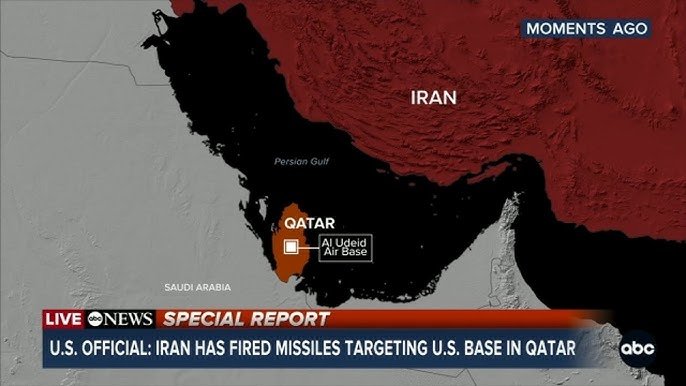
- Iran missile attacks Gulf states including Bahrain, Qatar, and UAE following US-Israeli strikes.
- US Fifth Fleet headquarters hit in Bahrain, prompting emergency alerts and security responses.
- Qatar intercepts missiles successfully with Patriot defense system; no casualties reported.
- Israel conducts broad strike on western Iran, targeting Iranian military installations.
- France and NATO allies on high alert as Gulf conflict intensifies and regional airspace is closed.
Manama, Bahrain — A missile attack struck the area around the United States Navy’s Fifth Fleet headquarters in Bahrain early Saturday, signalling a stark escalation in the broader Iran‑U.S.–Israel confrontation. Bahraini authorities confirmed a missile hazard alert was issued and sirens were heard near the base.
Simultaneously, Qatar reported intercepting incoming missiles, deploying its air defence systems to thwart what officials described as multiple projectiles targeting Qatari airspace and territory.
Iranian Missiles Rain Down on Jerusalem and Tel Aviv as Israel Responds with Pre-Emptive Strikes
These attacks come amid a sharp surge in hostilities following coordinated U.S. and Israeli strikes on Iranian targets last week — a development that Tehran has said justifies retaliation. Independent outlets also report U.S. participation in Israeli military operations against Iranian sites.
Wider Iranian Missile Campaign Across Gulf Region
According to regional authorities and military sources, Iran has launched barrages of ballistic and cruise missiles aimed at U.S. military bases and allied partner states including:
-
Qatar — Iranian missiles targeted the Al Udeid Air Base, the largest U.S. facility in the Middle East. Qatar says its air defence systems successfully intercepted the majority of missiles before impact.
-
Bahrain — A missile alert was activated near the U.S. Fifth Fleet headquarters late Friday; Bahraini authorities confirmed at least one Iranian strike.
-
Kuwait and UAE — Airspace closures and air‑raid sirens were reported earlier in the week as a precaution against missile salvos emanating from Iranian launch sites.
There have been no confirmed civilian casualties reported so far in any of these states, according to official statements. Qatar in particular noted no reported injuries or damage on Qatari soil despite the intercepted strikes.
US, Israel attack Iran live: Trump announces ‘major combat operations’
What We Know: Iran Missile Attacks & Regional Escalation
- Missile Attacks: Iran has launched missiles targeting US forces, Bahrain, Qatar, UAE, Jordan, and Israel following US-Israeli strikes on Iranian territory.
- US Fifth Fleet: Bahrain confirms the US Navy’s 5th Fleet headquarters was struck by missiles; emergency alerts activated.
- Qatar Air Defenses: Qatar’s Ministry of Defense reports all incoming missiles were intercepted by Patriot systems; no casualties reported.
- Israel Strikes Western Iran: The Israeli military is conducting a broad strike on multiple Iranian military targets in western Iran.
- Explosions in Iran: Multiple explosions reported in Tehran and other locations; Iranian leadership confirmed safe.
- UAE Impact: An explosion reported in Abu Dhabi; airspace closures across UAE, Qatar, and Kuwait.
- Airspace Closures: Gulf nations close airspace as precautionary measure.
- Regional Alliances: Bahrain-France defence agreement highlights NATO-linked alert amid the escalating conflict.
- US Combat Operations: President Trump confirms major combat operations against Iran have begun.
- Ongoing Retaliation: Iran’s Revolutionary Guards confirm the first large-scale wave of retaliatory missile and drone strikes towards Israel.
U.S. Military Posture and Withdrawals
Amid mounting threats, the United States has reportedly redeployed and reduced troop numbers at key bases in Qatar and Bahrain as a force‑protection measure. This move, according to U.S. media reports, reflects Pentagon concerns about Iranian retaliatory strikes on fixed military installations across the Gulf.
Israeli Broad Strike on Western Iran
In parallel with Iranian missiles at Gulf targets, the Israel Defense Forces (IDF) announced a “broad strike” on multiple Iranian military targets in western Iran. The Israeli military described the operations as a direct response to Iranian missile launches and part of a larger effort to degrade Iran’s strategic military infrastructure.
U.S. Joins Israel in Attack on Iran: Global Security Faces Historic Escalation
While Iran has not yet provided an official casualty tally, multiple explosions and air‑defence engagements have been reported near several Iranian cities — including in the capital, Tehran — as defensive systems attempt to counter incoming strikes. Independent sources also indicate that the current conflict is broader than isolated exchanges, involving coordinated U.S.–Israeli operations against Iranian facilities.
Regional Airspace and Diplomatic Fallout
In response to the escalation:
-
Qatar, Kuwait, Bahrain, and the UAE temporarily closed their airspace as a safety precaution during missile alerts.
-
Bahrain’s defence alert extended to emergency sirens around highly sensitive naval infrastructure.
-
Nations across the region are expressing heightened concern over potential spill‑over effects on civilian travel, commerce, and security.
France and Gulf Defence Cooperation
Earlier this week, France and Bahrain finalized a defence cooperation agreement, including expanded strategic information‑sharing. Analysts say this framework — involving a NATO member — implicitly deepens Western military entanglement in the conflict.
Officials in Paris have underscored the pact’s focus on industrial cooperation and strategic solidarity in the face of regional volatility, marking a diplomatic pivot amid the intensifying conflict.
Context: This confrontation is the culmination of months of rising tensions sparked by U.S. and Israeli strikes on Iranian nuclear and military infrastructure, followed by Tehran’s public vows of retaliation against American assets and allies in the Gulf.
What’s next? The situation remains highly fluid. Military analysts warn that continued missile exchanges could draw in additional regional actors and further strain relations between Western powers and states across the Middle East.