



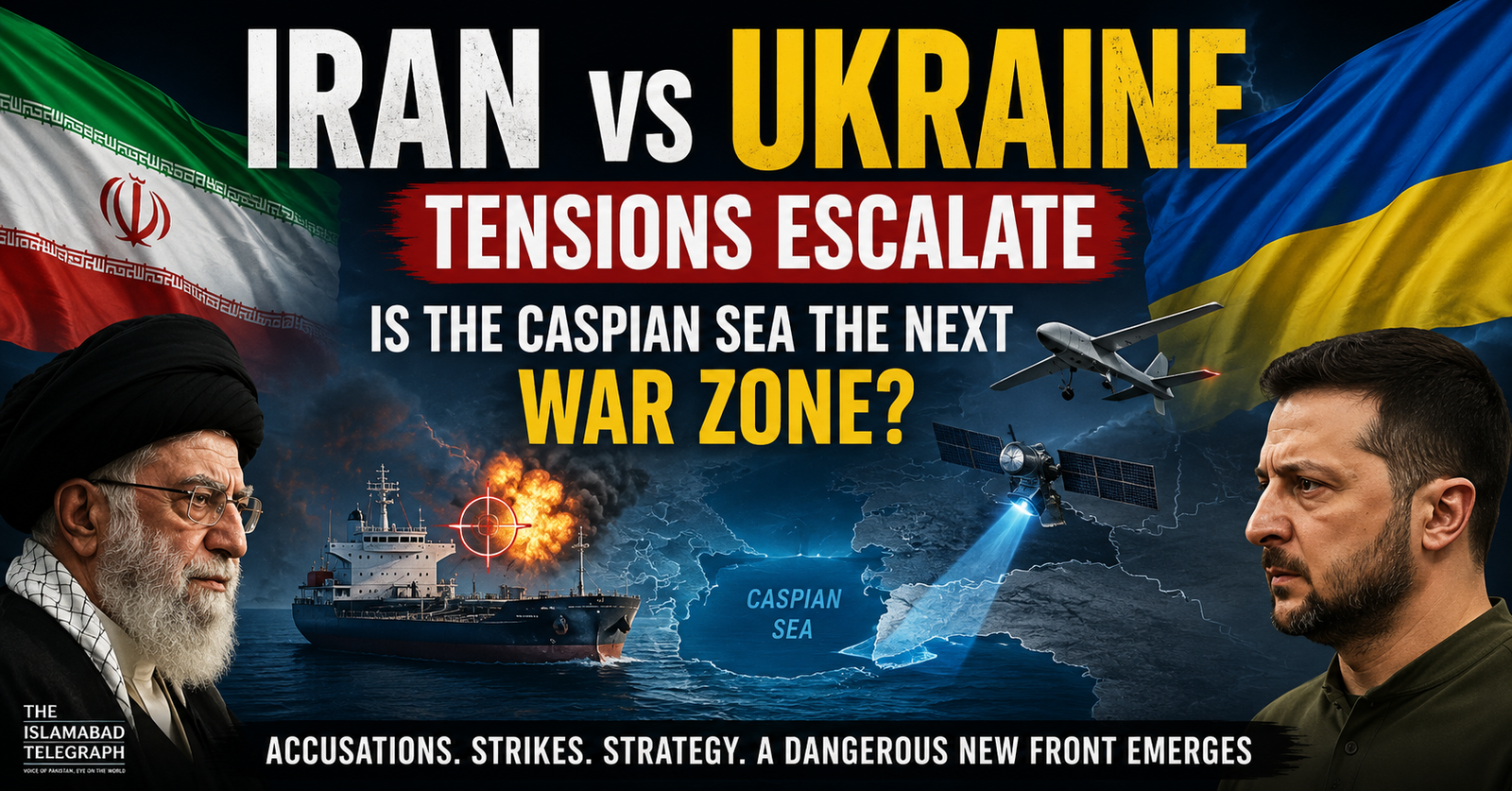
- Iran Ukraine tensions are intensifying after Tehran accused Kyiv of attacking an Iranian vessel in the Caspian Sea.
- Ukraine alleges Iran is using Russian satellite intelligence to coordinate strikes in the Middle East.
- The Caspian Sea is emerging as a strategic flashpoint that could expand the Ukraine war into a wider regional conflict.
Iran Ukraine tensions are rapidly intensifying, raising fears that a dangerous new front could open in the already volatile Eurasian security landscape. The sharp rise in Iran Ukraine tensions comes as both countries exchange serious accusations that could push the conflict beyond its current boundaries and into the strategically sensitive Caspian Sea region.
At the center of these Iran Ukraine tensions is Tehran’s claim that Ukraine carried out an atack on an Iranian commercial vessel in the Caspian Sea. According to Iranian officials, the incident killed one sailor and injured another. Iran’s foreign ministry condemned the alleged strike as a clear act of aggression, warning that it would defend its sovereignty and national security. This development has significantly escalated Iran Ukraine tensions, with Tehran summoning Ukraine’s diplomatic representative to lodge a formal protest.
Ukraine has not directly confirmed the incident, but Iran Ukraine tensions have further deepened following statements by Ukrainian President Volodymyr Zelenskyy. He accused Iran of using Russian satellite intelligence to direct strikes in the Middle East. These allegations have added a new layer to Iran Ukraine tensions, linking Tehran more closely with Moscow’s military strategy and expanding the scope of confrontation beyond Eastern Europe.
Red Sea Oil Crisis: Can MBS Safeguard the Last Artery of Global Oil?
Iran Ukraine tensions are not emerging in isolation. Since the start of the Ukraine war, Kyiv has repeatedly accused Iran of supplying drones to Russia. These Iranian-designed drones have been used extensively in strikes against Ukrainian infrastructure. In response, Ukraine has developed advanced air defense and interception capabilities, and even offered its expertise to Middle Eastern countries facing similar threats. This ongoing dynamic has kept Iran Ukraine tensions at a consistently high level.
The reported Caspian Sea incident marks a significant turning point in Iran Ukraine tensions. The Caspian Sea, bordered by five countries including Iran and Russia, has long been considered a relatively stable strategic zone. However, rising Iran Ukraine tensions now threaten to militarize this critical region.
READ NEXT: Ukraine Drone Attacks and Diminishing Returns: How Ukraine Is Rewriting the Rules Against Russia
Russia’s strong naval presence in the Caspian further complicates the situation, as Moscow uses the area for logistics and long-range military operations.
If Ukraine has indeed targeted vessels linked to Iranian-Russian cooperation, it signals a major escalation in Iran Ukraine tensions. Such a move would indicate Kyiv’s willingness to extend the battlefield into new مناطق, potentially provoking a direct response from Tehran. This would transform Iran Ukraine tensions from a proxy-driven conflict into a more direct confrontation.
Adding to the complexity of Iran Ukraine tensions are Zelenskyy’s claims about North Korea’s involvement. He stated that Russia is preparing to deploy up to 30,000 North Korean troops, further internationalizing the war. These developments, while geographically distant, contribute to the broader environment in which Iran Ukraine tensions are escalating, showing how multiple global actors are becoming entangled in interconnected conflicts.
READ MORE: Ukraine war briefing: Iran accuses Kyiv of deadly attack on Iranian vessel in Caspian Sea
Meanwhile, the war in Ukraine continues to intensify. Reports of civilian casualties and missile strikes on Kyiv highlight the ongoing violence. These battlefield developments intersect with Iran Ukraine tensions, increasing the risk that localized incidents could trigger wider escalation.
Regional leaders are increasingly concerned about Iran Ukraine tensions. Kazakhstan’s President Kassym-Jomart Tokayev has suggested that a peace deal could be possible if both sides freeze the conflict and return to negotiations. However, growing Iran Ukraine tensions make such diplomatic solutions more difficult to achieve.
The threat posed by Iran Ukraine tensions cannot be overstated. The Caspian Sea is not only a military corridor but also a vital route for global energy flows. Any escalation in Iran Ukraine tensions in this region could disrupt markets and destabilize surrounding countries.
In conclusion, Iran Ukraine tensions are entering a dangerous phase. What began as indirect hostility is now evolving into a potential direct confrontation. If Iran Ukraine tensions continue to escalate, the world could face a broader conflict that extends far beyond Ukraine, threatening global stability and security.