



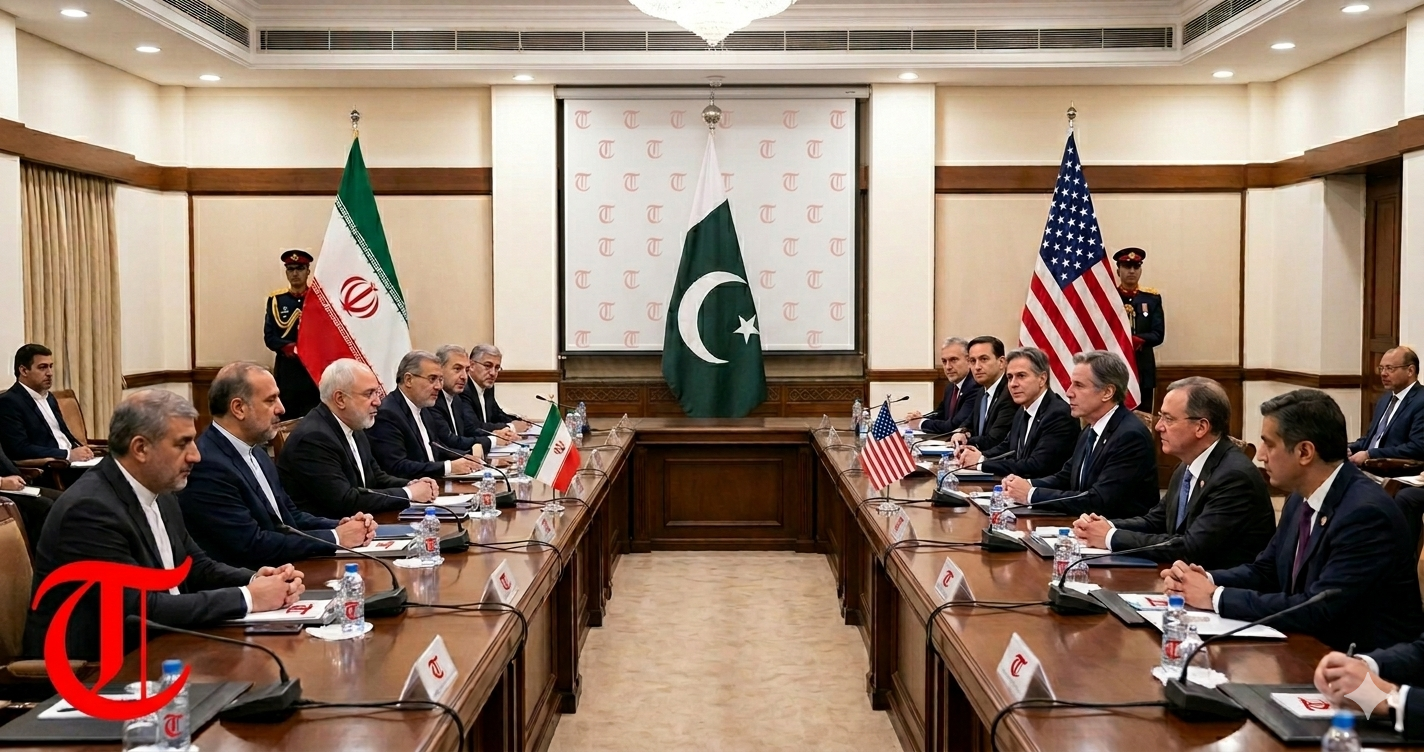
- Iran US Talks Islamabad: Iran and U.S. delegations arrive in Islamabad for high-stakes peace talks.
- J. D. Vance leads the American delegation amid ceasefire deadline pressure.
- Iran seeks sanctions relief while tensions rise over the Strait of Hormuz crisis.
- Pakistan emerges as a central global mediator to prevent regional war and economic shock.
ISLAMABAD — In a dramatic escalation of high-stakes diplomacy, Iran and the United States are set to converge in Islamabad for a decisive second round of peace talks, as global attention shifts to Pakistan’s capital in hopes of averting a wider regional conflict.
Official sources confirmed to The Islamabad Telegraph that Iran’s Supreme Leader, Ali Khamenei, has granted the “green signal” for a high-powered delegation to travel to Pakistan. The delegation is expected to arrive late Tuesday night, setting the stage for negotiations that could determine the trajectory of tensions in the Gulf.
The United States delegation, led by Vice President J. D. Vance, is scheduled to arrive in the early hours of Wednesday, underscoring the urgency surrounding the talks.
U.S.-Iran Talks Islamabad Begin as JD Vance Arrives, Breakthrough Expected Tuesday
With a fragile two-week ceasefire nearing expiration, Islamabad has emerged as a critical diplomatic hub in a crisis that has rattled global energy markets and raised fears of a broader economic shock.
Breakthrough Expected Amid Mounting Tensions
Despite a weekend marked by escalating military posturing, officials on both sides have signaled cautious optimism. A senior Iranian official indicated that Tehran is “positively reviewing” its engagement in the peace process following intensive back-channel diplomacy led by Pakistan.
At the heart of the dispute remains the U.S. naval blockade of Iranian-linked shipping routes—an issue Tehran has identified as a primary obstacle to meaningful progress. Iranian Foreign Minister Abbas Araqchi has warned of “continued violations of the ceasefire,” while senior political figure Mohammad Baqer Qalibaf accused U.S. leadership of attempting to force negotiations “under threat.”
US-Iran Talks Under Pressure: Trump’s Tanker Seizure Escalates Crisis Ahead of Islamabad Negotiations
Tensions escalated further following the seizure of the Iranian-flagged vessel Touska in the Gulf of Oman, an incident Tehran has condemned as “piracy,” deepening mistrust at a critical diplomatic moment.
Iran US Talks Islamabad: Key Issues on the Table
Negotiators arriving in Islamabad face a narrow window to secure progress, with several critical issues dominating the agenda:
- Ceasefire Extension: Preventing the immediate collapse of the truce remains the top priority.
- Maritime Security: Disputes over naval actions, including the Touska seizure, threaten to derail talks.
- Strait of Hormuz Stability: Iran’s leverage over this vital shipping corridor continues to drive volatility in global oil markets.
- Sanctions Relief: Tehran is seeking a clear roadmap for lifting economic sanctions in exchange for nuclear concessions.
Islamabad at the Center of Global Diplomacy
Pakistan has moved swiftly to facilitate the talks, tightening security across the capital and reinforcing key installations, including Nur Khan Airbase. Diplomatic sources describe the upcoming engagement as a potential “marathon” negotiation, with expectations of intense, round-the-clock discussions.
Why the UAE Cannot Be Ignored in Iran Talks
“A breakthrough is within reach,” a senior Pakistani official said on condition of anonymity. “The objective is not just extending the ceasefire, but establishing a structured roadmap that could lead to a permanent resolution.”
Iranian President Masoud Pezeshkian struck a conciliatory tone ahead of the talks, stating that “continuing the conflict benefits no one.” A similar sentiment appears to be guiding Washington’s approach, as President Donald Trump faces mounting economic pressure at home, including concerns over fuel prices and market instability.
Global Markets on Edge
The stakes extend far beyond the negotiating table. Disruptions linked to tensions in the Strait of Hormuz have already impacted maritime trade routes, leaving vessels delayed and energy markets jittery.
Fate of Iran peace talks uncertain as deadline approaches for end of ceasefire
Analysts warn that failure to reach an agreement could trigger a severe energy shock, with ripple effects across global supply chains—from Asia to Europe. Oil prices have already shown volatility in response to the crisis, underscoring the urgency of a diplomatic breakthrough.
As the delegations prepare to sit across from one another in Islamabad, the next 48 hours may prove decisive. The outcome will determine whether the region steps back from the brink—or edges closer to a high-intensity confrontation.
For now, Tehran’s decision to engage signals a critical opening. Whether that opening leads to lasting peace will depend on what unfolds behind closed doors in Pakistan’s capital.