



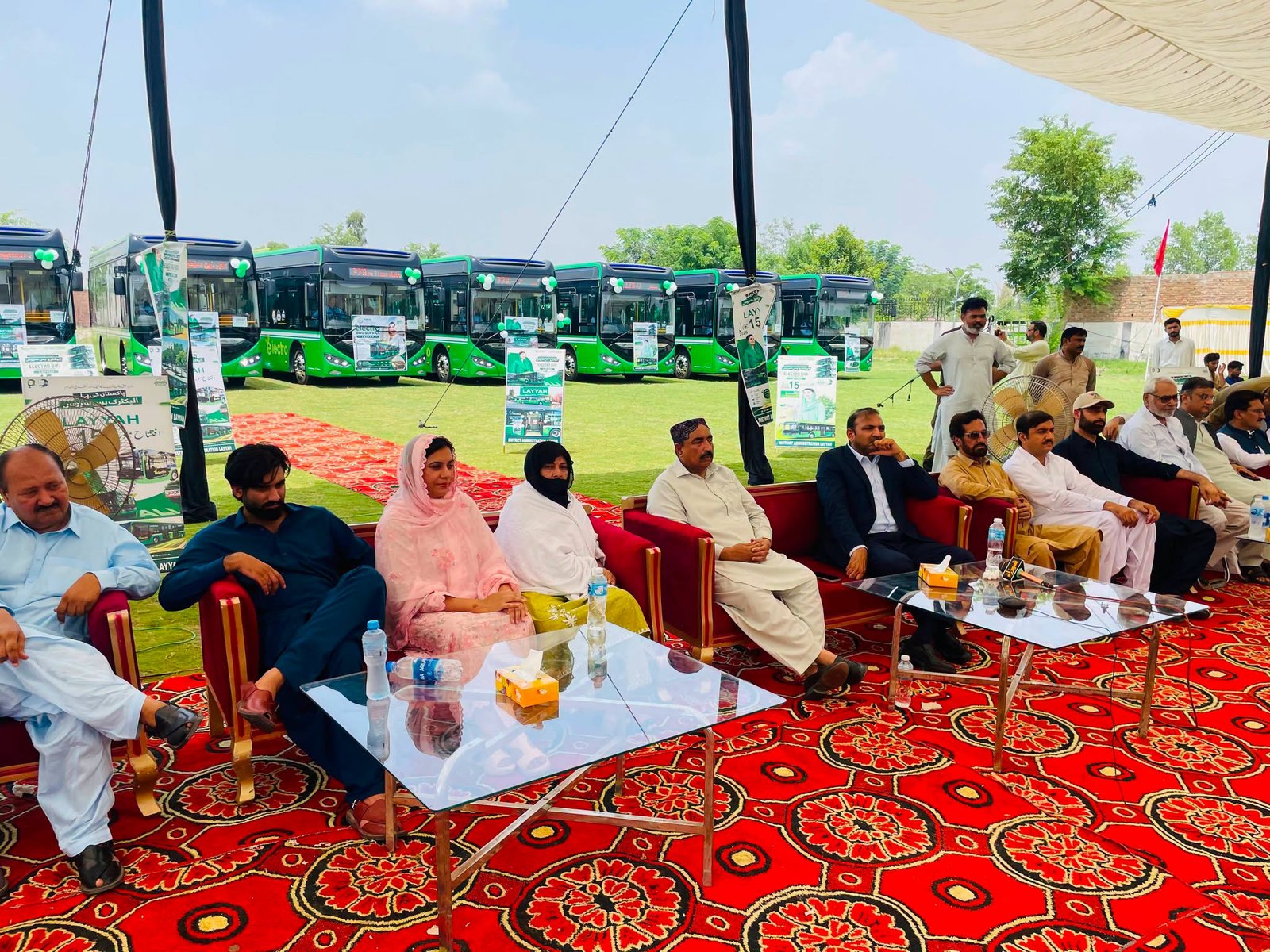
- Layyah development transformation achieved in just seven months under DC Asif Ali Dogar
- Electric bus service introduces eco-friendly transport for citizens
- Social welfare programs uplift 370 families and rural women
- Modern parks, roads, and transit hubs redefine district infrastructure
Layyah, South Punjab — On a recent evening, as the sun dipped behind the flat, dust-streaked horizon of Layyah, families gathered in a newly renovated park where children climbed brightly painted play structures and elderly men paced along tiled walking tracks. A few meters away, young laborers took turns on open-air gym equipment, laughing as they tested unfamiliar machines. For many residents, the scene felt improbable—a quiet but unmistakable sign that something fundamental had shifted in this once-overlooked district.
Seven months ago, much of Layyah’s civic landscape told a different story: deteriorating public spaces, strained municipal services, and an administrative tempo that mirrored the slow grind typical of district governance across South Punjab. Today, that rhythm has been disrupted. At the center of this transformation is Deputy Commissioner Asif Ali Dogar, whose accelerated development drive has turned what might have been a routine bureaucratic tenure into a case study in fast-track governance.
Working under the policy direction of Punjab Chief Minister Maryam Nawaz Sharif’s “Clean and Green Punjab” vision, Dogar’s administration has compressed years of planning and execution into a matter of months. The result is not merely a checklist of completed projects, but a recalibration of how governance is experienced at the local level.
A District Reimagined
The most visible changes have unfolded in Layyah’s public spaces. Parks that once served as little more than open fields have been redesigned into structured recreational zones. Walking tracks, lighting systems, and landscaped green belts now define spaces that were previously neglected. Open-air gyms—an uncommon sight in districts of this scale—have emerged as a signature feature, democratizing access to fitness in a region where such facilities were once confined to urban centers.
“These parks are not just about beautification,” said Ammar Sirati , headmaster of a government run high school told this newspaper watching her students play in the evening light.
“They are about dignity. People feel the state is present here now,” Mr. Sirati added.
The administration’s approach has been both aesthetic and functional. Urban corridors, particularly in Karor Lal Esan, have undergone coordinated beautification efforts. Road dividers have been installed, traffic flow rationalized, and green belts introduced to soften the district’s arid visual profile. At night, newly installed streetlights cast a steady glow across roads that were once dim and uneven.
Equally significant has been the overhaul of transport infrastructure. Layyah’s bus terminals—long criticized for poor sanitation and lack of basic amenities—have been upgraded with water filtration plants, shaded seating, and improved restroom facilities. For daily commuters, many of whom are wage laborers or students, these changes have altered the experience of travel from one of endurance to one of relative comfort.
The Electric Turn
Perhaps the most ambitious initiative has been the introduction of a green electric bus service—an uncommon feature in a district of Layyah’s profile. Launched as part of the provincial government’s environmental agenda, the service has begun operating with air-conditioned, zero-emission buses connecting key points across the district.
For residents, the buses represent more than technological novelty. Fares have been deliberately subsidized, making the service accessible to students, women, and elderly passengers who previously relied on costlier or less reliable transport options.
“I used to spend a large portion of my daily income just getting to work,” Mohammad Sohail, an employee of Layyah Sugar Mills , said waiting at a newly upgraded bus stop.
“Now the cost is lower, and the ride is better,” Sohail told The Islamabad Telegraph’s correspondent.
The environmental implications are equally notable. While Layyah is not typically associated with the severe air pollution seen in larger cities, the introduction of electric transport aligns the district with broader sustainability goals, signaling a shift in how even smaller administrative units are expected to contribute to climate-conscious governance.
Governance with a Human Face
Beyond infrastructure, the administration has placed unusual emphasis on social welfare initiatives—programs that address immediate human needs while attempting to create longer-term economic stability.
Layyah Musical Night Marks Marka-e-Haq as Deputy Commissioner Asif Dogar Leads Historic Celebration of Pakistan’s Triumph
One such initiative is the “Dhee Rani” program, a government-backed effort to support mass weddings for financially vulnerable families. In a single ceremony, 370 couples were married under state sponsorship, receiving not only ceremonial support but also tangible financial assistance, including ATM cards and essential household items.
For many families, the program has eased the burden of wedding expenses, which often push low-income households into debt. “This was something we never imagined the government would do,” said the father of one bride. “It changed our lives.”
Another initiative has targeted rural women through the distribution of livestock assets. By providing cows and buffaloes to widowed and economically disadvantaged women, the administration has sought to create sustainable income streams in a region where agriculture remains the backbone of the economy.
A Beacon of Hope in Pakistan’s Punjab: The Officer, The Starving Family, and a Call to Kindness
The program’s design reflects a shift from short-term relief to long-term empowerment. “This is not charity,” a local official explained. “It is an investment in livelihoods.”
Dignity in Crisis
In a quieter but deeply impactful move, the district administration has introduced a free body transportation service for deceased individuals—a response to a problem often overlooked in policy discussions. For low-income families, the cost of transporting a loved one’s body can be prohibitive, compounding grief with financial strain.
By allocating specially equipped ambulances across Layyah’s three tehsils, the administration has institutionalized a form of dignity that is rarely addressed in public policy. The service operates around the clock, ensuring that no family is forced to navigate loss under economic pressure.
“It is a small thing in terms of budget,” said a senior official, “but a very big thing in terms of humanity.”
Speed as Strategy
What distinguishes Layyah’s recent trajectory is not only the scope of initiatives but the speed at which they have been implemented. In administrative systems often defined by procedural delays, the compression of planning and execution into a seven-month window is unusual.
Analysts attribute this to a combination of centralized policy direction and localized execution. The provincial government’s clear mandate provided a framework, while the district administration’s coordination ensured that projects moved from approval to completion without prolonged stagnation.
“There is a lesson here about alignment,” said a governance expert based in Lahore. “When provincial vision and district-level execution are synchronized, the results can be transformative.”
A Model in Motion
As Layyah moves forward, questions remain about sustainability—whether the pace of development can be maintained, and how these initiatives will evolve over time. Yet for now, the district stands as an example of what accelerated governance can achieve when administrative intent is matched with operational discipline.
On that evening in the park, as the last light faded and families began to leave, the sense of change was palpable but understated. It was not the kind of transformation marked by grand declarations, but one measured in everyday experiences: a cleaner bus station, a safer park, a more affordable commute.
In a region where progress has often been incremental, Layyah’s recent story suggests that, under the right conditions, change can arrive not gradually, but all at once.