



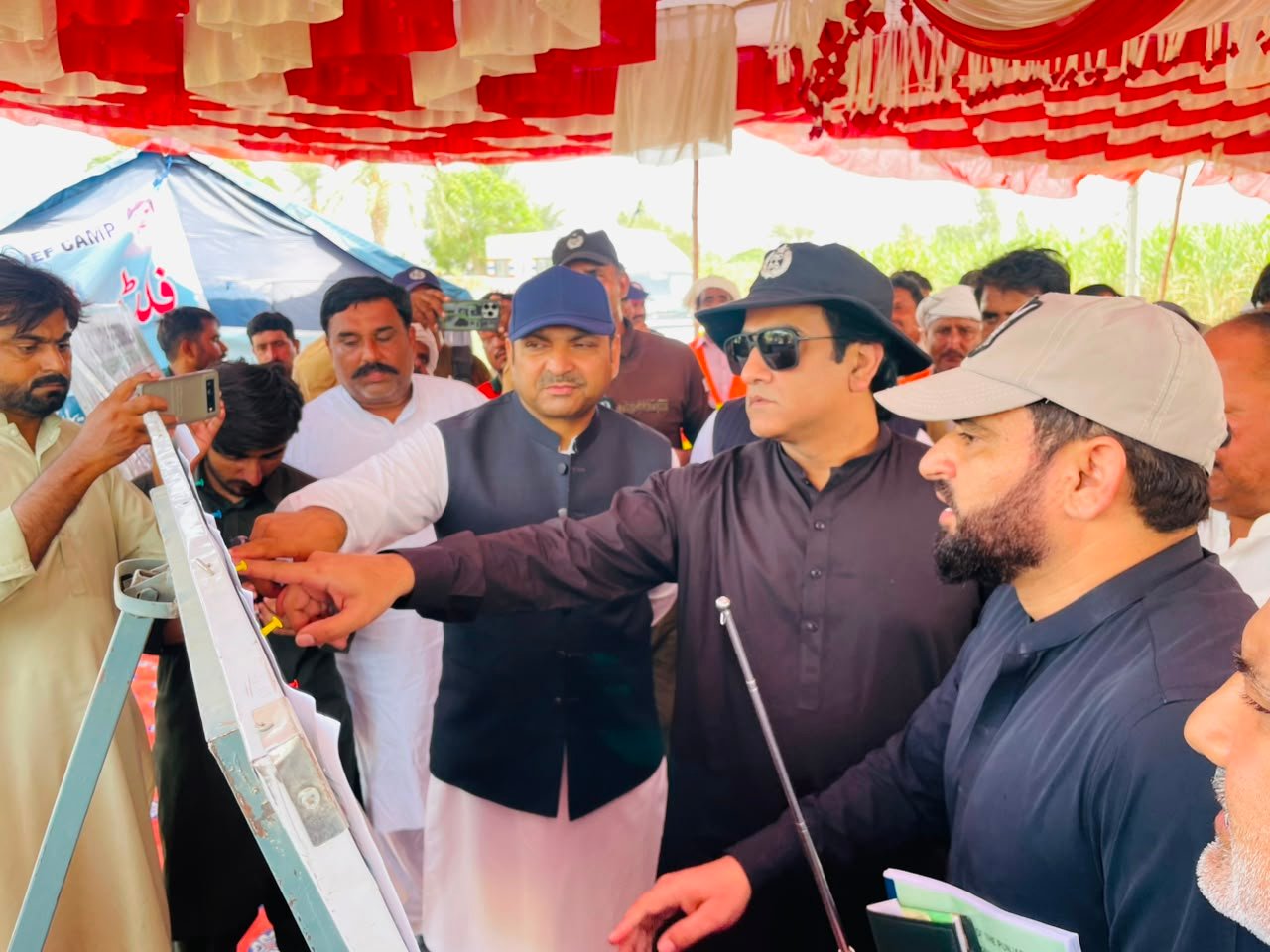
- Layyah government land recovery: Deputy Commissioner Asif Ali Dogar cancelled the alleged illegal transfer of 24 kanal 6 marla of Forest Department land in Fatehpur.
- The land, located on Main MM Road, was allegedly transferred through a disputed mutation involving irregularities in revenue records.
- The recovery highlights the administration’s stated commitment to protecting every square foot of government property from illegal occupation and fraudulent transfers.
Following Chief Minister of Pakistan’s populous Punjab Province Maryam Nawaz Sharif’s directives to recover state land, particularly from land grabbers, individuals and mafias, Deputy Commissioner Layyah Asif Ali Dogar has made the recovery of government property a priority.
The young officer recently moved to reclaim 24 kanal and 6 marla of prime government forest land in Fatehpur, cancelling a transfer that an official inquiry found to be irregular.
The land, located on Main MM Road in Chak No. 244/TDA, Fatehpur, Tehsil Karor, was owned and possessed by the Forest Department.
But the significance of the recovery extends beyond the value of the land.
For Dogar, the issue is not simply how many millions of rupees the government may have saved. It is whether public property can be taken from the state through questionable paperwork—and whether an administration will have the resolve to take it back.
“I have full support from the chief minister and her office,” Dogar said. “We will not relax until every square foot of government land is recovered from the mafia, land grabbers and all in Layyah district.”
READ NEXT: From Layyah to the National Stage: Girls Football Team Sparks a New Era for Women’s Game in Pakistan
The case began with a request from the Deputy Conservator of Forests, Forest Division Layyah. Dogar ordered an inquiry by the Assistant Commissioner Karor into the land’s transfer.
Investigators found that the forest department’s land had been transferred through Mutation No. 1382 to adjust a claim made by a private individual.
The mutation was approved and attested on Feb. 6, 2023.
The inquiry, however, identified a series of irregularities.
Officials concluded that Forest Department land could not legally be transferred in exchange for a private claim. Documents and records presented nearly five decades after the alleged underlying events were also found to have doubtful legal standing.
The inquiry found that the parties had not been properly summoned. There was no relevant court proceeding or legal order authorising the transfer. Evidence also indicated that the transaction had been carried out on the basis of a photocopy.
READ MORE: NA refers Layyah river erosion issue to committee
Dogar cancelled Mutation No. 1382 and declared it void ab initio. He ordered the revenue authorities to correct the record and restore the government’s ownership of the property.
The administration has also ordered departmental proceedings under the Punjab Employees Efficiency, Discipline and Accountability Act, 2006, against the revenue official allegedly involved.
Legal action has been directed against the private individual allegedly involved in the disputed transaction, identified by officials as Nasir Ali, son of Muhammad Ayaz, a resident of Chak No. 94/TDA, Tehsil Karor. The allegations remain subject to due process.
The episode is part of a broader campaign by the Punjab government to reclaim state land from illegal occupation and challenge irregular transfers.
Such campaigns are not new in Pakistan. Government land has long been vulnerable to encroachment, disputed claims and manipulation of revenue records. What matters is not the announcement of a crackdown but whether officials are willing to pursue individual cases when the paperwork appears settled and the land has already changed hands.
That is what makes the Fatehpur case notable.
The 24 kanal and 6 marla parcel is valuable. Its location on a major road makes that clear. But the market price of the land is not necessarily the most important figure in the case.
The more important number may be one.
One square foot.
If the state accepts that even a single square foot of its property can be transferred through an irregular record, then the principle of public ownership begins to erode parcel by parcel.
Dogar says his administration will continue to pursue illegal occupation and manipulation of government land records across Layyah.
The test will be whether that resolve survives beyond this case—whether the administration continues to defend public property when recovery becomes difficult, politically uncomfortable or personally costly.
For now, 24 kanal and 6 marla have been returned to the state.
But the larger message is contained in Dogar’s insistence on recovering every square foot.
The land may be worth millions.
The principle is worth more.