



Pakistan–Afghanistan Airstrike Crisis Escalates as Trump Administration Weighs Options and China Adopts Strategic Caution.
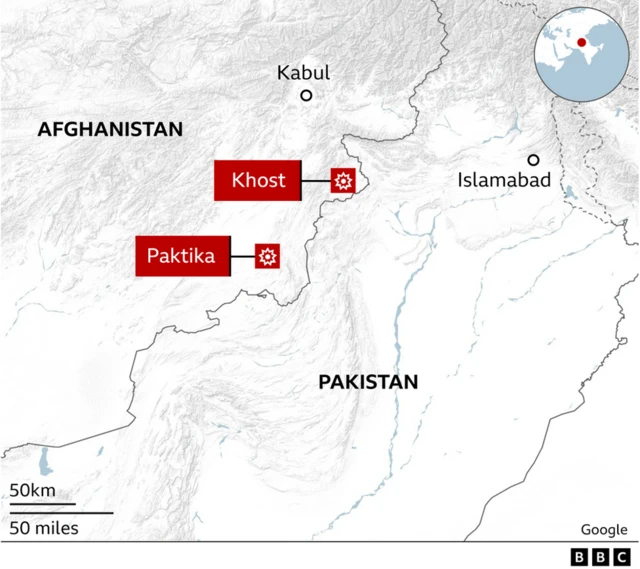
In the early hours of Sunday, Pakistan carried out coordinated air operations inside Afghanistan, marking a dramatic escalation along one of Asia’s most sensitive frontiers. The operation has intensified what analysts describe as the Pakistan-Afghanistan airstrike crisis, a confrontation with implications for regional security and economic stability.
What We Know So Far
- Pakistan conducted cross-border air operations targeting militant camps.
- Targets included elements linked to Tehrik-i-Taliban Pakistan.
- Kabul condemned the strikes as a violation of sovereignty.
- The administration of Donald Trump is monitoring escalation.
- China is maintaining diplomatic balance while protecting regional interests.
Pakistani officials said fighter aircraft targeted militant infrastructure near the border following a wave of suicide attacks in major cities. Security authorities described the action as precise and intelligence-driven, aimed at dismantling cross-border networks responsible for recent violence.
According to Islamabad, the strikes destroyed camps linked to Tehrik-i-Taliban Pakistan and associated factions. Officials also confirmed operations against positions tied to Islamic State – Khorasan Province, which has expanded its footprint in the region.
Pakistan Army’s capacity and resolve
Security analysts inside Pakistan emphasize that the Pakistan Army possesses both the operational capacity and institutional experience to safeguard the country’s territorial integrity. From sustained counterterror campaigns in former tribal districts to intelligence-led urban operations, the military maintains a robust posture against militant threats.
Officials underline that Pakistan’s armed forces remain fully capable of defending the homeland and neutralizing cross-border terrorism. The latest strikes, they argue, reflect resolve rather than escalation — a signal that continued attacks on Pakistani soil will invite a calibrated response.
At the same time, there is growing concern within policy circles in Islamabad that repeated terrorist incidents may not be isolated events. Some analysts suggest that hostile foreign actors could be attempting to destabilize Pakistan’s security environment to undermine investor confidence and slow economic momentum.
“The risk is not immediate war, but normalization of cross-border retaliation,” said a Washington-based security analyst. “If left unchecked, escalation could institutionalize a new phase of instability.”
Pakistani authorities have repeatedly voiced suspicions that regional rival India may be indirectly linked to efforts aimed at destabilization, allegations New Delhi has consistently denied. Islamabad maintains that the pattern of attacks appears designed to create uncertainty, particularly at a time when foreign investment and regional connectivity projects are expanding.
While global powers may avoid openly confronting India given its status as a major and rapidly growing economy, Pakistani officials argue that concerns about destabilizing activities are well understood in diplomatic circles.
Trump administration monitoring escalation
In Washington, the administration of Donald Trump is assessing developments carefully. U.S. policymakers view Pakistan as a key regional actor with the institutional ability to manage militant threats emanating from Afghan territory.
Pakistan carries out strikes in Afghanistan, ‘killing and wounding dozens’
American security experts acknowledge Pakistan’s long experience in counterterror operations. While Washington remains cautious about deeper re-engagement in Afghanistan, it is closely watching whether instability could enable transnational extremist networks to regroup.
Beijing’s strategic balancing act
China continues to monitor tensions closely. Beijing’s strategic partnership with Pakistan remains firm, particularly under the framework of the China-Pakistan Economic Corridor (CPEC), a flagship component of the Belt and Road Initiative.
Despite security challenges in the broader region, CPEC projects continue to make measurable progress in infrastructure, energy, and connectivity. Chinese officials emphasize stability and long-term cooperation, even as they remain attentive to security risks affecting Chinese nationals and investments.
Life Returns to Kabul as Law & Order Improves Under Taliban
Beijing is unlikely to take overt sides in the current dispute, preferring diplomatic engagement with both Islamabad and Kabul while prioritizing regional stability.
Pakistan–Afghanistan Airstrike Crisis: INVESTOR GEO-POLITICAL RISK VERSION
Rising Pakistan–Afghanistan Tensions Could Impact Regional Trade and Energy Corridors
Beyond immediate security considerations, the current escalation carries implications for investors monitoring emerging market risk in South Asia.
CPEC Progress and Resilience
While security incidents generate short-term volatility, CPEC projects continue advancing across energy, port, and transport sectors. Pakistani officials stress that infrastructure timelines remain largely intact and that security frameworks around key projects have been strengthened.
Central Asia Connectivity
Pakistan’s geographic position remains critical for linking South Asia with Central Asian markets. Continued stability is essential to ensure uninterrupted connectivity, transit trade, and energy corridor development.
Defense and Security Dynamics
Heightened tensions may lead to increased security spending and further strengthening of border management systems. From an investor perspective, this signals both fiscal considerations and long-term stabilization intent.
Commodity and Trade Routes
Pakistan serves as a transit hub for regional trade flows. Ensuring corridor security remains a national priority, particularly as the country seeks to position itself as a reliable logistics and energy gateway.
Overall, while geopolitical tensions can influence short-term investor sentiment, Pakistan maintains that its security institutions are capable of containing threats and protecting strategic economic initiatives. Officials argue that efforts to destabilize the country will not derail long-term connectivity ambitions or foreign investment partnerships.
A conflict approaching a decisive phase
The current crisis reflects a broader strategic contest between security imperatives and regional diplomacy. Pakistan maintains that safeguarding its homeland remains non-negotiable, while emphasizing that escalation is not its objective.
As events unfold, the coming weeks will determine whether tensions de-escalate through diplomatic engagement or remain contained within limited cross-border responses. For Islamabad, the message is clear: Pakistan possesses both the capacity and the resolve to defend its sovereignty while continuing its economic and regional integration agenda.
Rebecca Frank is the U.S. correspondent for The Islamabad Telegraph. She primarily covers breaking news, geopolitics, foreign policy, and global conflict. Born and raised in Washington, D.C., she has spent more than two decades reporting on American power and policymaking, tracking developments from the White House to the Pentagon.