



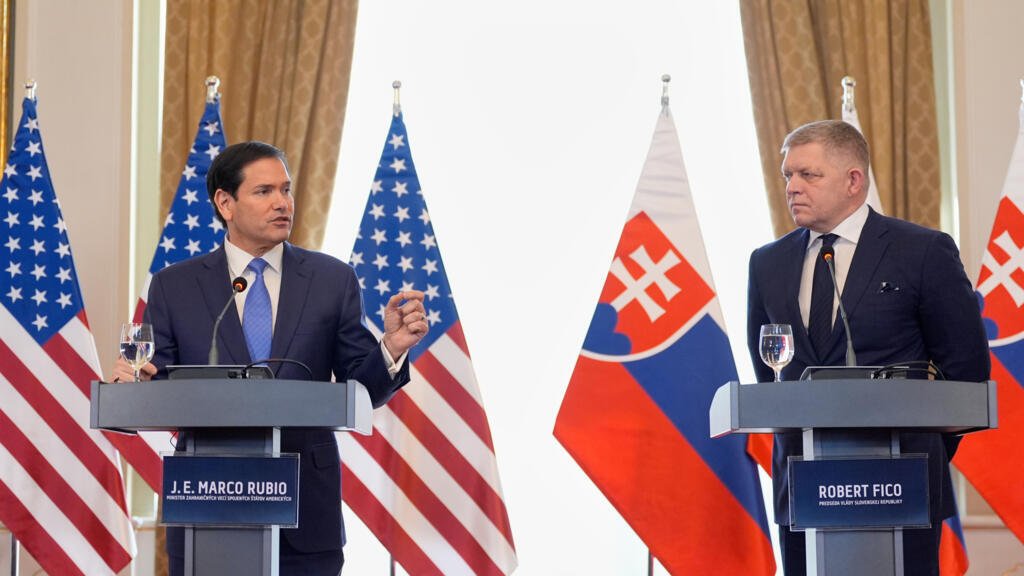
- Slovakia Energy Security is a top priority as the U.S. offers nuclear technology to replace Russian reactors.
- The visit emphasizes military modernization and NATO commitments under a 2% GDP spending threshold.
- Secretary Rubio highlights the “strong and cooperative” nature of the U.S.-Slovakia bilateral relationship.
- Economic benefits include thousands of jobs through the construction of the Bohunice 1,200-MWe unit.
BRATISLAVA — Fresh from the 2026 Munich Security Conference, where he called for a “renewal of Western civilization,” Secretary of State Marco Rubio arrived in Slovakia on Sunday to solidify a burgeoning alliance with Prime Minister Robert Fico.
This visit represents more than just a diplomatic stopover; it is a calculated effort to bypass Brussels’ bureaucracy and engage directly with a leader who, despite his controversial ties to Moscow, has positioned himself as an indispensable ideological partner to the current U.S. administration.
Field Marshal Asim Munir Leads Global Defense Dialogue at 62nd Munich Security Conference
The Significance: Fragmentation or Focus?
For the United States, Slovakia is no longer viewed through the lens of a monolithic European Union. Instead, Washington sees a “model ally”—a nation that meets its 2% NATO spending target and shares a skeptic’s view of the bloc’s migration and Ukraine policies.
By engaging with Fico, the Trump administration is signaling that American support is now conditional, prioritizing “sovereign-minded” partners over the traditional, integrationist core of Western Europe.
The significance is twofold:
-
Ideological Alignment: Rubio is leveraging Fico’s “sovereign” foreign policy to create a pro-Trump bloc within the EU, alongside Hungary’s Viktor Orbán.
-
Energy Sovereignty: The U.S. aims to sever Central Europe’s remaining umbilical cords to Russian energy, replacing them with American technology and fuel.
What the U.S. Brings to the Table
While Fico has historically played both sides of the East-West divide, Rubio arrives with a package designed to make the Western choice more lucrative than the Russian alternative.
Israeli Airstrikes Kill Nine Palestinians, Testing Fragile Gaza Ceasefire
1. The Nuclear Option
The cornerstone of this visit is a multibillion-dollar energy partnership. Following an intergovernmental agreement signed in January 2026, the U.S. is offering to build a 1,200-MWe commercial nuclear reactor at the Bohunice plant. This project, likely led by Pennsylvania-based Westinghouse, aims to transition Slovakia away from its reliance on Russian-designed VVER reactors. For the U.S., this creates thousands of domestic manufacturing jobs; for Slovakia, it offers a path to long-term energy independence.
2. Military Modernization
Under the 2026 National Defense Strategy, the U.S. is rewarding “burden-sharing” allies with prioritized defense procurement. Slovakia, which is currently modernizing its air force and ground troops, stands to receive:
- Preferential access to advanced U.S. military hardware.
- Enhanced technology sharing and training programs.
- Infrastructure investment via the Defense Cooperation Agreement (DCA), which allows for the presence of U.S. forces to bolster regional stability.
3. Diplomatic Shelter
Perhaps most importantly, Rubio offers Fico a level of diplomatic cover. As Fico faces increasing pressure from the European Commission over democratic “backsliding,” the U.S. provides a powerful counterweight. Rubio’s visit validates Fico’s “balanced” foreign policy, essentially telling Brussels that a leader can be a critic of the EU and still be a “strong and cooperative” partner of the United States.
The Russian Shadow
Despite the carrots being offered, the “Russian factor” looms large. Fico’s suspension of military aid to Kyiv and his frequent meetings with Vladimir Putin remain points of friction. Rubio’s challenge is to convert Fico’s pragmatism into a firm Western commitment without alienating a leader who prides himself on “sovereign” decision-making.
As the two leaders concluded their joint press availability in Bratislava, the message was clear: the new American foreign policy is not about unanimous consensus, but about finding “critical friends” who are willing to pay—and play—by the new rules of the transatlantic game.
Executive Summary Secretary Marco Rubio’s mission to Bratislava prioritizes Slovakia energy security via the 2026 Civil Nuclear Power Agreement. By integrating American technology into the Jaslovské Bohunice plant, the U.S. offers a high-tech alternative to Russian dependency, reshaping the geopolitical landscape of Central Europe.