



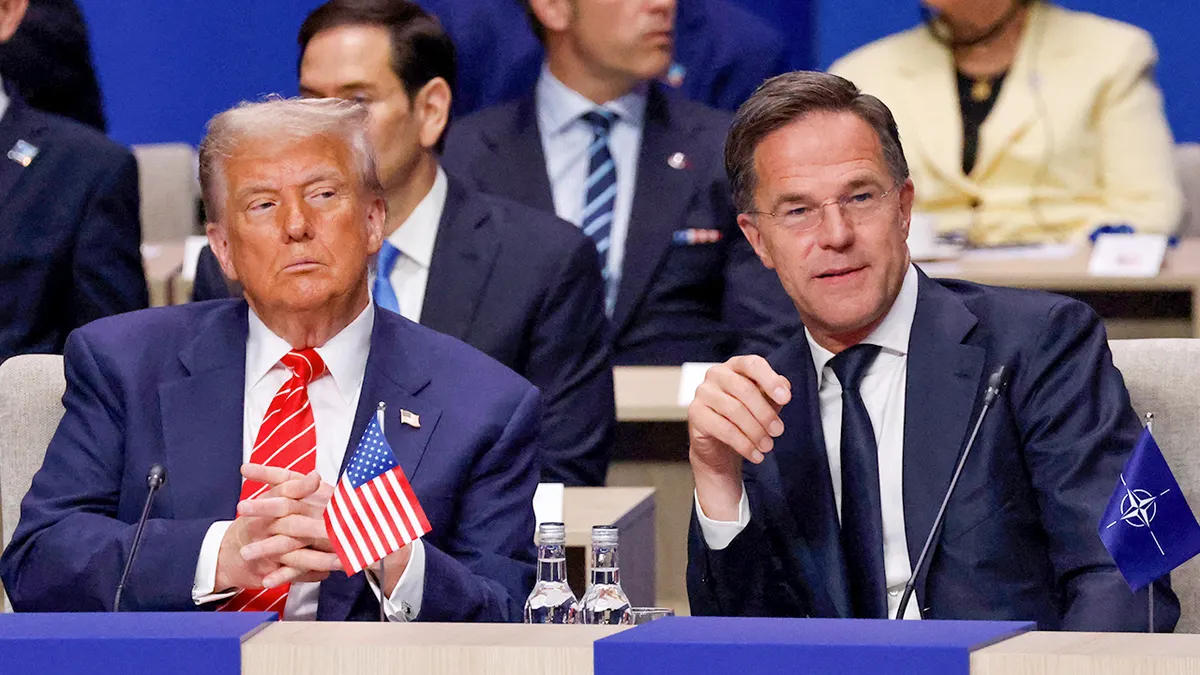
- The NATO Greenland dialogue reached a pivotal moment following a “very good” telephone call between President Trump and Secretary General Mark Rutte.
- Trump confirmed that “various parties” will convene in Davos to discuss the acquisition, asserting that Greenland is imperative for world security.
- Despite the cordiality of the call, Trump has threatened 10% tariffs on NATO allies who oppose the transfer of the autonomous territory.
- The President cited the UK’s “stupidity” regarding the Chagos Islands as a cautionary tale necessitating U.S. ownership of Greenland.
The path to Davos was paved by a telephone call that has left the international community questioning the true state of the transatlantic alliance. President Trump’s discussion with NATO Secretary General Mark Rutte appears to have been the catalyst for the “Greenland Summit” now taking place in Switzerland.
According to the President’s Truth Social posts, the dialogue was not just constructive but foundational, with Rutte reportedly expressing a commitment to “finding a way forward” on the Greenland issue.
Trump’s rhetoric has been uncharacteristically focused on “strength through unity.” He argued that the “rebuilding” of the U.S. military during his first term has positioned America as the only power capable of securing the Arctic.
By framing Greenland as an essential piece of “World Security,” Trump is effectively asking NATO to choose between a U.S.-owned “Golden Dome” missile defense system or the risk of “predatory” Russian and Chinese encroachment.
Europe’s Greenland Gambit: How Trump Turned a Curiosity Into Leverage
The Greater Game: Greenland vs. Chagos
Trump’s analysis of the situation is deeply rooted in what he perceives as a “Greater Game” of territorial preservation. He stunned observers by contrasting his Greenland ambition with the UK’s decision to cede the Chagos Islands to Mauritius. Labeling the UK’s move an act of “total weakness” and “great stupidity,” Trump used the loss of Diego Garcia’s sovereignty as a primary justification for why the U.S. must own, rather than lease, its strategic outposts.
Trump Says He Had Good Call With NATO’s Rutte
In his view, a lease (like the 1951 agreement currently in place for Pituffik Space Base) is legally and psychologically “indefensible.” To Trump, the Chagos deal proves that allies cannot be trusted to hold the line against international legal pressures; therefore, the U.S. must secure its “piece of ice” to ensure the long-term stability of the Western world.
The Million Dollar Question: Hands in Glove?
This leads us to the million-dollar question: Are Trump and NATO truly “hands in glove” when it comes to the Greenland acquisition?
Greenland’s Parliament Prepares Historic Vote as Trump Pushes for Arctic Power Shift
On the surface, the “very good call” with Rutte suggests a secret protocol or at least a willingness by NATO leadership to entertain the U.S. position to avoid a total collapse of the alliance. However, the friction remains palpable. While Rutte speaks of “thoughtful diplomacy,” the EU—led by France and Germany—has responded with “unflinching” threats of their own, viewing Trump’s 10% tariff ultimatum as a predatory tactic rather than an allied negotiation.
Is this a coordinated “greater game” where NATO allows the U.S. to take the lead on Arctic defense, or is Trump using the alliance as a shield to mask a unilateral land grab? The Davos summit may provide the answer, but for now, the “Golden Dome” over Greenland remains a vision of American strength that many in Europe still view as a bridge too far.
he Trump-Rutte dialogue suggests a “Greater Game” where NATO pragmatism meets American expansionism. By framing Greenland as a “security imperative” rather than a real estate deal, Trump forces NATO into a corner: endorse U.S. ownership or risk a fractured Arctic defense. Is NATO “hands in glove”? Likely, it’s a strategic surrender to avoid the “Chagos-style” territorial erosion Trump critiques, trading Danish sovereignty for the promise of a “Golden Dome” security umbrella.