



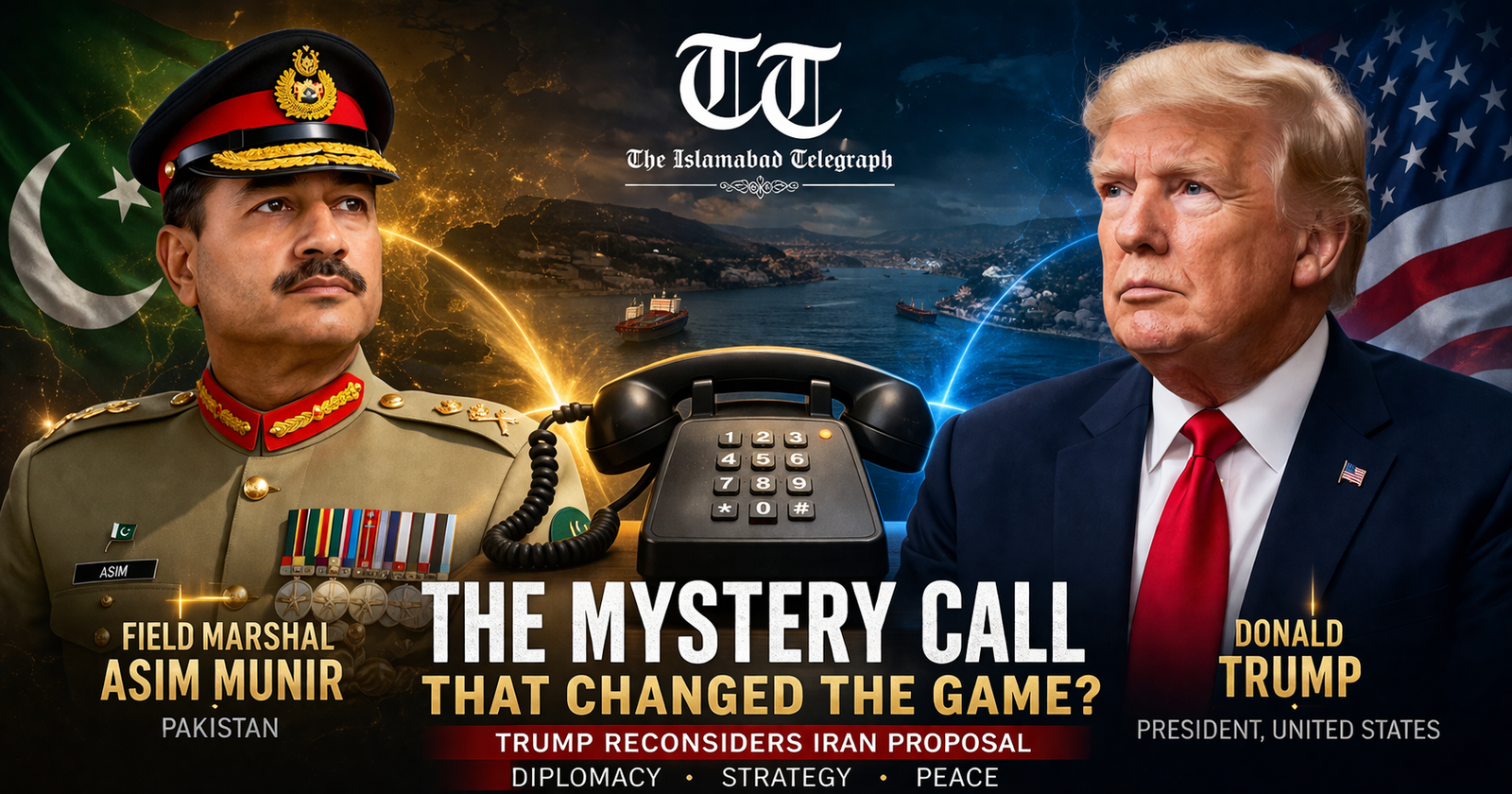
- Trump Iran proposal shift follows a mysterious call that changed White House stance
- U.S. now evaluating Iran’s offer to reopen Strait of Hormuz amid blockade tensions
- Pakistan emerges as a critical but quiet diplomatic player in crisis mediation
- Rising oil prices and disrupted shipping intensify global economic risks
WASHINGTON — In a striking and unexpected shift, Donald Trump has moved from dismissing Iran’s latest diplomatic proposal to ordering a serious internal review—an abrupt reversal that, according to multiple accounts, followed a “mystery call” whose origins remain undisclosed but whose impact is already reverberating across global capitals.
Just hours earlier, U.S. officials had indicated that Trump was prepared to reject Tehran’s offer outright. By Monday evening, however, the tone inside the White House had changed. Senior aides were instructed to evaluate the proposal “on a serious note,” signaling a potential opening in a conflict that has destabilized energy markets and strained diplomatic alignments from the Gulf to Europe.
The identity of the caller remains unknown, fueling intense speculation in diplomatic circles. Some observers point to Pakistan’s increasingly visible mediation role, while others suggest that a senior Pakistani figure—possibly Field Marshal Asim Munir or Shehbaz Sharif—could have urged Trump to reconsider. There is no official confirmation of either scenario. Yet what appears clear is that the message delivered carried enough weight to alter the trajectory of U.S. deliberations at a critical moment.
Oil Markets Surge as Trump Rejects Iran’s Peace Proposal Amid Growing Middle East Conflict
For weeks, Pakistan has quietly positioned itself as a key intermediary in the U.S.-Iran crisis, hosting indirect talks and facilitating backchannel communications. Officials familiar with the process say Islamabad has consistently pressed for de-escalation, warning of the mounting economic and humanitarian costs of a prolonged conflict.
At the center of the current debate is Iran’s proposal to decouple immediate military de-escalation from the broader and more contentious issue of its nuclear program. Under the plan, both sides would lift their respective blockades—Washington easing restrictions on Iranian ports, and Tehran reopening the Strait of Hormuz to global shipping—while postponing nuclear negotiations to a later stage.
Strait of Hormuz Breakthrough? Tehran Offers Maritime Peace for Sanctions Relief But Postpone Nuclear Talks
The proposal marks a tactical shift from Tehran, which appears to be prioritizing economic relief and regional stability over immediate concessions on its nuclear ambitions. For Washington, however, the sequencing presents a dilemma.
In an interview on Monday, Marco Rubio acknowledged that the Iranian offer was “better” than expected but reiterated that the nuclear issue remains central to any lasting resolution. “The nuclear question is the reason why we’re in this in the first place,” Rubio said, underscoring longstanding U.S. concerns about Iran’s enrichment activities.
Israel, Lebanon Talks Set for Washington as Iran–U.S. Dialogue in Islamabad Faces Uncertainty Amid Escalating Maritime Tensions
White House press secretary Karoline Leavitt confirmed that discussions are ongoing but declined to provide details, reflecting the sensitivity of the moment.
The stakes are immense. The near-paralysis of the Strait of Hormuz—through which roughly a fifth of the world’s oil supply typically flows—has sent shockwaves through global markets. Shipping traffic has collapsed, energy prices have surged, and supply chains are under mounting strain. Brent crude has climbed past $110 a barrel, raising fears of a prolonged economic shock reminiscent of the 1970s oil crises.
Complicating the picture further is the broader geopolitical landscape. Iran’s Foreign Minister, Abbas Araghchi, has embarked on a flurry of diplomatic engagements, including a high-profile meeting with Vladimir Putin in St. Petersburg. Moscow has signaled its willingness to mediate, though its dual-track approach—supporting Tehran while maintaining dialogue with Washington—has raised questions about its ultimate objectives.
U.S. weighs Iranian proposal that would open Strait of Hormuz but delay nuclear talks
Meanwhile, the conflict’s ripple effects continue to spread. In Lebanon, clashes between Israel and Hezbollah persist despite international efforts to broker a ceasefire, adding another layer of volatility to an already fragile region. Analysts warn that without progress on the U.S.-Iran track, parallel conflicts could further undermine diplomatic momentum.
Against this backdrop, Trump’s apparent willingness to reconsider Iran’s proposal—even if only tentatively—has injected a measure of cautious optimism. Those familiar with the White House deliberations say the president is increasingly aware of the war’s economic toll, both globally and domestically, as rising fuel prices and market instability begin to weigh on political calculations.
Still, significant obstacles remain. U.S. officials insist that any agreement must ultimately address Iran’s nuclear program, while Tehran has shown little inclination to accept preconditions that it views as infringing on its sovereignty.
The mystery call, whatever its origin, appears to have reframed the immediate question—not as a choice between acceptance and rejection, but as a strategic pause to reassess. Whether that pause leads to a breakthrough or merely prolongs a dangerous stalemate will depend on decisions made in the coming days.
For now, the world watches as a single, unexplained intervention reshapes the contours of a high-stakes confrontation—one in which the cost of miscalculation continues to rise, and the margin for diplomacy grows ever thinner.