



- U.S. Ground Offensive in Iran approved by Trump following Hegseth’s strategic recommendation
- Pentagon finalizes one of America’s largest military ground operations in decades
- Strategic targets include Kharg Island and Strait of Hormuz military infrastructure
- High-risk mission involves U.S. allies, with troops prepared for weeks of intense combat
WASHINGTON/TEHRAN — In a dramatic escalation that could redefine the trajectory of the ongoing Iran war, the Pentagon has given the final operational shape to what officials describe as one of America’s most significant ground military offensives in decades, following direct approval from Donald Trump on the recommendation of Defense Secretary Pete Hegseth.
According to multiple high-level sources who spoke to The Islamabad Telegraph, the decision—quietly finalized nearly two weeks ago—marks a turning point in Washington’s war calculus, shifting from largely aerial and proxy-based engagements to a coordinated, high-risk ground campaign deep inside Iranian territory.
“This is going to be America’s greatest ground military adventure in decades,” one senior defense analyst said, underscoring the scale and ambition of the plan.
A War Plan Years in the Making
Officials confirm that the groundwork for such an operation has been under study for years, but recent battlefield developments and escalating Iranian attacks across the region accelerated its execution timeline. War-gaming scenarios, contingency plans, and logistical frameworks have now been fully aligned.
“This is not last-minute planning,” a former senior defense official familiar with the strategy said. “Every scenario—from rapid insertion raids to extended coastal engagements—has been studied in depth.”
Iran says its forces are ‘waiting’ for US ground troops, as more American marines arrive in region
The plan, as it stands, does not resemble a full-scale invasion. Instead, it envisions a series of coordinated ground operations involving elite Special Operations units and conventional infantry, supported by naval and air power. These operations are expected to span weeks, potentially extending into months depending on resistance levels and evolving battlefield conditions.
Strategic Targets: Oil, Chokepoints, and Military Infrastructure
Among the primary objectives under consideration is the seizure or neutralization of Kharg Island, Iran’s most critical oil export terminal in the Persian Gulf. Control over this strategic asset would deal a devastating blow to Tehran’s economic lifeline while providing Washington with a powerful bargaining chip in future negotiations.
Additional targets include Iranian coastal missile installations near the Strait of Hormuz, a vital artery for global oil shipments. Military planners believe that neutralizing these sites could secure international shipping lanes and limit Iran’s ability to retaliate against commercial and military vessels.
Troop Build-Up and Regional Coordination
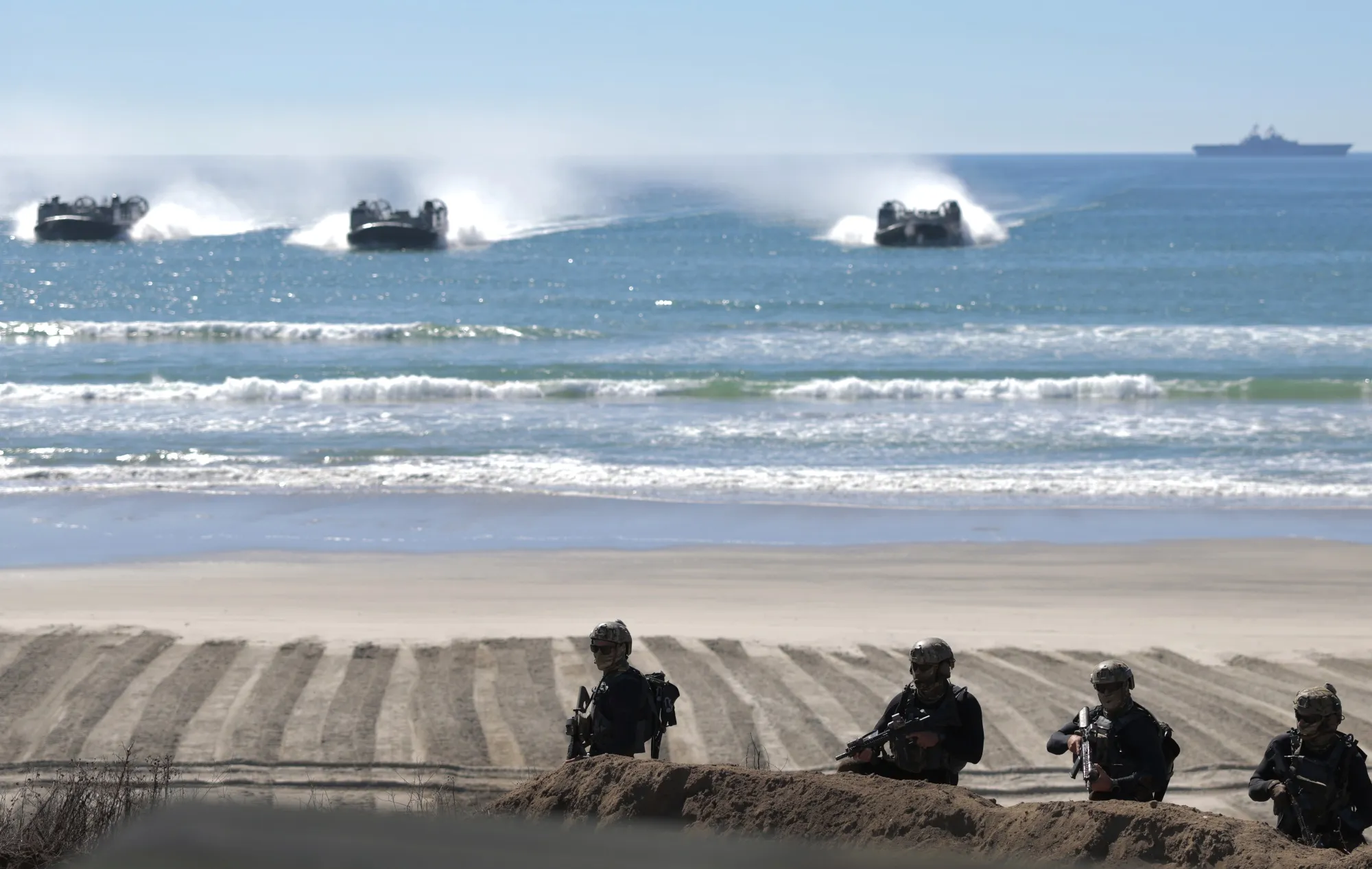
The deployment phase is already underway. Thousands of U.S. troops and Marines have been repositioned across the Middle East, including elements of the 31st Marine Expeditionary Unit, a rapid-response force capable of amphibious assaults and sustained ground operations.
Sources confirm that U.S. allies are deeply embedded in the planning and execution phases of this operation. From intelligence coordination cells in Washington to strategic war rooms in Jerusalem, a multinational framework is actively shaping the battlefield.
“Everyone—from soldiers on the ground to war room managers in Washington and Jerusalem—understands the stakes,” a source told The Islamabad Telegraph. “This is a coordinated military adventure, and every participant knows the risks involved.”
“We Will Accomplish the Mission at Any Cost”
In an exclusive conversation, Hegseth delivered a stark message reflecting the administration’s resolve.
“Everyone in this military adventure knows his job. We are going to accomplish the task at any cost,” he said.
The statement signals a hardened posture within the U.S. defense establishment, even as political messaging from the administration remains mixed. While Trump has publicly downplayed the likelihood of deploying ground troops, officials behind closed doors acknowledge that operational flexibility remains a key component of the strategy.
White House representatives have emphasized that preparations do not necessarily equate to immediate action, but insiders suggest the machinery of war is already in motion.
Risks: Drones, Missiles, and Urban Warfare
Military experts warn that any ground incursion into Iran carries immense risks. Iranian forces, particularly the Islamic Revolutionary Guard Corps, are expected to mount fierce resistance using drones, ballistic missiles, improvised explosives, and entrenched defensive positions.
Recent weeks have already seen significant casualties. At least 13 U.S. service members have been killed in various incidents across the region, while more than 300 have been wounded in retaliatory strikes targeting American bases.
“The challenge is not seizing territory—it’s holding it,” a former defense official said. “Once you’re on the ground, you’re exposed.”
Political Divisions and Public Resistance
Back home, the prospect of a ground war in Iran is deeply divisive. Lawmakers from both parties have expressed concerns, with some Republicans breaking ranks to oppose troop deployments. Public opinion polls suggest a majority of Americans are against sending ground forces into Iran, reflecting war fatigue and fears of another prolonged conflict.
Yet voices within Washington’s strategic community argue that limited, high-impact ground operations could shift the balance of power without triggering a full-scale war.
A Defining Moment
As the region braces for what could become the most dangerous phase of the conflict, the coming days will determine whether Washington proceeds with this ambitious and perilous plan.
For now, one thing is clear: the United States stands on the brink of a military escalation that could reshape not only the Iran war—but the global order itself.