



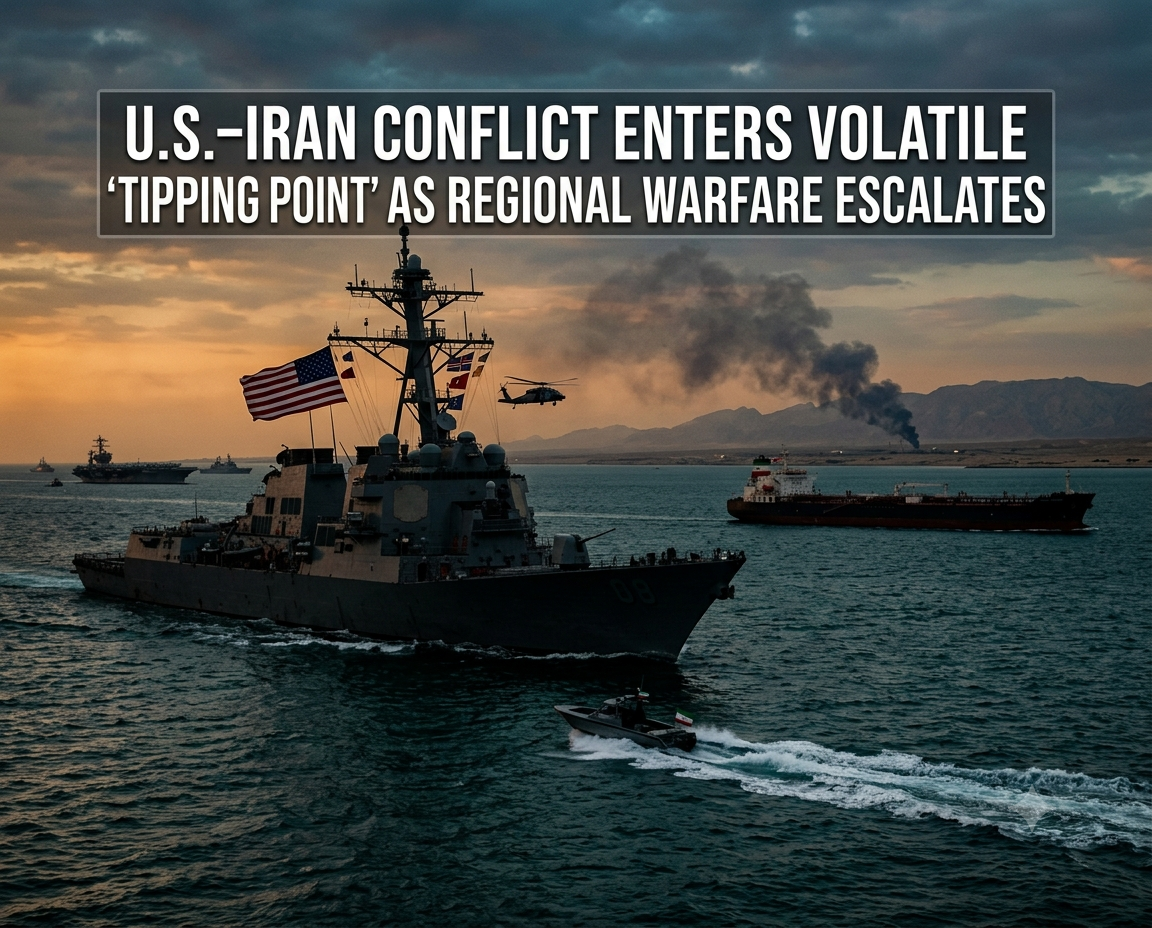
- U.S.-Iran war: Iran’s Red Crescent has appealed to the ICC for an independent investigation into the alleged strike on a wedding ceremony in Hormozgan.
- Washington denies targeting civilians, creating a major dispute over the intended target, intelligence used and precautions taken before the strike.
- The controversy comes amid escalating attacks across the Gulf, with the Strait of Hormuz remaining central to the conflict’s global economic consequences.
The U.S.-Iran war has taken a sharply uglier turn after an alleged American strike on a wedding ceremony in southern Iran killed at least four people and wounded 67, prompting Tehran to demand an international investigation and intensifying scrutiny of Washington’s conduct in a conflict already carrying a heavy civilian toll.
The Iranian Red Crescent Society (IRCS) has appealed to the International Criminal Court’s Office of the Prosecutor to examine the September 1 attack in Kuhestak, Sirik County, Hormozgan Province. The organization said the strike hit a civilian gathering at about 9:30 p.m. local time, when families had gathered for a wedding.
The allegations remain disputed. Tehran says civilians were deliberately or unlawfully struck, while Washington insists that American forces do not target civilians. The U.S. military, through Central Command spokesman Capt. Tim Hawkins, said reports originated from Iranian state media and maintained that American forces “never target civilians.” President Donald Trump has likewise rejected allegations that the United States deliberately attacks civilians.
READ NEXT: U.S.-Iran Conflict Reignites Ahead of Pakistan Talks, Sending Oil Prices Soaring Globally
But the competing claims have created a serious international-law question that cannot be settled by political statements alone: what exactly was targeted, what intelligence justified the strike, and were feasible precautions taken to protect civilians?
The IRCS has asked the ICC to receive and assess available information, preserve evidence and determine whether the incident falls within the Court’s jurisdiction. The Rome Statute gives the ICC authority over individuals accused of genocide, crimes against humanity, war crimes and aggression, subject to its jurisdictional requirements.
Reuters’ latest report on the Iran war and civilian casualties
Civilian toll becomes the new battlefield
Iranian officials say the wedding strike was part of a wider U.S. assault that killed 18 people and wounded 108 across Iran. The IRCS says four people were killed and approximately 67 wounded at the wedding, with several victims reportedly in critical condition.
The United Nations has expressed alarm over reports of civilian casualties, including the reported wedding strike, and called for all parties to respect international humanitarian law, particularly the principles of distinction, proportionality and precaution.
READ MORE: Live Updates: Iran ignores Trump’s warning, claims new attacks on bases used by U.S. troops in Kuwait, UAE
That intervention matters because the dispute is moving beyond the familiar battlefield argument of who fired first. It is increasingly becoming a test of whether the world’s most powerful military can demonstrate that its targeting decisions complied with the rules governing armed conflict.
Reuters reported that satellite imagery was used to verify the location of the damaged structure and a fallen utility tower, establishing a geographical relationship between the two. Such independent evidence could become important if investigators attempt to reconstruct the attack.
The controversy is also reviving memories of the earlier Minab school strike, where Iran reported approximately 160 deaths. The Pentagon has not publicly released a final finding on that incident, while Reuters previously reported that outdated targeting information may have contributed to the attack.
Reuters reporting on the earlier Minab strike and targeting questions
The cumulative effect is politically significant. Even if Washington ultimately demonstrates that the wedding venue was not the intended target, civilian casualties can still raise questions about proportionality and precautions. Conversely, Iran’s allegations will require independent verification rather than acceptance simply because they originate from Iranian authorities.
That is precisely why an investigation matters.
Hormuz turns a civilian tragedy into a global crisis
The danger extends far beyond Iran’s southern coastline. The latest American strikes were concentrated around Iran’s strategically vital southern region, close to the Strait of Hormuz, while Tehran responded with missile and drone attacks against U.S. positions in Bahrain, Jordan, Kuwait and Iraq.
The conflict has therefore entered a dangerous feedback loop: American strikes intensify Iranian retaliation; Iranian attacks increase pressure on Washington to respond; and every new exchange raises the possibility of attacks spreading across the Gulf.
The economic stakes are enormous. The U.S. Energy Information Administration estimates that oil and petroleum-liquid flows through Hormuz averaged only 4.9 million barrels per day in the second quarter of 2026, down dramatically from 21.6 million barrels per day in the final quarter of 2025 before the conflict.
Brent crude has already demonstrated how quickly military escalation translates into economic pressure. EIA data show prices reaching $118 a barrel on April 29 before falling sharply as diplomatic openings emerged. Renewed fighting subsequently pushed Brent as high as $105 in July.
On Thursday, Reuters reported Brent around $95 a barrel as markets assessed the consequences of renewed U.S.-Iran attacks.
Reuters report on oil markets and renewed U.S.-Iran strikes
The accountability question Washington cannot avoid
The most consequential question now is not whether Iran or the United States can claim battlefield superiority. It is whether either side can prevent a military confrontation from becoming a war in which civilian protection is subordinated to strategic objectives.
For Iran, the ICC appeal is an attempt to move the dispute from military retaliation to international law. For Washington, the strongest response would not simply be another denial but transparent evidence showing what target was selected, what intelligence supported the decision and what measures were taken to protect civilians.
The ICC itself is not a substitute for an independent fact-finding mechanism. It prosecutes individuals, not governments, and depends heavily on jurisdiction and state cooperation.
Yet the symbolism of Tehran seeking international scrutiny is powerful. Iran is effectively challenging Washington to prove that its military campaign is being conducted according to the same legal standards the United States has long demanded of its adversaries.
That makes the Kuhestak wedding strike more than another tragic episode in a seven-month war. It has become a test of credibility—for Washington, Tehran and the international system itself.
If the allegations are false, an independent investigation should establish that. If they are substantiated, accountability cannot depend on the identity of the attacker.
In a war already threatening global energy security, the most dangerous escalation may be the normalization of civilian deaths without credible investigation.