



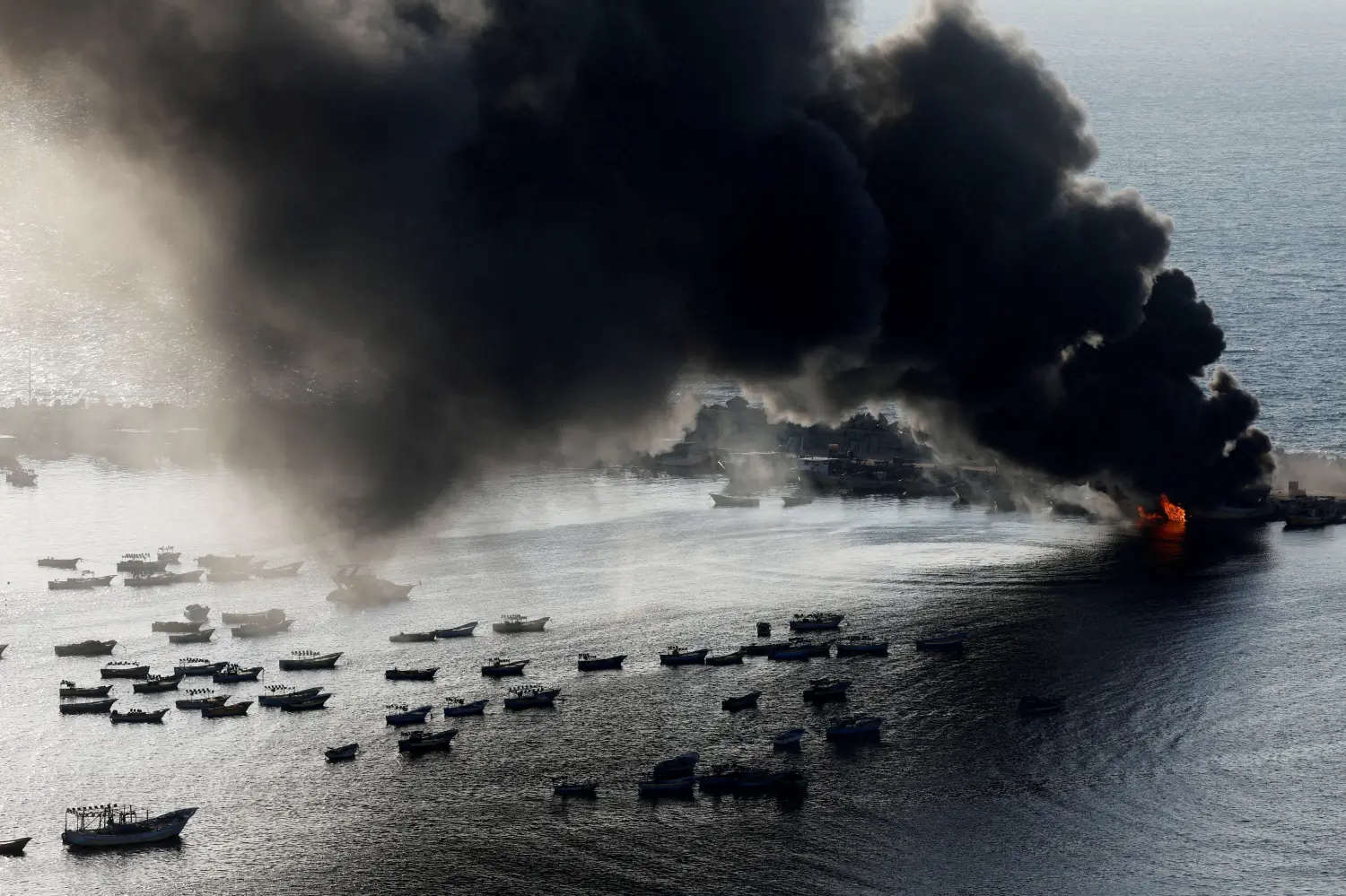
- U.S.–Israel Attack on Iran: The United States and Israel have launched major airstrikes on Iran under Operation Epic Fury.
- Negotiations have failed.
- Iran refused to abandon what Washington and Israel describe as its nuclear weapons ambitions, a genuine red line for President Donald Trump and Israeli leadership.
- Trump states Iran will never be allowed to possess a nuclear weapon.
- Trump warns Iran is close to developing missiles capable of striking the United States.
- President Trump says the Iranian regime has chanted “Death to America” for 47 years and remains the leading sponsor of state terrorism.
- Trump describes the leadership of the Iranian regime as “evil” and declares it must be destroyed.
- Trump calls on the Iranian Revolutionary Guard Corps, Iranian military forces, and police to surrender, lay down their arms, and receive immunity — or face certain death.
Iranian leaders, observers argue, should have understood that President Trump carries vivid memories of November 4, 1979 — the day Iran’s revolutionary regime seized U.S. Embassy staff hostage and broadcast the humiliation daily on American television until January 1981.
For more than a year, Trump watched blindfolded Americans pleading for mercy on morning television. He developed lasting contempt for what he viewed as the weakness of President Jimmy Carter, believing the crisis projected American vulnerability.
Trump has long framed the Iranian leadership as representing pure evil. He rejects the idea of the United States acting as the world’s policeman when American taxpayers bear the cost. However, he has consistently pledged to defend nations he considers genuine allies — particularly those contributing to American security partnerships.
Iranian Missiles Rain Down on Jerusalem and Tel Aviv as Israel Responds with Pre-Emptive Strikes
Trump has repeatedly indicated he will defend Israel if he believes the country faces imminent danger, placing that commitment above most other foreign policy considerations.
He prefers peace and trade over war, arguing he is not inherently a man of blood. Unlike former presidents Barack Obama and Joe Biden, he insists on meeting families of fallen American soldiers and aims to be present when coffins return home.
Trump places profound value on American lives.
His preferred regime-change model has been Venezuela: remove leadership, install a cooperative replacement, avoid American casualties, preserve infrastructure, and prevent long-term military occupations like those in Iraq and Afghanistan — conflicts he argues contributed to the $34 trillion U.S. national debt.
- Trump urges the Iranian people to rise up and take control of their government.
- Trump is gambling that Xi Jinping and Vladimir Putin will not intervene to aid Iran.
- Trump acknowledges the risk of U.S. casualties.
- Trump calls on God to protect American troops.
- Debate has reportedly emerged inside the White House regarding biblical prophecy, including Jeremiah 49:35–39, Daniel Chapters 9–12, Ezekiel 36, Jeremiah 16:16, and Ezekiel 38–39.
- Israel considers Iran’s nuclear ambitions an existential threat.
- Trump states he will obliterate Iran’s industry and navy if necessary.
- Iran retaliates against U.S. bases and other targets across the Middle East.
At 6:00 a.m. GMT, U.S. forces launched regime-change strikes targeting Tehran locations including Jomhouri Square and Hassan Abad Square, alongside attacks in Isfahan, Qom, Karaj, and Kermanshah. Analysts say Trump is signaling sustained military pressure aimed at senior Iranian leadership, including the Supreme Leader.
Iran leadership sites targeted by US and Israel as Tehran retaliates with strikes across region
Trump is betting that millions of Iranians will rise against the Islamic Revolutionary Guard Corps.
Iran’s leadership now appears to face two options: surrender and flee, or inflict heavy American casualties to pressure U.S. Congress and media into forcing an end to operations.
Posting on Truth Social, Trump wrote:
“Our objective is to defend the American people by eliminating imminent threats from the Iranian regime.”
He added the United States would “ensure that Iran does not obtain a nuclear weapon.”
U.S. Joins Israel in Attack on Iran: Global Security Faces Historic Escalation
Trump urged Iranian civilians to remain indoors during airstrikes but later called on them to reclaim political control, stating: “When we are finished, take over your government. It will be yours to take. This may be your only chance for generations.”
Israel’s prime minister similarly called on Iranians “to throw off the yoke of tyranny and bring about a free and peaceful Iran,” arguing joint action could create conditions for political change.
Israel declared a nationwide state of emergency, warning of likely missile retaliation. Citizens were instructed to remain home for three days unless classified as essential workers, while Israeli airspace closed to civilian flights.
UK Prime Minister Keir Starmer distances his government from the U.S. attacks, fearing mass protests and potential revenge strikes by Iranian sleeper cells.
- Trump sends signals to Xi Jinping, Narendra Modi, and the European Union regarding ongoing tariff negotiations.
- French, German, and Saudi leadership are reportedly privately relieved that the Iranian regime is under pressure.
- Iran vows a “crushing response” to the U.S.–Israel attack.
- President Donald Trump described the operation as “massive major combat operations” and again called on Iran’s Revolutionary Guard, military, and police to surrender. He promised fair treatment and immunity for compliance but warned of “certain death” for resistance.
In Bahrain, Iran launched missile attacks targeting the U.S. Navy’s Fifth Fleet. Iran also fired missiles toward Qatar; authorities reported interceptions, though explosions were heard near Doha’s Al Udeid Air Base, the largest U.S. military installation in the region.
The blasts occurred near venues used during the recent FIFA World Cup.
Airlines worldwide have suspended flights across large parts of the Middle East, disruptions that could expand into Europe and transatlantic routes as the conflict escalates, threatening global business despite digital connectivity.
In the United Kingdom, motorists rushed to fuel stations amid fears of energy price spikes caused by potential supply disruptions.
The UK Foreign Office issued strengthened travel warnings covering Jordan, Syria, Lebanon, Iraq, Yemen, Turkey, Saudi Arabia, and Oman — a list expected to grow.
Trump maintains negotiations were pursued but ultimately reached total impasse, leaving force as the final option.
He is also signaling strength to China, India, and the European Union ahead of tariff negotiations, emphasizing American military and economic power despite legal challenges limiting executive tariff authority. Trump argues tariff policies were already returning manufacturing jobs to the United States after decades of outsourcing.
He is gambling that Vladimir Putin will remain neutral and that China will avoid defending Iran despite discounted oil supplies meeting roughly 14% of Chinese demand.
Trump appears willing to accommodate Russian demands over Ukraine in exchange for Moscow distancing itself from Tehran.
UK Prime Minister Sir Keir Starmer has drawn criticism from some commentators for distancing Britain from Washington and Israel while facing domestic political pressure and security concerns.
Observers note fears within Britain of retaliatory attacks and rising domestic unrest. Political tensions have intensified following electoral setbacks and broader economic frustrations among younger voters facing debt and limited employment opportunities.
Some analysts argue Starmer’s political position has weakened significantly, with commentator Mark Sutherland warning investors that “desperate people do desperate things.”
French and German leaders are reportedly relieved to see pressure placed on Iran but remain concerned about retaliation. Saudi leadership believes Iran’s strategic rivalry with Sunni states made them potential primary targets ahead of Israel.
Within Trump’s political base, evangelical Christian advisers reportedly view Middle Eastern developments through a biblical prophetic framework. Discussions referencing ancient names for Iran — Persia and Elam — and passages from Jeremiah, Daniel, and Ezekiel have circulated among some policymakers.
Trump himself is not considered a biblical scholar but is influenced by advisers and religious figures, including U.S. Ambassador to Israel Mike Huckabee, Pastor John Hagee of San Antonio, and evangelical leaders Michele Bachmann and Jan Markell of Olive Tree Ministries.
Analysts argue policymakers seeking to understand Trump’s strategic thinking must also understand the ideological and religious perspectives shaping parts of his advisory circle.