



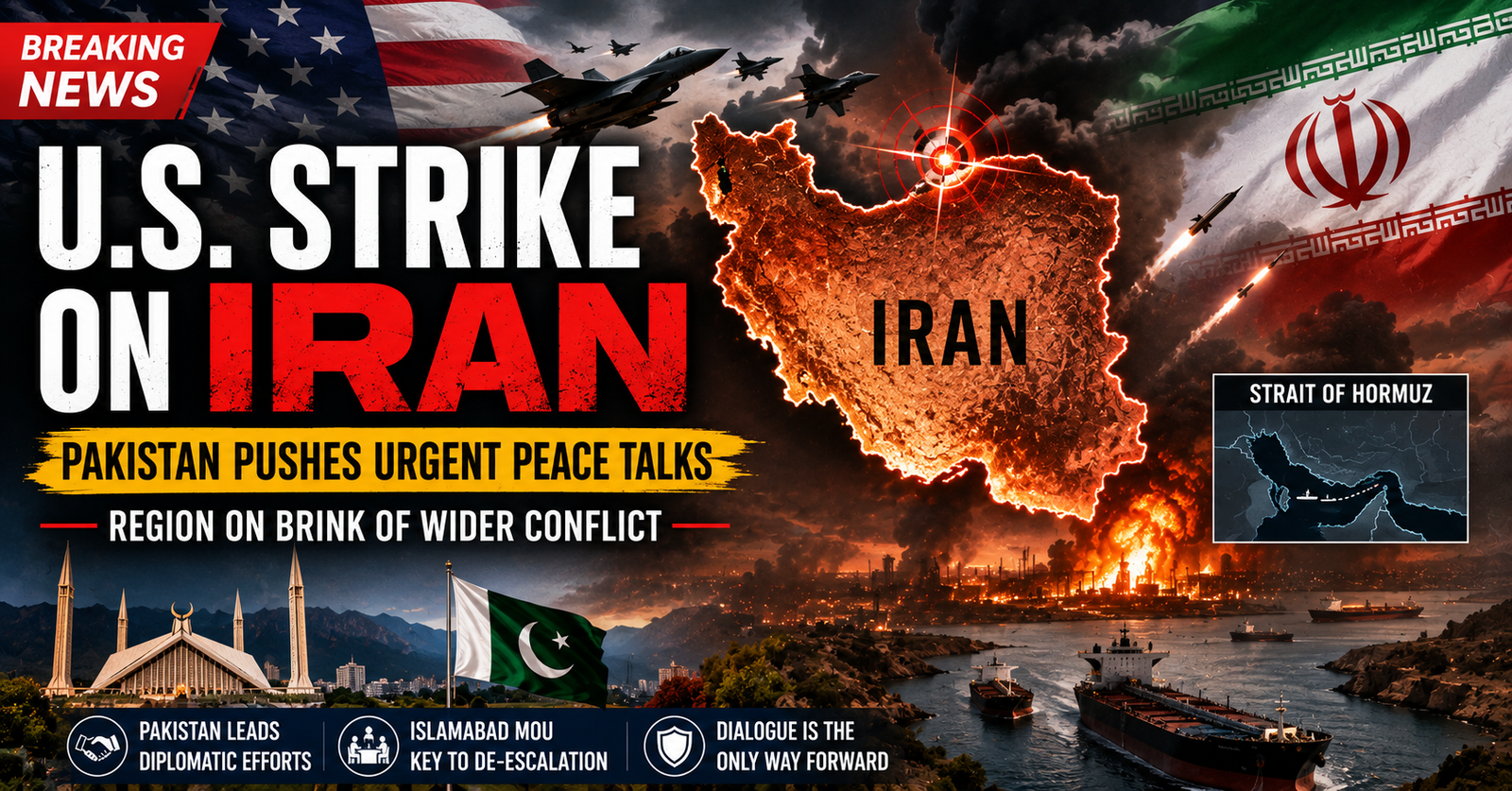
- U.S. strike on Iran threat grows as Pakistan pushes urgent diplomacy
- Islamabad urges both sides to return to MoU talks to prevent escalation
- Jordan attack triggers fears of wider Middle East conflict
At a weekly press briefing, Foreign Office spokesperson Tahir Andrabi said Pakistan is doing its “utmost” to bring Washington and Tehran back to the negotiating table under the Islamabad Memorandum of Understanding (MoU), even as the U.S. strike appears increasingly imminent.
Pakistan Urges Dialogue Amid U.S. Strike on Iran Threat
Andrabi warned that the Middle East security environment remains “precarious,” noting that the brief calm seen in recent days could collapse if the U.S. strike proceeds.
“We welcome all efforts aimed at sustaining cessation of hostilities and resumption of dialogue between Iran and the U.S.,” he said, reiterating that diplomacy—not escalation—is the only viable path forward in light of the U.S. strike on Iran crisis.
READ NEXT: U.S. Strike on Iran: 2-Week Decisive Military Campaign Aims to Cripple Tehran’s War Capabilities
Pakistan is actively working to bring both sides back to the Islamabad MoU, signed on June 18, which aims to stabilize the region and prevent outcomes like a prolonged U.S. strike on Iran scenario.
Islamabad MoU Key to Preventing U.S. Strike on Iran
According to Andrabi, ongoing diplomatic engagements are focused on de-escalation, particularly in the Strait of Hormuz, a critical global oil route that could be severely impacted by the U.S. strike on Iran.
Pakistan is urging both Tehran and Washington to honor commitments made under the MoU and the Pakistan–Qatar joint statement, ensuring that tensions do not spiral into a broader U.S. strike on Iran conflict.
READ MORE: Pakistan says ‘doing utmost’ to bring US, Iran back to Islamabad MoU
“Pakistan will continue its engagement to normalize the situation and avoid escalation,” Andrabi said.
Jordan Attack Sparks U.S. Strike on Iran Planning
Pakistan’s statement comes after Iran targeted U.S. forces in Jordan, an attack that has triggered Washington’s plans for a two-phase U.S. strike on Iran targeting military infrastructure.
Officials in Islamabad believe the planned U.S. strike on Iran could mark a dangerous turning point, pushing the region toward intense and prolonged fighting.
Security analysts warn that even a limited U.S. strike on Iran could ignite retaliatory attacks, disrupt global oil supplies, and destabilize already fragile economies across the Middle East.
Call for Restraint
Andrabi urged both sides to exercise “maximum restraint” and resume technical-level talks immediately to prevent the U.S. strike from escalating further.
“The recent calm had rekindled hopes for a durable ceasefire,” he noted, warning that any military action like a U.S. strike could erase diplomatic gains.
The Islamabad MoU framework remains Pakistan’s primary tool to prevent escalation and avoid a prolonged U.S. strike on Iran crisis.
Global Alarm Over Expanding U.S. Strike
International concern is mounting as the possibility of a U.S. strike grows. UN Secretary-General Antonio Guterres has warned that failure to return to diplomacy could widen the conflict significantly.
With mediation efforts involving Pakistan and Qatar underway, the world is closely watching whether diplomacy can still prevail over the intensifying strike on Iran trajectory.
Pakistani authorities believe continued escalation, particularly through a strike on Iran, could push the region into “serious and ferocious fighting,” putting both peace and economic stability at grave risk.
As tensions peak, Pakistan is positioning itself as a critical mediator, working urgently to prevent the U.S. strike on Iran from becoming a prolonged and devastating conflict.