



- U.S strike on Iran appears imminent as CENTCOM briefs Trump on finalized military targets across Iranian territory
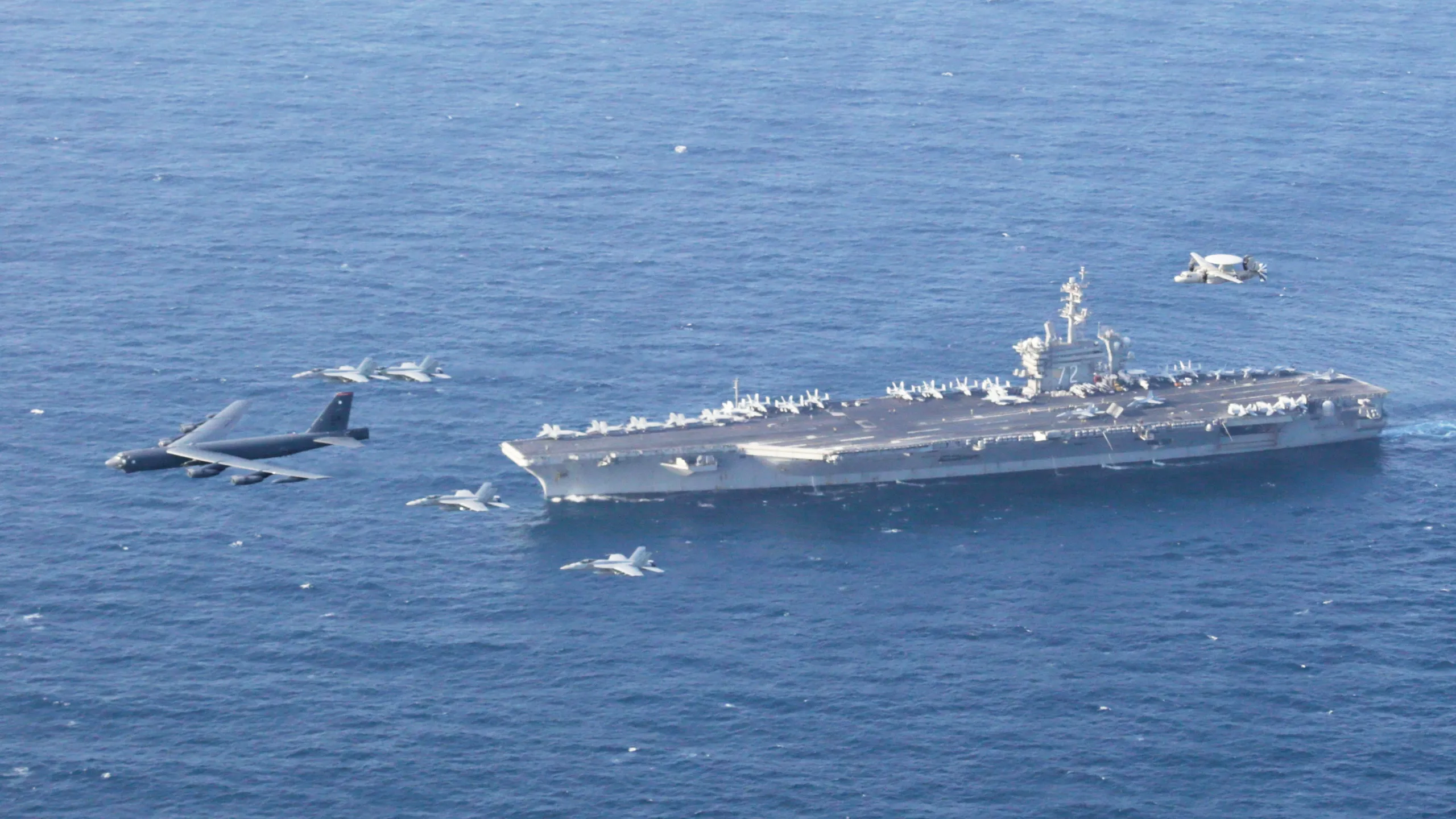
- USS Abraham Lincoln carrier strike group boosts America’s offensive capability in Middle Eastern waters
- Tehran signals fierce retaliation, including threats to close the Strait of Hormuz and target U.S assets
- Intelligence reports suggest Iranian leadership uneasy despite strong public anti-U.S sentiment
The United States has quietly but decisively positioned a strike force in the Middle East capable of unleashing what insiders describe as an unprecedented military assault on Iran — an operation whose scale and intensity would eclipse anything previously seen in the region.
According to multiple sources familiar with deliberations inside Washington, commanders of U.S. Central Command have already briefed President Donald Trump on finalized operational plans. Targets across Iran — military installations, command centers, missile infrastructure, and regime-linked strategic assets — have reportedly been locked in.
“This is not about symbolic strikes,” one regional security source said. “This is about overwhelming force meant to cripple Iran’s military capacity in days, not weeks.”
U.S. Prepares for Iran Attack: Military Buildup, Tehran Tensions, and Drone Threats
At the heart of the deployment is a U.S. naval strike group led by the aircraft carrier USS Abraham Lincoln, now operating in Middle Eastern waters. While CENTCOM has not disclosed its precise location, its presence dramatically expands Washington’s ability to carry out sustained air operations, precision missile attacks, and electronic warfare campaigns deep inside Iranian territory.
President Trump has publicly oscillated between warning and diplomacy. “We have a big armada next to Iran. Bigger than Venezuela,” he told Axios, referencing a previous U.S. intervention that ended in the capture of Venezuela’s leadership. Yet he simultaneously insisted Tehran was seeking talks. “They want to make a deal. I know so. They called on numerous occasions.”
U.S. carrier strike group enters Middle East region after Iran commander warns U.S. its forces have “finger on the trigger”
Behind closed doors, however, U.S. intelligence briefings paint a far more aggressive picture. The New York Times reported Trump has received assessments suggesting the Iranian regime is at its weakest point since the 1979 revolution, with growing internal strain following the bloodiest crackdown on protests in the country’s history.
More than 3,000 people were reportedly killed within days as security forces crushed nationwide demonstrations sparked by inflation and economic despair. Rights organizations believe the true death toll could exceed 4,000, though verification has been severely hindered by a near-total internet blackout imposed by authorities.
U.S. Prepares for Iran Attack: Military Buildup, Tehran Tensions, and Drone Threats
Thousands more have been arrested, with activists accusing security agencies of raiding hospitals to detain injured protesters. Human rights monitors describe a campaign of mass intimidation designed to erase evidence and regain control of the narrative.
Yet despite the brutality, the Iranian regime may not be as fragile as some in Washington hope.
A senior journalist based in Tehran told The Islamabad Telegraph that while unease is evident within the upper echelons of the ruling establishment, public sentiment remains largely behind the government — particularly in rural areas.
“The regime is still enjoying massive support of the public,” he said, speaking on condition of anonymity. “Anti-U.S. sentiment runs very high across the countryside. It will not be easy to mobilize people against the system. However, I have seen clear uneasiness among the top brass. They know the pressure is mounting.”
This dual reality — outward stability paired with elite anxiety — is shaping Tehran’s increasingly confrontational posture.
Iranian officials have openly threatened retaliation should U.S. forces strike. Revolutionary Guards spokesman Mohammad Ali Naini warned that any American aircraft carrier entering Iranian waters would be targeted. Conservative newspapers went further, declaring Iran was prepared to shut down the Strait of Hormuz — the world’s most critical energy transit chokepoint — through which nearly a fifth of global oil flows.
An anti-U.S. billboard in Tehran depicting the destruction of an American aircraft carrier underscores how the regime is preparing the public psychologically for confrontation.
The rhetoric escalated sharply last week when both sides exchanged direct threats over potential assassinations of leadership figures.
“If anything happens, they’re going to wipe them off the face of the earth,” Trump said in a News Nation interview, referring to Iran’s warnings against targeting him.
Iranian General Abolfazl Shekarchi responded bluntly: “If a hand of aggression is extended toward our leader, we will not only sever that hand — we will set their world on fire and leave them no safe haven in the region.”
Such language reflects how close the standoff has moved toward a direct military collision.
Analysts say Washington’s options range from targeted strikes on military infrastructure to a broader campaign aimed at destabilizing — or even toppling — the regime itself. U.S. Senator Lindsey Graham confirmed discussions with Trump about ending Iran’s ruling system, arguing that temporary restraint would only delay future bloodshed.
Yet history suggests that external military pressure often strengthens nationalist resolve inside Iran rather than weakens it.
While elite factions may be rattled by the scale of U.S. preparations, widespread hostility toward American intervention remains deeply entrenched among much of the population — a factor that could blunt Washington’s hopes for rapid internal collapse.
What appears increasingly clear is that both sides are moving into a high-risk phase where miscalculation could ignite a regional war.
With U.S. strike assets in place, Iranian forces on full alert, and political rhetoric reaching incendiary levels, the Middle East is standing at the edge of a conflict that could reshape the region’s security order for years to come.
Whether diplomacy prevails or the world witnesses the “unprecedented” assault insiders warn about may depend less on strategy — and more on which side blinks first in a confrontation neither seems willing to back away from.