


- US-Iran talks Islamabad emerge as a critical diplomatic breakthrough with high chances of success
- Trump administration demands release of American detainees as a goodwill gesture
- Iran submits new conditions including sanctions relief and security guarantees
- Israel suspends Lebanon strikes, signaling seriousness ahead of negotiations
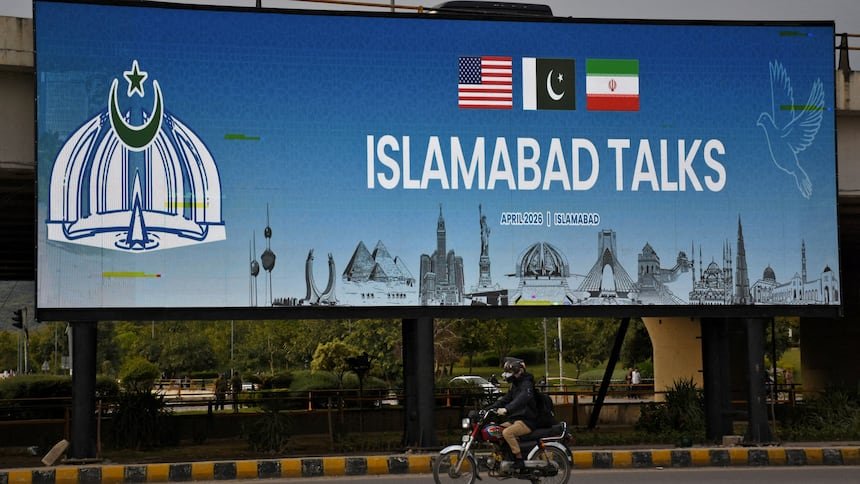
Islamabad — In a development that could redefine the trajectory of the Middle East crisis, high-stakes negotiations between the United States and Iran are set to begin in Pakistan’s capital this weekend, with both sides signaling cautious optimism despite deep mistrust and unresolved strategic divides.
According to senior sources within the Pakistani government, the administration of Donald Trump has already conveyed a critical precondition to Tehran: the release of American detainees held in Iran. The demand, insiders say, is being positioned as an early confidence-building measure—one that could set the tone for broader negotiations aimed at ending weeks of conflict involving U.S. and Israeli forces.
“The message has been passed clearly through diplomatic channels,” a senior official familiar with the discussions told The Islamabad Telegraph. “Washington sees the release of detained Americans as a goodwill gesture that can unlock momentum in talks.”
At least six U.S. nationals are believed to be held in Iran, including individuals detained on espionage-related charges widely dismissed by international rights groups as politically motivated. Advocacy organizations argue that their release would provide Tehran with a low-cost diplomatic opening, particularly at a time when the country is under immense military and economic pressure.
On the ground in Islamabad, preparations are already underway. The Iranian delegation has arrived, while a high-powered U.S. team—including Vice President JD Vance, Secretary of State Marco Rubio, and senior envoy Steve Witkoff—is expected to land within hours. Also expected is Jared Kushner, a key architect of Trump-era Middle East diplomacy, underscoring the seriousness of the engagement.
Asim Munir Iran War Diplomacy: How Pakistan’s Field Marshal Convinced Trump to Delay Strike on Iran
Sources familiar with the backchannel diplomacy say the talks have “bright chances” of yielding tangible outcomes, particularly after both sides demonstrated flexibility in the lead-up to negotiations.
One of the most significant signals came from Israel. As a crucial precondition for talks, the government of Benjamin Netanyahu has suspended military operations in Lebanon—a move widely interpreted by regional observers as a gesture of alignment with Washington’s diplomatic push.
U.S., Iran delegations head to Islamabad as Tehran demands measures before talks start
“This is not a symbolic step,” said a regional security analyst based in Islamabad. “Halting operations in Lebanon reflects a coordinated effort to create a conducive environment for negotiations. It shows that all parties understand the stakes.”
The ceasefire, however, remains fragile. Just days ago, tensions escalated over disagreements بشأن whether Lebanon was included in the broader truce framework. Iran had threatened to withdraw from the agreement if Israeli strikes continued, highlighting how quickly the situation could unravel.
Beyond detainees, the core issues dividing Washington and Tehran remain formidable. Chief among them is Iran’s closure of the Strait of Hormuz, a strategic chokepoint through which a significant portion of the world’s oil supply flows. The blockade has sent global energy markets into turmoil, driving up fuel prices and intensifying pressure on the Trump administration at home.
Equally contentious is Iran’s stockpile of enriched uranium. The U.S. insists that Tehran must never be allowed to develop nuclear weapons capability, while Iran has categorically rejected demands to fully abandon enrichment.
Sources indicate that Tehran has also tabled a set of fresh demands ahead of the Islamabad talks. While details remain closely guarded, officials familiar with the proposals suggest they include phased sanctions relief, guarantees بشأن non-aggression, and the unfreezing of Iranian financial assets held abroad.
“Iran is not coming empty-handed,” said a diplomat briefed on the discussions. “They have their own expectations, and they want tangible concessions before making any major moves.”
Public rhetoric from both sides, however, continues to reflect deep skepticism. President Trump has dismissed some Iranian proposals as “unworkable,” while Iranian officials have accused Washington of negotiating in bad faith.
Yet behind the scenes, there appears to be a shared recognition that the current trajectory is unsustainable. The war has imposed heavy costs on both sides—militarily, economically, and politically—creating what one Western diplomat described as a “mutual urgency to find an off-ramp.”
Pakistan’s role in hosting these talks has also drawn international attention. Long viewed as a peripheral player in Middle Eastern diplomacy, Islamabad has now positioned itself as a neutral convening ground capable of facilitating dialogue between adversaries.
Diplomatic insiders credit Pakistan’s military and political leadership for quietly building trust with both Washington and Tehran in recent weeks, paving the way for what could become one of the most consequential negotiations in recent history.
As delegations prepare to sit across the table, expectations remain tempered but hopeful. The path to a comprehensive agreement is fraught with obstacles—from nuclear disputes to regional proxy conflicts—but the convergence of diplomatic signals suggests that, for the first time in weeks, a window for de-escalation may be opening.
Whether that window leads to a lasting peace or merely a temporary pause will depend on what unfolds in Islamabad over the coming days. For now, the world watches closely as Pakistan’s capital becomes the stage for a high-stakes gamble on diplomacy.