



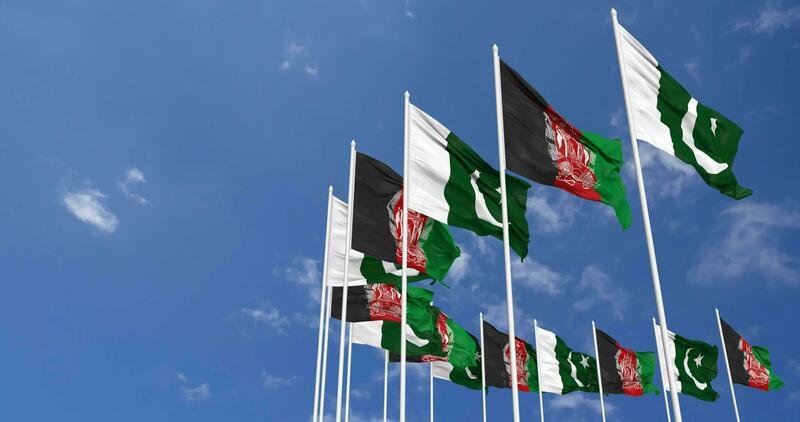
- Islamabad and Kabul Mediation Deficit: While the US and Secretary of State Marco Rubio have offered a productive role, Washington lacks close ties to Kabul and cannot bridge the divide alone.
- The Multi-Actor Framework: A lasting settlement requires a divided approach—Qatar maintaining the diplomatic channel, Saudi Arabia providing political cover, and the US supplying verification technology and pressure.
- Conditional Reciprocity: Any credible framework must tie Taliban concessions on militant groups to suspended Pakistani cross-border strikes and phased border reopenings.
In September, both sides of the Pakistan-Afghanistan conflict made their case to Al Arabiya. Pakistan’s military spokesman accused the Taliban of allowing Afghan territory to be used to recruit, arm and launch militants.
Taliban spokesman Zabihullah Mujahid denied the charge, warned of a “crushing response” to any Pakistani strike, and said Saudi Arabia, as a friend of both countries, “can play a positive role.” Islamabad treated Kabul’s offer of dialogue as a pretence rather than a path to resolution.
Six weeks later, on October 31, US Secretary of State Marco Rubio said Washington would play a “productive role” if one existed. Pakistan welcomed the offer within a day, but on one condition: verifiable Taliban action against the Tehreek-e-Taliban Pakistan, the Baloch Liberation Army and other groups operating from Afghan soil. Kabul repeated its standard reply that Pakistan’s insecurity is Pakistan’s own problem.
Both sides will accept talks. Neither will move on what the talks are about.
Islamabad And Kabul Need Enforcement, not Dialogue
This year has brought the most sustained fighting between the two neighbours since the Taliban returned to power. Pakistani airstrikes have reached Kabul. Cross-border trade and transit, including the route linking Central Asia to Pakistani ports, have been largely halted. On November 1, an exchange of fire near Torkham briefly closed the crossing again.
READ MORE: Pakistan-Afghanistan Tensions: China Steps In as Islamabad Intensifies Operations Against Terrorist Sanctuaries
Mediation has not been lacking. A Qatari-Turkish ceasefire agreed in Doha in October 2025 collapsed. In Istanbul, the parties agreed in principle to a monitoring and verification mechanism with penalties for violations, but it never took effect. Chinese efforts stalled, and the Moscow Format meeting in October ended without a joint statement. The few tangible results came with Saudi involvement: the release of three Pakistani soldiers in February and the Eid truce in March, secured together with Qatar and Türkiye.
These results matter, but they show the difference between interrupting a conflict and resolving it. Pakistan wants the Taliban to act against a movement bound to them by shared ideology, history and longstanding personal and militant networks. For Kabul, that carries an internal cost. For Islamabad, accepting unverified promises carries the risk of further attacks.
READ MORE: Pakistan to join Moscow talks on Afghanistan today amid tensions with Kabul
The obstacle is not a shortage of dialogue. It is the absence of an arrangement that makes compliance more rewarding than defiance, and that makes violations independently verifiable.
Washington’s limits
The United States cannot build that arrangement alone. It has real influence in Islamabad but little in Kabul, where it has no embassy and recognises no government. Its principal instruments of leverage over Kabul remain punitive: sanctions, financial restrictions and withheld recognition. Rubio himself acknowledged that Washington lacks a close relationship with the Taliban.
Washington has also been far more receptive to Pakistan’s security case than to Kabul’s, which makes it hard to present as neutral. And with the confrontation with Iran still absorbing American attention, months of patient shuttle diplomacy along the Durand Line are unlikely to become a priority.
The US offer still has value. Washington can press Islamabad to accept verification instead of unilateral strikes, and it can supply intelligence and technical capacity for monitoring. But influence over one party and pressure on the other do not make a mediator.
Two Gulf actors, not one bloc
Qatar has been the Taliban’s principal diplomatic channel since the Doha process of 2020. It offers access, a venue and a degree of trust that Washington lacks.
Saudi Arabia brings different assets. It has religious standing that a movement claiming Islamic legitimacy cannot easily dismiss; Mujahid himself invoked Afghans’ reverence for the Two Holy Mosques. It also has substantial financial and strategic influence in Islamabad.
Riyadh now has a direct stake in the outcome as well. When the Makkah defence pact was activated in October, Pakistan and Türkiye committed to arrangements for the rapid deployment of agreed military forces and capabilities to the kingdom, subject to their national laws. A Pakistan tied down on its western frontier is a less capable security partner in the Gulf.
Türkiye, a mediator and party to the same pact, can broaden the coalition’s legitimacy. But it cannot replace Riyadh’s leverage or Doha’s access.
Gulf involvement should not be romanticised. These mediators have produced truces, not settlements. Riyadh’s alliance with Islamabad risks the appearance of partisanship in Kabul, the same perception that blunted China’s efforts. Money and religious authority cannot substitute for verifiable commitments.
From Ceasefire to Settlement
A credible framework would divide the work. Qatar holds the channel. Saudi Arabia reassures Islamabad and provides political cover for Taliban concessions. The United States supplies pressure on Pakistan and the technical means of verification.
The bargain must be reciprocal and conditional. Kabul would accept measurable restrictions on TTP bases, recruitment, movement and cross-border attacks. In return, Pakistan would suspend cross-border strikes while compliance holds, and both governments would pledge not to support armed groups operating against the other. A monitoring mechanism with Gulf observers and American technical support would investigate alleged violations, and disputed incidents would trigger consultations before either side walked away.
Istanbul showed that agreeing on monitoring is not enough. What was missing then were guarantors with standing in both capitals and incentives worth protecting. Rewards should follow compliance, not precede it. A phased reopening of Torkham and Chaman to trade, backed by Gulf investment in border infrastructure, would give both governments something concrete to lose.
Kabul will not make costly concessions without assurance against further strikes. Islamabad will not accept another ceasefire resting on Taliban promises. A settlement must make restraint measurable, violations costly and cooperation worthwhile.
The Real Test
The question is not whether Washington needs Riyadh’s permission to mediate. It is whether American diplomacy can deliver lasting results without partners trusted in both capitals and willing to help pay for peace. It cannot. If Rubio’s offer is to become more than a statement of goodwill, his first calls should go to Riyadh and Doha, not Kabul.
Dr. Yerzhan Dosmukhamedov is an independent policy analyst based in Oxford, United Kingdom. He holds a D.Phil. in Law from the University of Oxford and is a former senior Kazakh diplomat and Chief of Staff to the Vice President of Kazakhstan.