



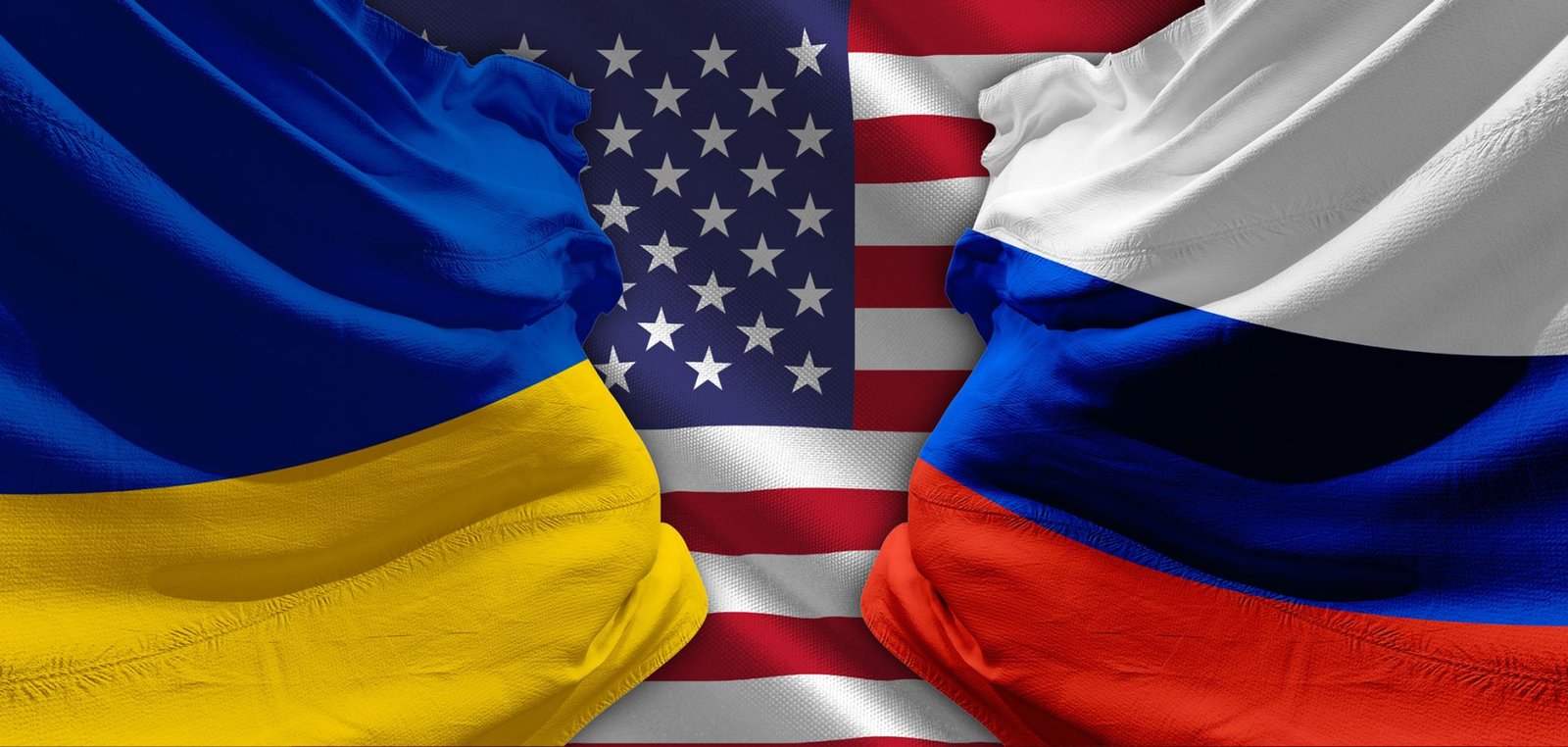
- U.S. intelligence guiding Ukraine’s attacks on Russian oil refineries, FT reports.
- Kremlin warns Washington has crossed into “active participation” in war.
- Russia threatens to open “all options” as Tomahawk debate deepens tension.
- Europe divided as NATO edges closer to direct confrontation with Moscow.
The war in Ukraine has reached a perilous new frontier — one that no longer stops at the border. For months, according to a startling Financial Times report, the United States has quietly helped Ukraine target Russian energy facilities deep inside Russia, far from the front lines. Through satellite intelligence, route planning, and strike coordination, Washington has effectively become a co-strategist in Kyiv’s long-range campaign — a campaign designed not merely to disrupt fuel supplies, but to drain the economic lifeblood of Vladimir Putin’s war machine.
It is, in effect, the most direct U.S. involvement in active strike operations against Russia since the war began.
Unnamed Ukrainian and American officials told the Financial Times that U.S. intelligence has been instrumental in identifying vulnerabilities in Russian oil refineries and energy hubs — targets that are vital to Moscow’s revenue and logistics. The report claims that Washington not only shares raw data but actively assists in shaping each mission’s timing, altitude, and flight path to evade Russian air defenses. In some cases, U.S. analysts have advised Ukrainian drone operators on the precise trajectories to maximize damage while minimizing exposure to radar.
A U.S. official, quoted anonymously, put it bluntly: “Ukraine picks the targets, but we help make the hits possible.”
A War Without Borders
For months, explosions have rocked Russian regions once considered untouchable — Bryansk, Tatarstan, Kursk, and even areas near Moscow. Many of the attacks struck oil refineries, fuel depots, and logistics nodes crucial to Russia’s wartime economy. Until recently, these strikes were shrouded in ambiguity. Kyiv claimed responsibility for some, remained silent on others. Now, with confirmation of U.S. coordination, the ambiguity has lifted.
READ MORE: A Fragile Ceasefire, A Shared Celebration: Why Palestinians See the Peace Deal as a Step Toward Justice
In Moscow, the revelation was received as nothing short of a provocation. Kremlin spokesman Dmitry Peskov accused Washington and NATO of providing “the entire infrastructure of intelligence gathering and target designation” to Kyiv. “This is not assistance,” he said coldly at a press briefing. “It is participation.”
For Russian officials, this is no semantic distinction. By aiding Ukraine in planning deep strikes inside sovereign Russian territory, Washington has crossed a line — transforming itself from an arms supplier into an operational partner. “It is not Ukraine attacking Russia,” one retired Russian general told Izvestia. “It is the United States attacking Russia through Ukrainian hands.”
The Strategic Logic
From Washington’s perspective, the logic is brutally pragmatic. Every refinery destroyed chips away at Russia’s capacity to fuel its tanks, aircraft, and industrial base. Every strike that forces Russia to divert air defenses inward reduces the pressure on Ukraine’s front lines. The goal, U.S. officials privately suggest, is to weaken Russia’s war economy to the point that Putin is compelled to negotiate — a form of economic strangulation conducted by precision strike.
ALSO READ: Taliban, Pakistani forces trade heavy fire along Afghanistan border
It is also a signal: America’s patience is finite. Two years of war, tens of billions in aid, and thousands of lives lost have yielded a stalemate. Long-range strikes offer the possibility — however remote — of changing that calculus.
But they also risk something far larger: the perception, in Moscow, that the United States is now a direct belligerent.
Putin’s Red Line
President Vladimir Putin has long warned that Western intelligence-sharing constitutes “co-belligerence.” The Tomahawk debate earlier this month only sharpened those fears. In an interview published Sunday, Putin said that if Washington were to supply long-range cruise missiles — such as Tomahawks — to Ukraine, it would mean “the destruction of Moscow’s relationship with the United States.”
Now, with revelations that the U.S. is already guiding long-range drone operations, the Kremlin may conclude that the relationship is already destroyed.
“The United States has declared itself part of the war,” said a senior Russian diplomat, speaking on background. “If our energy facilities are being targeted with American help, then all options are open. Energy infrastructure is not a legitimate battlefield target — it is an attack on our statehood.”
Those words — “all options” — echo ominously in Moscow’s military circles. Russian doctrine allows escalation, even nuclear, if the nation’s critical infrastructure is attacked with foreign coordination. The risk of miscalculation, already immense, has never been greater.
Kyiv’s War of Shadows
In Kyiv, the news was met not with surprise but with quiet satisfaction. For months, Ukrainian officials have hinted that Western “partners” were providing critical intelligence for deep strikes. “We do not confirm or deny the involvement of allies,” one Ukrainian defense official told me. “But we can say this — when Russian refineries explode, our soldiers at the front feel less pressure. Every fire behind the enemy lines brings our victory closer.”
President Volodymyr Zelenskyy, in a “positive and productive” call with U.S. President Donald Trump over the weekend, discussed new ways to “bolster air defense” and expand cooperation. He later posted on X: “There are solid ideas on how to truly strengthen us.” For Ukrainians, such cooperation is not escalation — it is survival.
Behind closed doors, however, some in Kyiv worry that America’s hand may one day retreat. “The more successful these operations become, the more nervous Washington gets,” said a Ukrainian intelligence officer. “If Russia retaliates against the U.S. directly, will they still help us? That is our fear.”
Europe’s Unsteady Pulse
Across Europe, the new revelations have stirred unease. German officials, still haunted by memories of Cold War brinkmanship, privately warn that U.S.-guided strikes on Russian soil risk transforming a regional war into a continental one. In Paris, diplomats whisper about “strategic recklessness.” But in Warsaw and Tallinn, the mood is different: triumphant, even defiant.
“Russia understands only pain,” a senior Polish defense official said. “If the Americans are finally helping Ukraine take the fight inside Russia, it’s about time.”
This divide — between Western Europe’s restraint and Eastern Europe’s militancy — reflects a deeper fracture within NATO. How far can the alliance go in supporting Ukraine without becoming part of the war? And if the U.S. has already crossed that threshold, what happens when Russia decides to respond in kind?
The Edge of Escalation
In Washington, officials insist that no American personnel are directly involved in operations on Russian territory. The intelligence support, they argue, is advisory — not operational. But the difference may matter little to Moscow.
“It’s one thing to supply weapons,” said a former U.S. intelligence officer. “It’s another to help use them.”
The war’s logic is tilting toward escalation. Russia could retaliate through cyber strikes on Western energy grids, sabotage undersea cables, or covert actions in NATO states. A miscalculated drone strike — one that kills Russian civilians or hits a sensitive military site — could ignite a spiral neither side can control.
The parallels to history are unmistakable. In the 1962 Cuban Missile Crisis, the world came within a breath of nuclear war over missiles placed in a neighboring country. Today, it is drones and intelligence links — but the core question is the same: how close can nuclear powers push before the line disappears?
A War Without Shadows
For now, Washington remains silent, Kyiv continues to strike, and Moscow seethes. Each attack inside Russia deepens the illusion that this war can be contained. It cannot.
The United States has moved from supporting Ukraine to shaping its battlefield. What began as a proxy war is becoming a partnership of precision and peril. In the fog of modern conflict, the boundaries of war — territorial, political, and moral — are dissolving.
Russia calls it participation. America calls it support. History may call it the moment the shadows vanished — and the world stepped closer to open confrontation.