



-
Trump Caribbean strategy forces postponement of the Summit of the Americas amid unprecedented regional fractures.
-
Expanding U.S. military deployments revive fears of a neo-Monroe doctrine aimed at Venezuela, China, and Russia.
-
Latin America splits sharply as Trump uses sanctions, tariffs, and incentives to enforce compliance.
-
Analysts warn the Trump Caribbean strategy may trigger a future Venezuela confrontation and create rival hemispheric blocs.
The Summit of the Americas—meant to be a moment of hemispheric unity—fell apart before it began. The Dominican Republic postponed the gathering after President Donald Trump made clear he wasn’t attending, citing a scheduling conflict with the 2026 World Cup final draw. What followed exposed something deeper: a region profoundly uncomfortable with Trump’s second-term foreign policy.
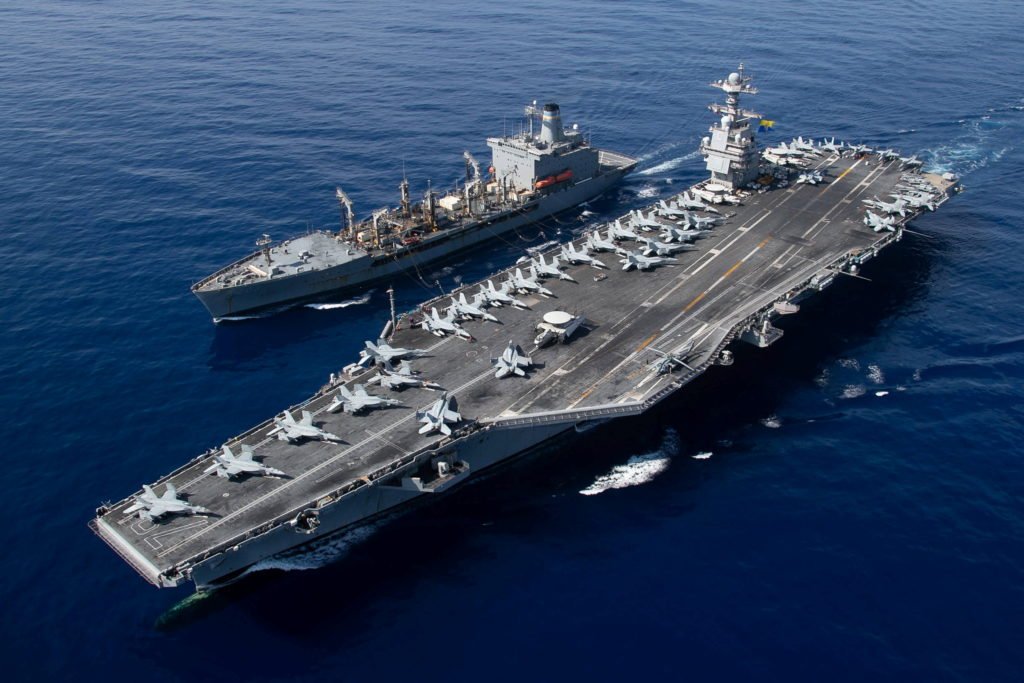
Only a fraction of the 29 eligible countries had agreed to attend. Latin America has been shaken by Trump’s aggressive actions: lethal U.S. attacks on alleged narcotics boats, expanded CIA covert authorities, and fresh deployments of warships and Marines across the Caribbean. The administration is pushing ahead with plans to revive or expand U.S. military access points in Ecuador, Panama, El Salvador, and Puerto Rico.
Meanwhile, Washington is rewarding compliant governments. Argentina received a $20 billion economic infusion. El Salvador was paid millions to imprison deported detainees. Paraguay agreed to host asylum seekers. Trinidad and Tobago joined joint military exercises after praising U.S. operations.
READ MORE: Fentanyl, Narco-Terrorists, and a Dangerous Precedent: Is the U.S. Repeating the Iraq WMD Playbook in the Caribbean?
But others who refused Washington’s line have suffered: Colombian President Gustavo Petro saw his U.S. visa cancelled. Mexico’s Claudia Sheinbaum warned the U.S. she would expand intelligence-sharing to stop “kill missions” at sea. The hemisphere is now split between those who fear Washington and those who defy it.
The Return of the Monroe Instinct
The Trump Caribbean strategy signals a strategic redirection: refocusing U.S. power toward the Western Hemisphere to counter China’s economic dominance and Russia’s military reach. Washington is no longer shy about imposing its worldview. Trump’s foreign policy runs on a simple engine: reward loyalty, punish defiance.
ALSO READ: Brazil’s Lula says US warships in Caribbean are a source of ‘tension’
This shift represents the most assertive U.S. hemispheric posture since the Cold War. Under the “America First Hemisphere Doctrine,” governments are expected to pick a side. Those accepting U.S. terms gain access to markets, funds, and military partnerships. Those resisting are hit with tariffs, sanctions, diplomatic humiliation—and the implicit threat of force.
Trump’s decisions are deeply personal. A brief conversation with Brazil’s President Lula softened earlier hostilities, even as Lula condemned the maritime killings. The American president is treating diplomacy as transactional combat: leaders must prove loyalty or suffer consequences.
The strategic calculus is clear. The U.S. wants to ring-fence Venezuela, deter Chinese port and telecom projects, and keep Russian military assets away from the Caribbean basin. The region is becoming a forward-operating theater designed to ensure no rival power establishes a foothold.
Echoes of Intervention Past
Latin America’s unease is rooted in its collective memory. The region has endured U.S. interventions, CIA coups, and extrajudicial operations from the early 20th century through the Cold War. Trump’s lethal boat strikes, covert action authorities, and new basing arrangements resurrect that history.
The U.S. designation of Ecuadorian gangs as foreign terrorist organizations mirrors Cold War counterinsurgency frameworks—granting broad latitude for intelligence-sharing, joint raids, and military expansion. Latin Americans fear these “temporary measures” could evolve into semi-permanent U.S. intervention structures.
Regional leaders are anxiously awaiting the official release of Washington’s national security and defense strategies. Both are rumored to decisively pivot U.S. global posture away from the Middle East and Indo-Pacific and toward the Western Hemisphere. For many, this signals a long-term American re-entry into the region’s security architecture.
A Hemisphere on the Brink
The trajectory is unmistakable: the Western Hemisphere is heading toward strategic confrontation.
1. A U.S.-aligned security bloc will become formalized.
Argentina, Paraguay, Ecuador, Panama, El Salvador, and Trinidad and Tobago may soon form a structured coalition, possibly a “Caribbean-Pacific Security Compact,” under heavy U.S. influence.
2. An anti-U.S. axis will rise—backed by China and Russia.
Colombia, Mexico, Bolivia, and perhaps Brazil (depending on political mood) will strengthen ties with Beijing and Moscow to counter U.S. dominance.
3. A Venezuela flashpoint is increasingly likely.
With troop deployments, naval buildups, and political rhetoric intensifying, a limited conflict—airstrikes, blockades, or special operations—appears increasingly plausible by 2026.
4. The Summit of the Americas will return—but as a battleground.
What was once a forum for discussion will become a stage for open confrontation between U.S.-aligned and independent Latin American states.
Prophecy for 2026:
The Trump Caribbean strategy is not a policy—it is the blueprint of an emerging hemispheric order defined by fear, force, and fractured alliances. Latin America is no longer a passive frontier. It is the opening theater of a new geopolitical contest that will shape global power for years to come.