



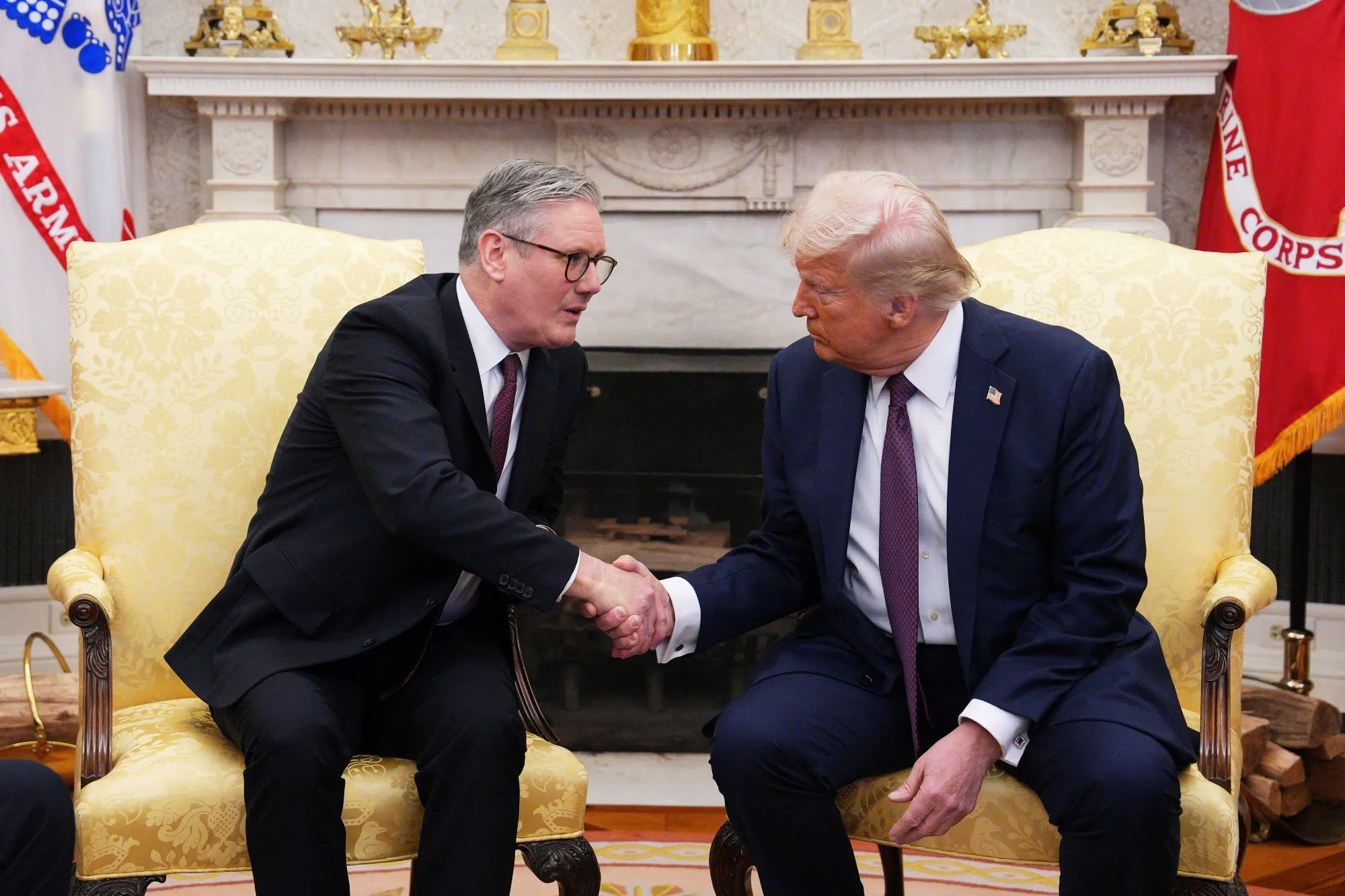
- Trump Iran War Decision reshapes US-UK military coordination and challenges decades of automatic strategic alignment.
- Britain signals refusal to allow US bases for strikes, reflecting domestic political and security pressures.
- China’s economic partnership with Iran influences London’s cautious diplomatic calculations.
- Trump balances negotiation pressure with military readiness as global markets brace for escalation.
The Trump Iran War Decision now dominates strategic debate across Washington, London, and major global capitals. Policymakers, military planners, and financial leaders closely watch whether the United States will strike Iran. Britain’s position has suddenly become central to that calculation.
The current official position of the United Kingdom states that British airfields will not support a United States attack on Iran. This stance marks a dramatic break from four decades of consistent Anglo-American military cooperation across the Middle East.
For forty years, British prime ministers routinely granted American forces permission to operate from UK bases during regional conflicts. Strategic alignment between London and Washington rarely faced public resistance, especially during crises involving hostile regimes.
U.S.-Iran Talks Enter Critical Phase as Trump Sets One-Month Deadline and Military Pressure Mounts
On April 15, 1986, American aircraft launched major strikes against Libya directly from British territory. F-111 bombers departed RAF Lakenheath and RAF Upper Heyford, supported by tanker aircraft operating from RAF Mildenhall and RAF Fairford.
Successive American administrations therefore assumed automatic access to RAF Fairford in Gloucestershire and the Indian Ocean base at Diego Garcia. Those facilities long served as critical launch platforms for Middle Eastern operations.
The emerging Trump Iran War Decision now challenges those historical assumptions. Prime Minister Keir Starmer appears willing to resist expectations that previous governments accepted without hesitation.
Several domestic pressures drive Starmer’s calculation. His authority inside Parliament weakened after he appointed Peter Mandelson as ambassador to Washington despite controversial associations. Many Labour MPs view the decision as politically reckless during an already fragile period.
Trump has discussed timeline for Iran strikes, including as soon as this weekend, but no decision yet
Starmer also confronts a high-stakes parliamentary by-election in Manchester scheduled for February 26. Polling suggests Labour could lose one of its safest constituencies, alarming MPs worried about their political futures.
A defeat would likely trigger an immediate leadership challenge. Party rivals already prepare for contests expected either after the by-election or following poor local election results later this spring.
Health Secretary Wes Streeting represents the party’s centrist wing, while Angela Rayner commands strong support among grassroots activists. Rayner retains influence among Labour members despite earlier controversies surrounding alleged tax irregularities.
Trump Iran Nuclear Deal Faces One-Month Deadline as Military Pressure Escalates
Muslim voters and activists hold growing influence within Labour’s internal politics. Starmer fears alienating that constituency during a moment when many supporters migrate toward the Green Party.
Political survival therefore shapes Britain’s response to the Trump Iran War Decision. Starmer seeks stability until summer rather than confrontation over a deeply polarizing foreign conflict.
Domestic security fears reinforce that caution. British authorities worry that pro-Iran demonstrations could erupt across London, Birmingham, and Manchester if military escalation begins.
Officials also anticipate counter-protests led by nationalist activists and emerging political movements. Large confrontations could overwhelm police forces that remain largely unarmed and stretched by limited manpower.
Britain’s armed forces offer little reassurance. The army now fields roughly 70,000 personnel, many stationed overseas, limiting rapid domestic deployment during civil unrest.
Economic diplomacy with China forms another decisive factor shaping the Trump Iran War Decision from London’s perspective. Starmer recently sought expanded trade cooperation with Beijing to stimulate Britain’s struggling economy.
China maintains close economic ties with Iran and imports approximately 1.3 million barrels of Iranian oil daily. Beijing also purchases plastics, polymers, metals, coal, and industrial materials at discounted prices.
Transactions frequently occur in Chinese yuan rather than US dollars, strengthening China’s financial independence from Western sanctions systems. Beijing reportedly supplies air defense technology and missile components that enhance Iran’s deterrence capabilities.
Starmer therefore avoids actions that could damage relations with Chinese President Xi Jinping during sensitive trade negotiations. Economic necessity increasingly influences British strategic autonomy.
Starmer’s political background further explains his cautious approach toward the Trump Iran War Decision. He entered frontline politics late after serving as Director of Public Prosecutions.
Labour elevated him rapidly because he strongly opposed Britain’s withdrawal from the European Union following the 2016 referendum. Since becoming prime minister in 2024, he has pursued long-term institutional goals through gradual regulatory change.
Starmer reportedly aims to reshape public opinion before June 23, 2026, the tenth anniversary of the Brexit vote. His strategy seeks to convince voters that Brexit caused Britain’s economic stagnation and social strain.
Reintegration with European structures remains an unstated objective among several senior Labour figures. Mandelson previously played a major role in advancing that agenda within European trade policy circles.
Yet Starmer’s foreign policy ambitions extend beyond Europe. He strongly supports Ukraine and advocates sustained confrontation with Russia alongside France and Germany.
British planners reportedly discussed expanded mobilization concepts, including large-scale national service models tied to European defense integration. Supporters argue shared sacrifice could rebuild continental unity through collective security commitments.
Such policies could involve emergency authorities under the Civil Contingencies Act 2004 during wartime conditions. The legislation grants sweeping state powers over economic and civilian resources during national crises.
Britain’s fiscal outlook intensifies those concerns. Public debt approaches total annual GDP, leaving the government dependent on continued borrowing to sustain public spending obligations.
Any financial shock could disrupt payments to pensions, healthcare systems, and public services. Political leaders fear economic instability could trigger widespread social unrest.
Against this backdrop, Starmer views conflict with Russia as strategically useful but considers conflict with Iran politically dangerous. His government therefore distances itself from direct participation in the Trump Iran War Decision.
The American calculation differs significantly. President Donald Trump continues to signal willingness to negotiate while maintaining credible military pressure.
Trump prefers dramatic concessions achieved through brinkmanship rather than immediate escalation. Advisors believe Tehran may ultimately compromise to avoid devastating strikes on strategic infrastructure.
However, uncertainty defines the final stage of the Trump Iran War Decision. If Iranian leadership refuses meaningful concessions, Trump has repeatedly indicated he will authorize decisive military action.
Global markets, energy exporters, and regional governments now prepare for both outcomes. Diplomacy still offers an exit, yet military readiness signals that time for negotiation may soon expire.
The world therefore watches a single question: will deterrence succeed, or will the Trump Iran War Decision reshape the Middle East once again?
Jonathan Stuart-Brown, LLB – Lawyer, journalist, and author, Jonathan Stuart-Brown has written for UK newspapers, the BBC, and international outlets on geopolitics, Royal stories, defence, military, human interest, and showbiz. He is also a legal expert, documentary filmmaker, and thriller writer. Views expressed here are his own and do not necessarily reflect those of The Islamabad Telegraph.