



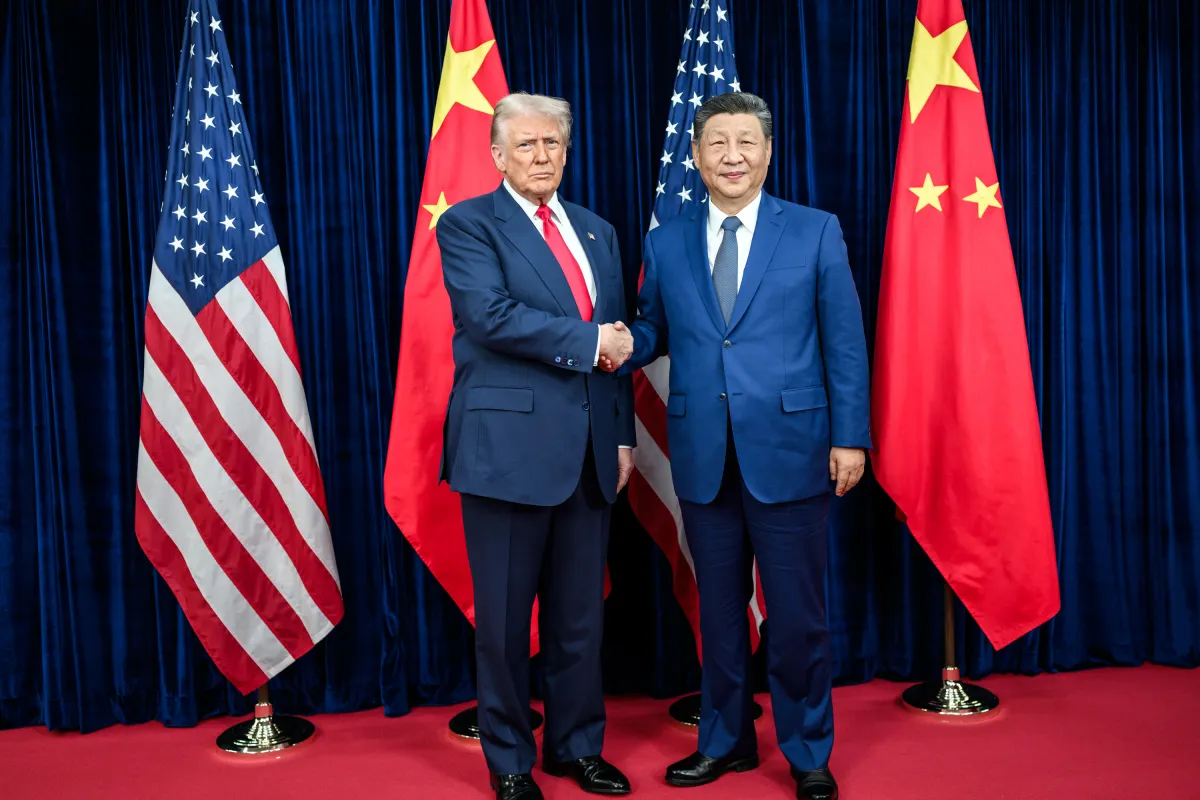
- Trump Xi summit preparations continue despite speculation about delays caused by the Iran war.
- U.S. officials say any postponement would depend on President Trump’s wartime responsibilities.
- Trade negotiations in Paris between U.S. and Chinese officials were described as constructive.
- New trade mechanisms and ongoing investigations remain sources of tension between the two powers.
The possibility of a delay in the planned summit between Donald Trump and Xi Jinping has sparked speculation across international media, but officials on both sides indicate that the high-profile meeting is still expected to proceed as scheduled.
The summit—expected to take place between March 31 and April 2—has been widely viewed as a critical diplomatic moment in a turbulent geopolitical year marked by trade tensions, shifting alliances and the ongoing war involving Iran. Yet uncertainty emerged after U.S. officials suggested that the only potential obstacle would be the president’s wartime responsibilities as commander-in-chief.
Speaking in Paris after two days of U.S.–China economic talks, Scott Bessent, the U.S. Treasury Secretary, said any postponement would not be linked to trade disputes or disagreements over shipping routes but rather to the demands of the Iran war.
According to Bessent, if the summit were to be delayed, it would be because Trump may need to remain in Washington to manage the conflict rather than travel abroad. His comments followed growing speculation that tensions surrounding the Strait of Hormuz—which has been affected by Iran’s wartime strategy—could complicate diplomatic engagements.
Trump’s Iran war duties, not China disputes, could delay Beijing summit, Bessent says
However, Bessent stressed that Beijing’s stance on the Strait of Hormuz would not be a factor in any potential delay. His remarks were aimed at calming speculation that the summit could be derailed by disagreements over energy security or maritime trade.
Despite these concerns, officials involved in the talks described the latest round of negotiations between the two countries as constructive.
China’s chief trade negotiator Li Chenggang said discussions had been “in-depth, candid and constructive,” emphasizing both sides’ commitment to maintaining stability in tariff levels. The talks were designed to lay the groundwork for agreements that Trump and Xi could consider during their upcoming meeting.
Iran Releases Pilot Identities After US-Israel Airstrikes in Major Psychological Warfare Escalation
The negotiations also explored the possibility of creating new institutional frameworks to manage economic ties between the two powers. One proposal involves establishing a U.S.–China Board of Trade that would coordinate import and export priorities to ensure both countries focus on mutually beneficial sectors. Another concept under discussion is a Board of Investment aimed at addressing disputes over cross-border investments and market access.
Such mechanisms reflect a broader attempt to stabilize the world’s most consequential economic relationship at a time when geopolitical tensions are rising.
Yet friction remains.
Beijing expressed concern over Washington’s new trade investigations under Section 301, which target alleged unfair practices including industrial overcapacity and forced-labor supply chains. Chinese officials warned they would monitor the investigations closely and take countermeasures if necessary.
These disputes illustrate the complex environment in which the Trump-Xi summit is being planned. Unlike routine diplomatic meetings, summits between leaders of the world’s two largest economies often require months—sometimes years—of preparation to align agendas, negotiate deliverables and manage political sensitivities.
Historically, such meetings are rarely delayed once formally scheduled because they involve extensive logistical planning and diplomatic commitments. For that reason, many analysts believe the summit is likely to proceed unless the Iran war dramatically escalates.
The conflict has already disrupted global energy markets and international shipping routes, forcing Washington to devote significant strategic attention to the Middle East. If the situation intensifies, Trump may feel compelled to remain in Washington to oversee military operations and crisis diplomacy.
Even so, diplomatic sources suggest that preparations for the summit are continuing without interruption. Officials involved in the Paris talks signaled that the meeting between Trump and Xi remains an important opportunity to stabilize U.S.–China relations at a time of global uncertainty.
Trade analysts also note that expectations for major breakthroughs at the summit may be limited. Instead, the meeting could serve as a platform to outline broader frameworks for cooperation, with more detailed agreements potentially rolled out later in the year.
Several additional opportunities for high-level engagement are already on the diplomatic calendar, including a potential state visit to the United States by Xi, the APEC Summit scheduled to be hosted by China later this year, and the G20 Summit planned in the United States.
In that sense, the upcoming summit may be less about immediate breakthroughs and more about maintaining dialogue between two superpowers navigating an increasingly volatile global landscape.
For now, despite speculation swirling in Western media, there is no clear indication from either Washington or Beijing that the meeting will be postponed—suggesting that the Trump-Xi summit could still go ahead as planned.